 BUY NOW
 Spectral Performance Selection
Narrow Linewidth Lasers
Compare laser sources by linewidth, wavelength, stability, tuning, power, and integration requirements.
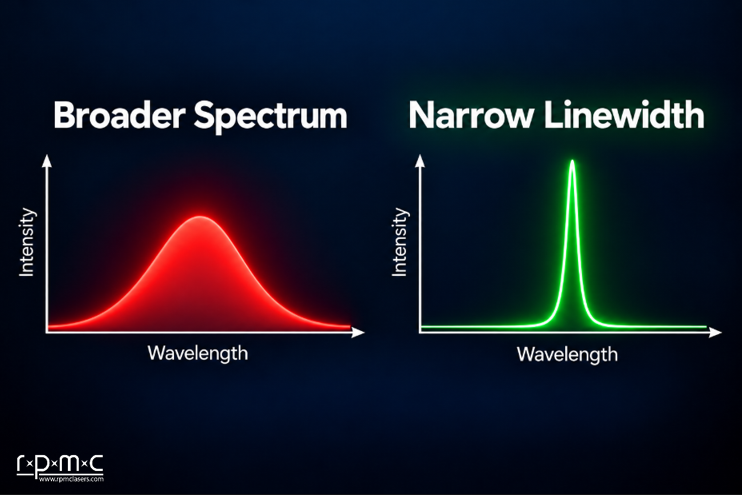
Narrow linewidth is a spectral performance requirement, not a single laser architecture. RPMC offers narrow-linewidth options across multiple laser technologies, including laser diodes, fiber lasers and amplifiers, DPSS lasers, HeNe lasers, and other specialized sources.
The right starting point depends on more than linewidth alone. Wavelength, output power, CW or pulsed operation, frequency or wavelength stability, tuning requirements, beam delivery, package, and system integration can all determine which source is practical for an application.
Key Selection Considerations
- Wavelength: Required center wavelength or usable tuning range.
- Linewidth: Maximum allowable spectral linewidth or related coherence requirement.
- Stability: Allowable wavelength or frequency drift over the relevant time and operating conditions.
- Output: Required optical power, pulse format, beam delivery, and spatial-mode requirements.
- Tuning: Fixed wavelength, tunable operation, tuning range, tuning speed, and mode-hop requirements where applicable.
- Integration: Free-space or fiber delivery, package, polarization, modulation, cooling, and OEM constraints.
Not sure which narrow-linewidth source fits?
Send RPMC the wavelength, linewidth or coherence requirement, power, CW or pulsed operation, tuning needs, and output format you know. We can help compare the available architectures and configurations.
When Should I Consider a Narrow Linewidth Laser?
A narrow-linewidth source is worth considering when the spectral width or frequency behavior of the laser directly affects the measurement, interaction, or downstream optical system. Common examples include spectroscopy, interferometry, metrology, coherent sensing, laser seeding, and other applications where spectral resolution, coherence, or frequency control matters.
The required linewidth can vary substantially by application. Some systems only need a narrower spectrum than a conventional source, while others require linewidths specified in MHz or kHz together with demanding stability, tuning, noise, or side-mode suppression requirements. The useful question is not simply whether a laser is described as “narrow linewidth,” but how narrow and how stable the source must be for the application.
Narrow Linewidth vs. Single-Frequency / SLM
Narrow linewidth and single longitudinal mode are related, but they are not interchangeable requirements. Narrow linewidth describes the spectral width of the laser output. Single longitudinal mode (SLM), often associated with single-frequency operation, describes operation on a single longitudinal optical mode. An SLM designation alone does not define the exact linewidth, frequency noise, wavelength drift, or tuning performance of the source. If single-frequency or SLM operation itself is a hard requirement, compare our Single Longitudinal Mode Lasers.
Compare Narrow Linewidth Laser Options
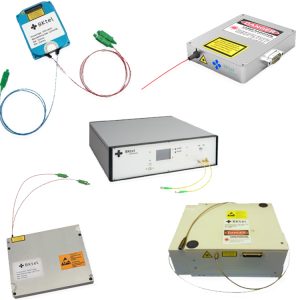
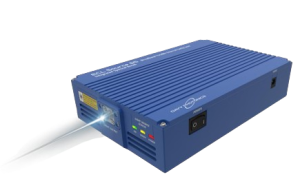
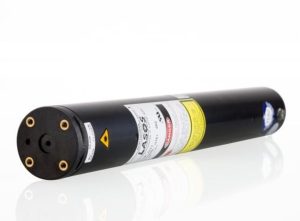
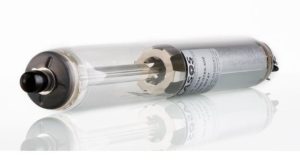
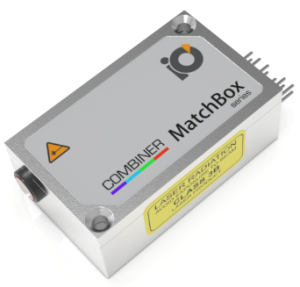
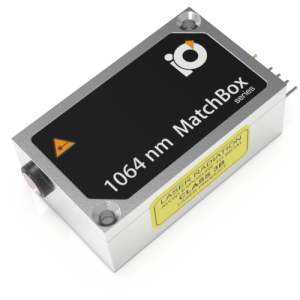
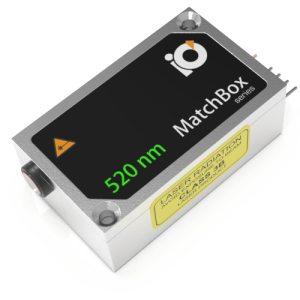
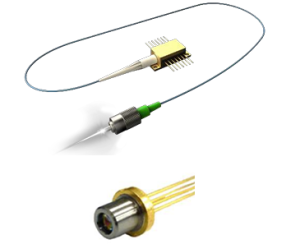
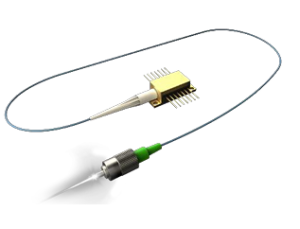
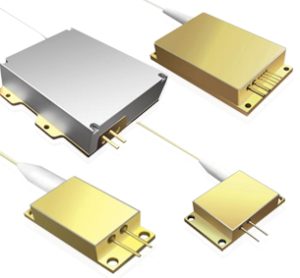
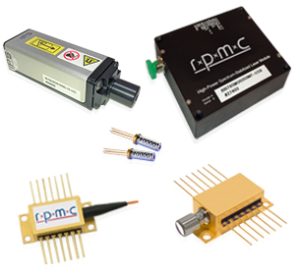
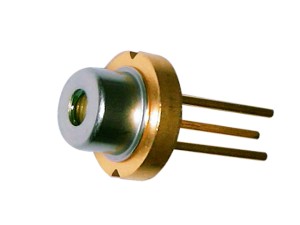
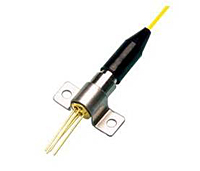
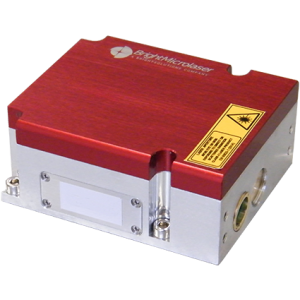
Use the filters below to narrow the available sources by laser category, technology, wavelength, power, and other relevant characteristics. If several architectures meet the basic requirements, RPMC can help compare the tradeoffs and down-select the most practical option.

What Should I Specify for a Narrow Linewidth Laser?
You do not need every specification finalized before contacting RPMC. Start with the requirements that are fixed and identify where the system has flexibility.
Spectral & Optical Requirements
- Center wavelength or wavelength range
- Maximum acceptable linewidth
- Frequency or wavelength stability requirement
- Coherence-length requirement, if applicable
- Fixed or tunable wavelength
- Tuning range and tuning speed
- Mode-hop-free tuning requirement, if applicable
- Polarization, SMSR, or noise requirements when important
Power, Output & Integration
- CW or pulsed operation
- Required optical power or pulse energy
- Free-space or fiber-coupled output
- Spatial-mode or beam-quality requirements
- Package, size, cooling, or environmental constraints
- Modulation or control requirements
- Prototype or production quantities
- Application and project timeline
If some of these values are still unknown, send the requirements you do know. RPMC can help determine which specifications actually drive the source selection and where different architectures provide useful tradeoffs.
Start With the Requirement, Not the Stabilization Method
If you know you need a specific linewidth or stability level but do not know whether the right solution is DFB, VBG, FBG, another external-cavity design, or a different laser architecture, that is enough to start. RPMC can compare the available approaches based on the full set of optical and integration requirements.
Related Spectral-Control Options
Narrow linewidth can be achieved using several different source architectures and stabilization approaches. If your requirement is already defined more specifically, these related pages can help narrow the options:
- Single Longitudinal Mode (SLM) Lasers – when single-frequency or single-longitudinal-mode operation is a specific requirement.
- Distributed Feedback (DFB) Lasers – when an integrated distributed-feedback architecture is appropriate.
- Volume Bragg Grating (VBG) Lasers – for wavelength-stabilized laser diode configurations using a volume Bragg grating.
- Fiber Bragg Grating (FBG) Lasers – for narrow-linewidth configurations using fiber Bragg grating feedback.
Have a linewidth, wavelength, or frequency-stability requirement?
Share the specifications you already know and the application you are designing around. RPMC can help compare narrow-linewidth laser architectures and narrow the practical options.