 BUY NOW
Laser Diode Selection
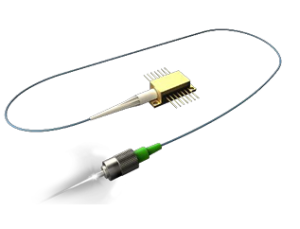
Fiber-Coupled Stabilized Laser Diodes
Wavelength-stabilized and narrow-linewidth laser diode options for systems that require controlled spectral performance with flexible fiber delivery.
Fiber-coupled stabilized laser diodes combine wavelength or spectral control with delivery through optical fiber. Depending on the source, stabilization may be achieved using distributed feedback (DFB), volume Bragg gratings (VBGs), fiber Bragg gratings (FBGs), or other wavelength-selective architectures.
Start with the target wavelength and optical power, then define both the spectral requirements and the fiber interface. Linewidth, wavelength drift, tuning behavior, fiber core, numerical aperture, connector, package, and operating conditions can all affect which configuration is appropriate.

Key selection considerations include:
- Spectral performance: define the required center wavelength, linewidth, wavelength accuracy, drift, tuning behavior, and other stability requirements.
- Stabilization architecture: DFB, VBG, FBG, and other wavelength-selective approaches can provide different combinations of stability, linewidth, tuning, power, and package options.
- Fiber delivery: core size, numerical aperture, connector or termination, fiber length, and downstream coupling requirements should be considered together with the laser specifications.
Need help narrowing the options?
RPMC can help compare wavelength, power, linewidth, stabilization method, fiber, connector, package, and integration requirements.
When Should I Consider a Fiber-Coupled Stabilized Laser Diode?
Start here when the application requires tighter control of wavelength or spectral behavior and fiber delivery is part of the optical system. Depending on the source, this may include narrower linewidth, reduced wavelength drift, single-longitudinal-mode operation, controlled center wavelength, or tunability.
The key is to define which spectral characteristics must be controlled and how the output needs to be delivered. A source may meet the required wavelength and power while still being unsuitable because of linewidth, drift, fiber core, numerical aperture, connector, or other interface requirements.
If spectral control is required but direct access to the beam is preferable, compare free-space stabilized laser diodes. If single-mode fiber delivery and spatial beam quality are more important than spectral stabilization, compare fiber-coupled single mode laser diodes.
Compare Fiber-Coupled Stabilized Laser Diode Options
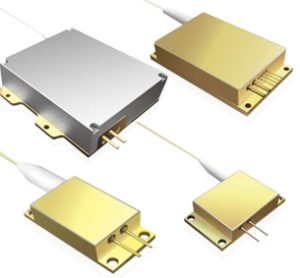
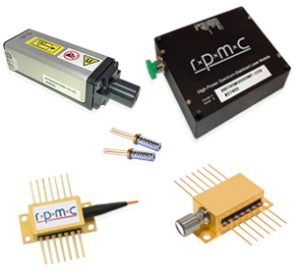
Use the filters and product table below to narrow the available sources by wavelength, power, and other available product characteristics. Individual products may provide different stabilization methods, linewidths, tuning capabilities, fiber configurations, connectors, packages, and customization options.

What Should I Specify?
The best starting point is to define the spectral requirement and the fiber interface together. “Stabilized” can describe several different performance characteristics, while the fiber configuration determines how that output will integrate into the rest of the optical system.
- target wavelength or wavelength range
- required optical power
- linewidth or spectral-width requirement
- wavelength accuracy, drift, or tuning requirements
- fiber type, core size, and numerical aperture
- connector, termination, and fiber-length requirements
- package and operating-temperature constraints
- prototype or expected production quantities
Not every requirement is represented by the filters. RPMC can help compare DFB, VBG, FBG, narrow-linewidth, and other available architectures together with the fiber interface required by the system.
Spectral Stability and Fiber Delivery Are Separate Requirements
A stabilized laser diode is selected for its wavelength or spectral behavior, while fiber coupling defines how the optical output is delivered. Linewidth, wavelength stability, single-longitudinal-mode operation, fiber core, numerical aperture, and connector type describe different aspects of the source and should be evaluated independently against the system requirements.
Need a Different Output Architecture?
If you need similar wavelength or spectral control with direct access to the emitted beam, compare free-space stabilized laser diodes. For applications driven primarily by single-mode fiber delivery and spatial beam quality, see fiber-coupled single mode laser diodes, or return to the Laser Diodes page to compare the broader portfolio.
Have a fiber-coupled stabilized laser diode requirement?
Send RPMC the wavelength, power, linewidth, stability, tuning, fiber, connector, packaging, and integration requirements you already know. We can help narrow the available configurations.