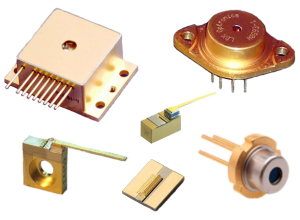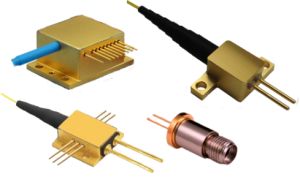

Pump Lasers &
Diode Pump Sources

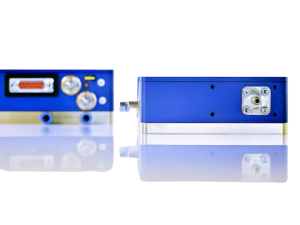
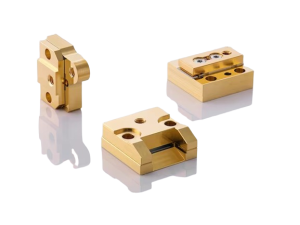
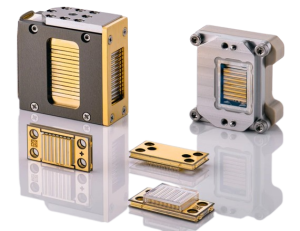
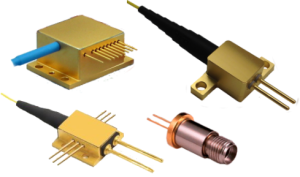
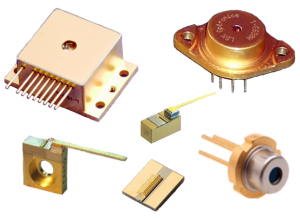
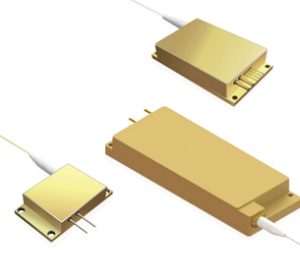
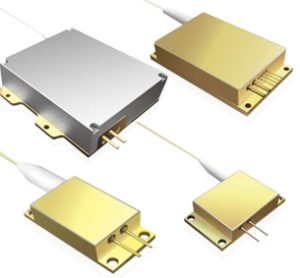
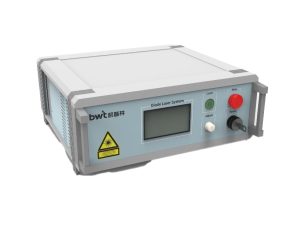
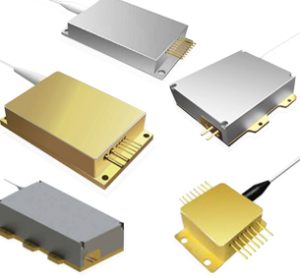
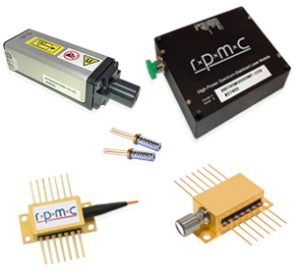
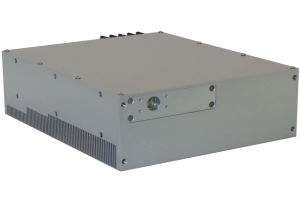
Pump sources for fiber lasers, fiber amplifiers, DPSS gain media, and other optical pumping systems, selected around absorption wavelength, required pump power or energy, delivery method, stabilization, and integration requirements.
          • Start with the gain medium:
            Match the pump wavelength to the relevant absorption band rather than starting with the wavelengths available for sale.
          • Define the pump format:
            CW, QCW, or pulsed operation where applicable, plus required optical power or energy and operating duty cycle.
          • Match the delivery and integration:
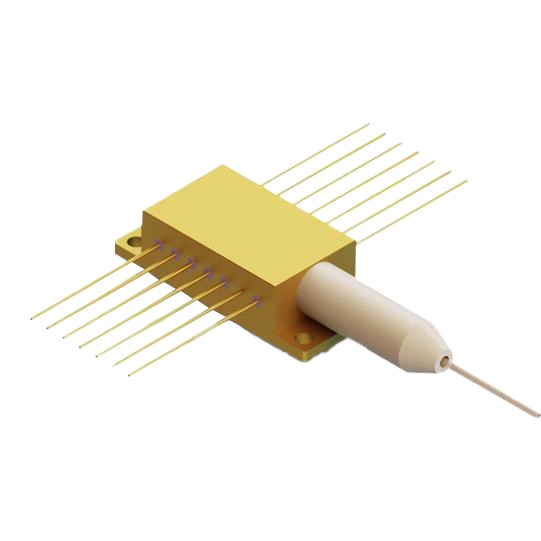
            Free-space or fiber-coupled output, wavelength stabilization, fiber/core requirements, cooling, electrical drive, packaging, and back-reflection considerations.

What Are You Pumping?

The gain medium and system architecture should drive pump-source selection. Start with what must absorb the pump light, then determine the wavelength, power, delivery, stabilization, and integration requirements around it.

Fiber Lasers & Fiber Amplifiers

Start with the doped fiber, pump absorption band, cladding or core-pumping architecture, required pump power, and the fiber interface needed to couple pump energy efficiently into the system.

Common selection drivers: pump wavelength, optical power, fiber core/cladding geometry, NA, connector or splice strategy, brightness, duty cycle, and back-reflection sensitivity.

DPSS Gain Media

Start with the crystal or gain medium and its absorption characteristics. The practical pump source may depend on both the absorption band and how the pump light needs to be delivered into the gain region.

Common selection drivers: wavelength, wavelength tolerance, pump power, free-space or fiber delivery, beam size, absorption geometry, thermal load, and stabilization requirements.

Other Optical Pumping Systems

Some applications use a complete CW or pulsed laser as the pump source for another gain stage or nonlinear optical process. Examples can include pumping solid-state lasers, optical parametric amplifiers, OPOs, and other wavelength-conversion systems. Start with the absorbing or nonlinear system and the pump wavelength, pulse format, energy or power, beam quality, timing, and spectral requirements it needs.

Common selection drivers: absorption wavelength, source format, beam quality, power or energy, timing, spectral width, delivery method, and system geometry.

How to Select a Pump Laser

1. Match the Gain Medium and Absorption Band

The material being pumped should determine the starting wavelength range. Identify the gain medium, dopant, or absorbing transition first, then evaluate pump sources that overlap the usable absorption band.

2. Define the Required Pump Format

Specify CW, QCW, or pulsed operation where applicable, along with required optical power or pulse energy, operating duty cycle, and any modulation or timing requirements.

3. Decide How the Pump Light Will Be Delivered

Determine whether the architecture requires free-space or fiber-coupled delivery. For fiber-coupled systems, core diameter, cladding dimensions, numerical aperture, connector or splice strategy, and brightness may materially affect the selection.

4. Determine Whether Wavelength Stabilization Matters

Some gain media tolerate relatively broad pump spectra, while others benefit from tighter wavelength control. Stabilized pump diodes can be useful when absorption bandwidth, temperature sensitivity, or operating conditions make pump wavelength control important.

5. Account for Integration and Protection

Package size, cooling, thermal load, electrical drive, fiber routing, connectors, back-reflection sensitivity, monitoring, reliability requirements, and system footprint can all affect which pump configuration is practical.

Browse Pump Laser Diodes & Pump Sources

Use the filters and product table below to compare available pump-source wavelengths, powers, output formats, stabilization options, and package configurations.
Filters Reset

Category

Type

Wavelength Selection

Power Selection

Picture Part Number Wavelength (nm) Description Type
JDL-Unmounted Bars: 760-1070nm Unmounted Laser Diode Bars & Single Emitters JDL-Unmounted Bars 760-1070, 808, 915, 940, 976 Laser Diode, Multimode, Unmounted bar, Infrared, 760-1070nm, up to 300W CW/500W QCW Single Emitter, Array (Bar), Customizable
various configurations of the jenlas fiber ns OEM green disk laser housing JenLas D2 532, 1064 DPSS Laser, Multimode, Thin-disk, 532nm or 1064nm, up to 8W CW DPSS Lasers, Collimated Beam, Fiber-Coupled, Customizable
JOLD-FC: 760-1070 & 1470nm Fiber-Coupled Laser Diode Modules JOLD-FC 760-1070, 808, 880, 915, 938, 976, 1470 Laser Diode, Multimode, Fiber-coupled, Infrared, 760-1470nm, up to 400W Array (Bar), Fiber-Coupled
JOLD-Open Heatsinks: 760-1070nm Single Laser Diode Bar Package JOLD-Open Heatsinks 760-1070, 808, 880, 915, 938, 976 Laser Diode, Multimode, Bar package, Infrared, 760-1070nm, up to 300W Array (Bar), Customizable
JOLD-Stacks: 760-1070nm High-Power Laser Diode Stacks JOLD-Stacks 760-1070, 808, 940 Laser Diode, Multimode, Bar stack, Infrared, 760-1070nm, up to 2400W Array (Bar), Customizable
LDX-IR-FC: Fiber coupled Infrared Multimode Laser Diode LDX-IR-FC 1015, 750, 780, 797, 808, 830, 860, 915, 940, 980, 1064, 1130, 1210, 1280, 1370 Laser Diode, Multimode, Fiber-Coupled, Near-Infrared, 750–1400nm, up to 12.8W Single Emitter, Fiber-Coupled, Made in the USA, Customizable
LDX-IR-FS: Free Space Infrared Multimode Laser Diode LDX-IR-FS 750, 780, 797, 808, 830, 860, 915, 940, 980, 1064, 1130, 1210, 1280, 1370 Laser Diode, Multimode, Free-Space, Near-Infrared, 750–1400nm, up to 16W Single Emitter, Made in the USA, Customizable
LDX-SWIR-FC: Fiber coupled Short-wave Infrared Multimode Laser Diode LDX-SWIR-FC 1470, 1550, 1620, 1640, 1675, 1850 Laser Diode, Multimode, Fiber-Coupled, SWIR, 1400–1900nm, up to 5.6W "Eye Safe", Single Emitter, Fiber-Coupled, Made in the USA, Customizable
LDX-SWIR-FS: Free Space Short-Wave Infrared Multimode Laser Diode LDX-SWIR-FS 1470, 1550, 1620, 1675, 1850 Laser Diode, Multimode, Free-Space, SWIR, 1400–1900nm, up to 7W "Eye Safe", Single Emitter, Made in the USA, Customizable
LDX-VIS-FC: Fiber coupled Visible Multimode Laser Diode LDX-VIS-FC 445, 520, 622, 630, 660, 685, 735, 750 Laser Diode, Multimode, Fiber-Coupled, Visible, 405–750nm, up to 4W Single Emitter, Fiber-Coupled, Made in the USA, Customizable
LDX-VIS-FS: Free Space Visible Multimode Laser Diode LDX-VIS-FS 445, 520, 622, 630, 660, 685, 735, 750 Laser Diode, Multimode, Free-Space, Visible, 405–750nm, up to 5W Single Emitter, Made in the USA, Customizable
RPK-IR-MM: Fiber-Coupled IR Multimode Laser Diodes RPK-IR-MM 793, 808, 940, 976, 980, 1064 Laser Diode, Multimode, Fiber-coupled, 793nm-1940nm, up to 300W Single Emitter, Multi-Emitter, Fiber-Coupled
RPK-IR-STAB: Fiber-Coupled IR Stabilized Laser Diode RPK-IR-STAB 785, 808, 878, 976, 1064 Laser Diode, Wavelength Stabilized, Fiber-coupled, Infrared, 760-1400nm, up to 430W Multi-Emitter, VBG, Narrow Linewidth, Fiber-Coupled
RPK-TK: Fiber-Coupled Turn-Key Direct Diode Laser System RPK-TK 405, 445, 520, 635, 660, 690, 785, 808, 830, 915, 976, 1064 Laser Diode, Wavelength Stabilized, Fiber-coupled, 405-1064nm, up to 3000W Multi-Emitter, Fiber-Coupled, Turn-Key System
RPK-VIS-MM: Fiber-Coupled Visible Multimode Laser Diode RPK-VIS-MM 405, 525, 635 Laser Diode, Multimode, Fiber-coupled, Visible, 400-750nm, up to 200W Single Emitter, Multi-Emitter, Fiber-Coupled
RVBG: Stabilized Laser Diode RVBG 633, 680, 785, 808, 860, 976, 1030, 1064 Laser Diode, Stabilized, 633-1064nm, up to 600mW LD Module, Single Emitter, VBG, Narrow Linewidth, Single Longitudinal Mode (SLM), Fiber-Coupled, Made in the USA
Wedge: Short Pulse Q-Switched DPSS Laser Wedge 3100, 266, 355, 532, 1064, 1570 DPSS Laser, ns/ps pulsed, 266nm to ≈ 3µm, up to 4mJ, up to 100kHz Pulsed DPSS Lasers, Airborne Laser, Ruggedized, Adjustable Rep Rate, High Pulse Energy, High Peak Power, Low Jitter

What Should I Specify for a Pump Source?

You do not need a finalized pump-laser part number before contacting RPMC. Start with the gain medium or system being pumped and the requirements you already know.

Optical Requirements

  • Gain medium, dopant, or system being pumped
  • Target pump wavelength or absorption band
  • Required optical power or pulse energy
  • CW, QCW, or pulsed operation
  • Duty cycle or repetition rate where applicable
  • Wavelength-stability or spectral-width requirements
  • Free-space or fiber-coupled delivery
  • Beam size, fiber core, NA, or brightness requirements

Integration Requirements

  • Package and mounting constraints
  • Cooling and thermal-management requirements
  • Electrical drive conditions
  • Connector, fiber, or splice requirements
  • Back-reflection considerations
  • Monitoring or photodiode requirements
  • Operating environment
  • Prototype or production quantity
  • Project schedule

Pump Laser FAQs

How do I choose the correct pump wavelength?

Start with the absorption characteristics of the gain medium, dopant, or system being pumped. The useful pump wavelength is determined by where that material efficiently absorbs energy, then refined by available source power, spectral width, operating temperature, delivery method, and system architecture.

When should I use a wavelength-stabilized pump diode?

Wavelength stabilization can be useful when the gain medium has a relatively narrow absorption band or when temperature-dependent wavelength shifts could reduce pump absorption or system consistency. The need for stabilization depends on the gain medium, operating conditions, and required performance.

Should I use a free-space or fiber-coupled pump source?

It depends on the pump geometry and integration requirements. Fiber coupling can simplify routing and integration, while free-space output may be preferred when the optical design requires direct beam access, specific focusing conditions, or a different coupling geometry. For fiber-coupled sources, fiber core, numerical aperture, connector or splice requirements, and brightness may also affect the selection.

What pump power do I need?

Required pump power depends on the gain medium, absorption efficiency, desired laser or amplifier output, pump geometry, thermal limits, and overall system efficiency. Rather than selecting the highest available power, start with the required system performance and the gain medium being pumped.

What information should I provide RPMC when selecting a pump source?

Start with the gain medium or system being pumped, target pump wavelength or absorption band, required optical power or energy, CW/QCW/pulsed operation, delivery format, fiber or beam requirements, wavelength-stabilization needs, cooling and electrical constraints, back-reflection considerations, package limitations, quantity, and project schedule. If some specifications are unknown, RPMC can help determine which ones actually drive the selection.
Component FAQs

Can I operate multiple laser diodes from the same power supply?

Can I operate multiple laser diodes from the same power supply?

The same power supply can drive multiple laser diodes if they are connected in series, but they must never be connected in parallel. When two diodes are connected in series, they will function properly as long as the compliance voltage is large enough to cover the voltage drop across each diode. For example, suppose you are trying to power two diode lasers, each with an operating voltage of 1.9 V, and connect the two in series. In that case, the pulsed or CW laser driver must have a total voltage capacity greater than 3.8 V. This configuration works because diodes share the same current when connected in series. In contrast, when two diodes are connected in parallel, the current is no longer shared between the two diodes. Get more details on the topic in this article: “Can I Operate Multiple Laser Diodes From the Same Power Supply?” Get more information from our Lasers 101, Blogs, Whitepapers, FAQs, and Press Release pages in our Knowledge Center!

Can laser diodes emit green, blue, or UV light?

Can laser diodes emit green, blue, or UV light?

The output wavelength of a semiconductor laser is based on the difference in energy between the valance and conduction bands of the material (bandgap energy). Since the energy of a photon is inversely proportional to its wavelength, this means that a larger bandgap energy will result in a shorter emission wavelength. Due to the relatively wide bandgap energy of 3.4 eV, gallium nitride (GaN) is ideal for the production of semiconductor optoelectronic devices, producing blue wavelength light without the need for nonlinear crystal harmonic generation. Since the mid-’90s, GaN substrates have been the common material utilized for blue LEDs. In recent years, GaN based laser technology has provided blue, green and UV laser diodes, now available in wavelengths from 375 nm to 521 nm, with output powers exceeding 100 watts. Read our article, titled “Gallium Nitride (GaN) Laser Diodes: Green, Blue, and UV Wavelengths” to learn more about GaN Based Laser Diodes, available through RPMC. Get more information from our Lasers 101, Blogs, Whitepapers, and FAQs pages in our Knowledge Center!

How long will a laser diode last?

Honestly, it depends on several factors, and there is no simple chart to cover everything. Typical diode lifetimes are in the range of 25,000 to 50,000 hours. Though, there are lifetime ratings outside this range, depending on the configuration. Furthermore, there are a wide range of degradation sources that contribute to a shorter lifespan of laser diodes. These degradation sources include dislocations that affect the inner region, metal diffusion and alloy reactions that affect the electrode, solder instability (reaction and migration) that affect the bonding parts, separation of metals in the heatsink bond, and defects in buried heterostructure devices. Read more about diode lifetime and contributing factors in this article: “Understanding Laser Diode Lifetime.” Get more information from our Lasers 101, Blogs, Whitepapers, FAQs, and Press Release pages in our Knowledge Center!

What factors affect the lifetime of laser diodes?

There are a great many factors that can increase or decrease the lifetime of a laser diode. One of the main considerations is thermal management. Mounting or heatsinking of the package is of tremendous importance because operating temperature strongly influences lifetime and performance. Other factors to consider include electrostatic discharge (ESD), voltage and current spikes, back reflections, flammable materials, noxious substances, outgassing materials (even thermal compounds), electrical connections, soldering method and fumes, and environmental considerations including ambient temperature, and contamination from humidity and dust. Read more about these critical considerations and contributing factors in this article: “How to Improve Laser Diode Lifetime: Advice and Precautions on Mounting.” Get more information from our Lasers 101, Blogs, Whitepapers, FAQs, and Press Release pages in our Knowledge Center!

What is a laser diode?

A Laser Diode or semiconductor laser is the simplest form of Solid-State Laser. Laser diodes are commonly referred to as edge emitting laser diodes because the laser light is emitted from the edge of the substrate. The light emitting region of the laser diode is commonly called the emitter. The emitter size and the number of emitters determine output power and beam quality of a laser diode. Electrically speaking, a laser diode is a PIN diode. The intrinsic (I) region is the active region of the laser diode. The N and P regions provide the active region with the carriers (electrons and holes). Initially, research on laser diodes was carried out using P-N diodes. However, all modern laser diodes utilize the double-hetero-structure implementation. This design confines the carriers and photons, allowing a maximization of recombination and light generation. If you want to start reading more about laser diodes, try this whitepaper “How to Improve Laser Diode Lifetime.” If you want to read more about the Laser Diode Types we offer, check out the Overview of Laser Diodes section on our Lasers 101 Page!

What is the difference between laser diodes and VCSELs?

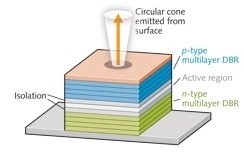
Laser Diodes and VCSELs are semiconductor lasers,  the simplest form of Solid State Lasers.  Laser diodes are commonly referred to as edge emitting laser diodes because the laser light is emitted from the edge of the substrate. The light emitting region of the laser diode is commonly called the emitter.  The emitter size and the quantity of emitters determine output power and beam quality of a laser diode. These Fabry Perot Diode Lasers with a single emission region (Emitter) are typically called laser diode chips, while a linear array of emitters is called laser diode bars. Laser diode bars typically use multimode emitters, the number of emitters per substrate can vary from 5 emitters to 100 emitters. VCSELs (Vertical Cavity Surface Emitting Laser) emit light perpendicular to the mounting surface as opposed to parallel like edge emitting laser diodes.  VCSELs offer a uniform spatial illumination in a circular illumination pattern with low speckle. If you want to read more about lasers in general, and help narrowing down the selection to find the right laser for you, check out our Knowledge Center for our Blogs, Whitepapers, and FAQ pages, as well as our Lasers 101 Page!VCSEL

What’s the difference between single transverse mode & single longitudinal mode?

What’s the difference between single transverse mode & single longitudinal mode?

Within the laser community, one of the most overused and often miscommunicated terms is the phrase “single mode.”  This is because a laser beam when traveling through air takes up a three-dimensional volume in space similar to that of a cylinder; and just as with a cylinder, a laser beam can be divided into independent coordinates each with their own mode structure.  For a cylinder we would call these the length and the cross-section, but as shown in the figure below for a laser beam, we define these as the transverse electromagnetic (TEM) plane and the longitudinal axis.   Both sets of modes are fundamental to the laser beam’s properties, since the TEM modes determine the spatial distribution of the laser beams intensity, and the longitudinal modes determine the spectral properties of the laser.  As a result, when a laser is described as being “single-mode” first you need to make sure that you truly understand which mode is being referred to.  Meaning that you must know if the laser is single transverse mode, single longitudinal mode, or both. Get all the information you need in this article: “What is Single Longitudinal Mode?” Get more information from our Lasers 101, Blogs, Whitepapers, FAQs, and Press Release pages in our Knowledge Center!

CW Lasers FAQs

How do I align my optical system?

How do I align my optical system?

Laser alignment can be a challenging task, but aligning a laser beam doesn’t have to be as complicated as it might seem with the right optical alignment tools and proper laser alignment techniques. Multiple optical alignment techniques have been developed over the years, utilized by technicians and engineers to simplify the alignment process. With the development of these universal laser beam alignment methods, along with some laser alignment tips and tricks, you don’t need to be a laser expert to perform your alignments with relative ease, ensuring your laser beam path is right where you want it to be and your beam is on target every time. Read our article, titled “Laser Alignment: HeNe Lasers, Methods, and Helpful Tips” to get the knowledge and advice you need for proper optical beam path alignment utilizing HeNe Lasers. Get more information from our Lasers 101, Blogs, Whitepapers, FAQs, and Press Release pages in our Knowledge Center!

Should I choose multimode or single-mode for Raman spectroscopy?

On the surface, this seems like a simple question since Raman is a nonlinear optical effect and therefore the tighter the beam can be focused the higher the conversion efficiency.  Seemingly a single-mode laser would be preferable, but in practice there are other factors that can complicate the situation. The first question you should ask yourself when considering which type of laser to choose is whether you are doing microscopy or bulk sampling.  If the answer to that question is microscopy, then you immediately should go with a single mode laser.  Since the goal of any microscopy system is to produce the highest resolution image possible, the number one consideration should be how tightly can the laser beam be focused down. However, there are several other considerations when choosing between multimode and single-mode. Learn which is best for you in this article: “Multimode vs Single-Mode Lasers for Raman Spectroscopy.” Get more information from our Lasers 101, Blogs, Whitepapers, FAQs, and Press Release pages in our Knowledge Center!

What is a CW Laser?
What is a CW Laser?

A CW or continuous-wave laser is any laser with a continuous flow of pump energy. It emits a constant stream of radiation, as opposed to a q-switched or mode-locked pulsed laser with a pulsed output beam. A laser is typically defined as having a pulse width greater than 250 ms. The first CW laser was a helium-neon (HeNe) gas laser, developed in 1960, which you can read more about in this blog “HeNe Lasers: Bright Past, Brighter Future.” If you want to read more about the types of CW Lasers we offer, check out the Overview of CW Lasers section on our Lasers 101 Page!

What is the best laser for optical surface flatness testing?

It is essential that the laser exhibit a high level of spectral stability, ensuring that any changes in the interference pattern are caused by features in the sample and not originating from the laser beam. In addition to spectral stability, high beam pointing stability ensures consistent measurements by mitigating any beam position drift concerning the position of the sample. Lasers with longer coherence lengths, and subsequently narrower linewidths, play an important role in determining the resolution of the measurement, as well as consideration of the wavelength used. Exhibiting both single longitudinal mode and single spatial mode has excellent benefits. Get more information from our Lasers 101, Blogs, Whitepapers, FAQs, and Press Release pages in our Knowledge Center!

What type of laser is best for Doppler LIDAR?

What type of laser is best for Doppler LIDAR?

Various LIDAR signal methods for measuring velocity have one critical requirement in common, the need for precise control over laser frequency. While a wide variety of single-frequency lasers have been used in Doppler LIDAR research, the industry as a whole has adopted single-frequency fiber lasers as the ideal light source. Fiber lasers have several advantages over traditional DPSS lasers, all of which derive from the geometry of the fiber optic itself, namely the innate ability to have an extremely long single-mode optical cavity. This geometry allows for the production of either extremely high-power, single-mode lasers producing unprecedented brightness, or extremely narrow band lasers, with near perfect single-frequency output. If you want to learn more about Doppler LIDAR, the critical considerations involved, and ideal laser sources, check out this whitepaper: “Single-Frequency Fiber Lasers for Doppler LIDAR.” Get more information from our Lasers 101, Blogs, Whitepapers, FAQs, and Press Release pages in our Knowledge Center!

What’s the difference between single transverse mode & single longitudinal mode?

What’s the difference between single transverse mode & single longitudinal mode?

Within the laser community, one of the most overused and often miscommunicated terms is the phrase “single mode.”  This is because a laser beam when traveling through air takes up a three-dimensional volume in space similar to that of a cylinder; and just as with a cylinder, a laser beam can be divided into independent coordinates each with their own mode structure.  For a cylinder we would call these the length and the cross-section, but as shown in the figure below for a laser beam, we define these as the transverse electromagnetic (TEM) plane and the longitudinal axis.   Both sets of modes are fundamental to the laser beam’s properties, since the TEM modes determine the spatial distribution of the laser beams intensity, and the longitudinal modes determine the spectral properties of the laser.  As a result, when a laser is described as being “single-mode” first you need to make sure that you truly understand which mode is being referred to.  Meaning that you must know if the laser is single transverse mode, single longitudinal mode, or both. Get all the information you need in this article: “What is Single Longitudinal Mode?” Get more information from our Lasers 101, Blogs, Whitepapers, FAQs, and Press Release pages in our Knowledge Center!

Pulsed Lasers FAQs

What is a Pulsed Laser?

A pulsed laser is any laser that does not emit a continuous-wave (CW) laser beam. Instead, they emit light pulses at some duration with some period of ‘off’ time between pulses and a frequency measured in cycles per second (Hz). There are several different methods for pulse generation, including passive and active q-switching and mode-locking. Pulsed lasers store energy and release it in these pulses or energy packets. This pulsing can be very beneficial, for example, when machining certain materials or features. The pulse can rapidly deliver the stored energy, with downtime in between, preventing too much heat from building up in the material. If you would like to read more about q-switches and the pros and cons of passive vs active q-switches, check out this blog “The Advantages and Disadvantages of Passive vs Active Q-Switching,” or check out our Overview of Pulsed Lasers section on our Lasers 101 Page!

What is the best laser for LIDAR?

What is the best laser for LIDAR?

There are actually numerous laser types that work well for various LIDAR and 3D Scanning applications. The answer comes down to what you want to measure or map. If your target is stationary, and distance is the only necessary measurement, short-pulsed lasers, with pulse durations of a few nanoseconds (even <1ns) and high pulse energy are what you’re looking for. This is also accurate for 3D scanning applications (given a stationary, albeit a much closer target), but select applications can also benefit from frequency-modulated, single-frequency (narrow-linewidth) fiber lasers. If your target is moving, and speed is the critical measurement, you need a single-frequency laser to ensure accurate measurement of the Doppler shift. If you want to learn more about the various forms of LIDAR and the critical laser source requirements, check out our LIDAR page for a list of detailed articles, as well as all the LIDAR laser source products we offer. Get more information from our Lasers 101, Blogs, Whitepapers, FAQs, and Press Release pages in our Knowledge Center!

What is the best laser for tattoo removal?

What is the best laser for tattoo removal?

The best laser for tattoo removal depends on factors like wavelength versatility, pulse duration, and energy output to effectively target various ink colors while minimizing skin damage. Q-switched or ultrafast lasers with pulse durations of 100 ps to 10 ns and a fluence of ~10 J/cm² are ideal for fragmenting ink via selective photothermolysis. For example, the Lampo 266-1064 nm offers multiple wavelengths (266 nm, 532 nm, 1064 nm) for multi-color tattoos, while the Nimbus 770-1064 nm provides customizable sub-nanosecond pulses for precision. The Quantas-Q1 delivers high pulse energy (up to 32 mJ at 1064 nm) for efficient treatments.

For more details on pulsed lasers for tattoo removal applications, see our blog, “Choosing the Right Laser for Tattoo Removal: Key Considerations‘! Get more information from our Lasers 101, Blogs, Whitepapers, and FAQ pages in our Knowledge Center!

We’re here to offer expert advice & to you help select the right laser for your application.
Contact Us Here or email us at [email protected]!

What is the difference between active and passive q-switching?

There are a wide variety of q-switch technologies, but the technique as a whole can be broken down into two primary categories of q-switches, passive and active. Active q-switches could be a mechanical shutter device, an optical chopper wheel, or spinning mirror / prism inside the optical cavity, relying on a controllable, user set on/off ability. Passive q-switches use a saturable absorber, which can be a crystal (typically Cr:YAG), a passive semiconductor, or a special dye, and automatically produce pulses based on it’s design. Both passive and active q-switching techniques produce short pulses and high peak powers, but they each have their pros and cons. When choosing between actively q-switched and passively q-switched lasers, the key is to understand the tradeoffs between cost/size and triggering/energy and decide which is best for your particular application. Read more about these tradeoffs in this article: “The Advantages and Disadvantages of Passive vs Active Q-Switching.” Get more information from our Lasers 101, Blogs, Whitepapers, FAQs, and Press Release pages in our Knowledge Center!

What type of laser is used for LIBS?

A laser source used for LIBS must have a sufficiently large energy density to ablate the sample in as short a time possible. Typically, pulsed DPSS lasers take center stage here. However, it’s been shown that pulsed fiber lasers can also be a great option. For example, you could utilize fiber lasers to measure detection limits as low as micrograms per gram (µg/g) for many common metals and alloys, including aluminum, lithium, magnesium, and beryllium. Analytical performances showed to be, in some cases, close to those obtainable with a traditional high-energy Nd:YAG laser. The beam quality of fiber lasers, in conjunction with longer pulse widths, resulted in significantly deeper and cleaner ablation craters. If you want to learn more about LIBS and ideal laser sources, check out either this blog: “OEM Fiber Lasers for Industrial Laser Induced Breakdown Spectroscopy,” or this blog: “Laser Induced Breakdown Spectroscopy (LIBS) in Biomedical Applications.” Get more information from our Lasers 101, Blogs, Whitepapers, FAQs, and Press Release pages in our Knowledge Center!

Which IR laser is best for laser target designation?

There are many different types of laser designation systems used by the military today. Still, they all share the same basic functionality and outcome. At a glance, the laser requirements seem relatively straightforward. The laser needs to be invisible to the human eye, and it needs to have a programmable pulse rate. Still, when you look in more detail, many small factors add up to big problems if not appropriately addressed. Excellent divergence and beam pointing stability, low timing jitter, and rugged, low SWaP design are all critical features of a good laser designation source. Read more on these critical features in this article: “What are the Critical Laser Source Requirements for Laser Designation?” Get more information from our Lasers 101, Blogs, Whitepapers, FAQs, and Press Release pages in our Knowledge Center!