
 BUY NOW
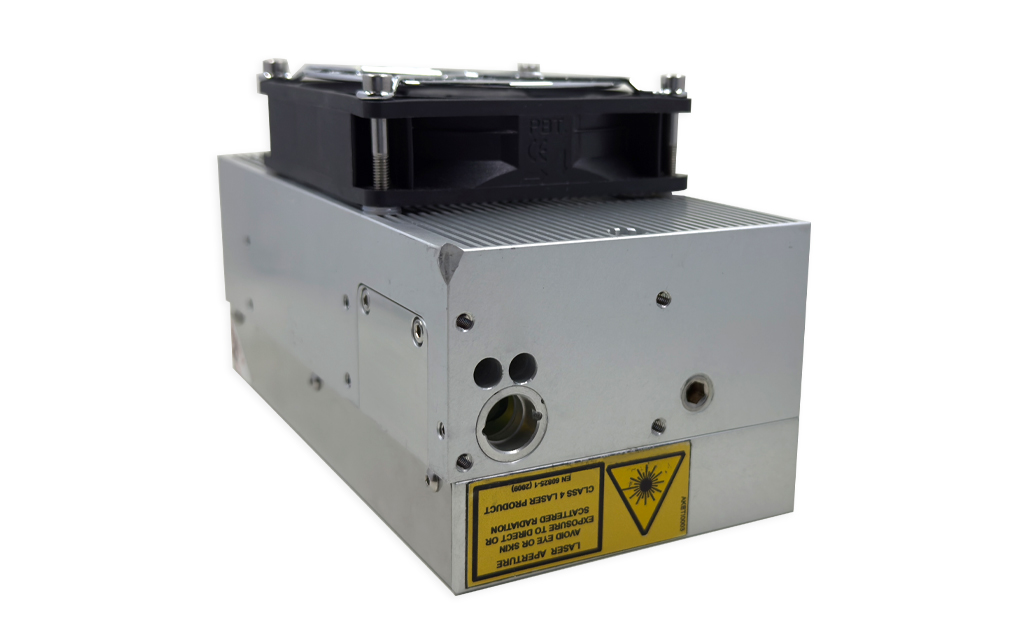
How to evaluate optical, timing, mechanical & system requirements when replacing an obsolete laser source
When a laser source is discontinued, finding a replacement is rarely as simple as matching wavelength and output power.
The replacement must still work inside the existing optical, electrical, mechanical, thermal, and control architecture – and some specifications may be much more important to the application than others.
The goal is therefore not always to find an identical laser. It is to identify the requirements that cannot change, determine where the system has usable tolerance, and then evaluate available standard, configurable, or custom sources against those constraints.
The discontinued Coherent Helios and the Bright Solutions Wedge family provide a useful example, but the same process applies whenever an OEM, laboratory, or production system must replace an obsolete laser source.
A Replacement Does Not Always Need Identical Specifications
It is tempting to start by copying every value from the discontinued laser’s datasheet and looking for an exact match. That can unnecessarily eliminate viable alternatives.
Instead, separate the specification into two groups:
Hard Requirements
Specifications the existing system or process genuinely cannot tolerate changing. Examples may include wavelength, mounting envelope, pulse timing, electrical interface, or a minimum pulse energy.
Flexible Requirements
Specifications that can vary within an acceptable range or be accommodated through optical, mechanical, electrical, or software changes. These may include package dimensions, beam diameter, repetition rate, or output level depending on the system.
A successful replacement is one that satisfies the application and integration requirements – not necessarily one whose datasheet is numerically identical to the obsolete source.
What Should You Compare When Replacing a Laser?
Start with the original laser specification, but also document how the laser is actually being used in the current system. The following requirements often determine whether an alternative is practical.
| Wavelength | Target wavelength, allowable tolerance, spectral bandwidth, and any wavelength-stability requirement. |
| Power / Pulse Energy | Minimum and maximum useful output at the actual operating repetition rate, not simply the highest catalog value. |
| Pulse Width | Required pulse-duration range and whether process performance depends on peak power or pulse shape. |
| Repetition Rate | Required operating range, including single-shot, externally triggered, or variable-frequency operation where needed. |
| Triggering & Timing | External trigger requirements, trigger delay, timing jitter, pulse-on-demand behavior, and synchronization with the rest of the system. |
| Beam Characteristics | Beam quality, diameter, divergence, polarization, pointing, and how the beam interfaces with existing optics. |
| Mechanical Package | Footprint, mounting pattern, beam height, connector locations, weight, and available space for adapters or redesign. |
| Cooling & Electrical | Input voltage, current, power supply, air/water/contact cooling, heat load, and environmental constraints. |
| Control Interface | Trigger signals, analog or digital control, communication protocol, software, monitoring, interlocks, and system automation. |
| Environmental / Qualification | Temperature, humidity, shock, vibration, sealing, airborne or defense requirements, and any existing qualification burden. |
| Lifecycle & Availability | Production status, expected availability, manufacturer support, customization path, serviceability, and supply continuity. |
Match the Actual Operating Point, Not Just the Maximum Specification
A discontinued laser may be capable of 100 µJ per pulse, for example, while the existing system only uses 60 µJ. A potential replacement capable of 180 µJ is not automatically better – what matters is whether it can reliably produce the required output at the required repetition rate, pulse width, beam condition, and timing behavior.
The same applies to average power, repetition rate, pulse duration, and other parameters that may change together as the operating point changes.
If possible, document the settings currently used in production or in the experiment. Those values are usually more useful for replacement selection than the maximum values printed on the original datasheet.
Case Study: Replacing a Discontinued Coherent Helios Laser
The discontinued Coherent Helios family is a good example of why replacement selection requires more than finding a laser with similar headline specifications.
One common Helios configuration, the HELIOS 1064-5-50, operated at 1064 nm with approximately 100 µJ maximum pulse energy and a sub-nanosecond pulse width. The Bright Solutions Wedge family provides several short-pulse DPSS configurations that overlap with those requirements and may be strong candidates for systems previously using Helios.
That does not make Wedge an automatic drop-in replacement. The correct Wedge model – or another laser entirely – depends on the specific Helios configuration and the requirements of the existing system.
Example Specification Comparison
| Specification | Coherent HELIOS 1064-5-50 | Wedge HF 1064 Example |
|---|---|---|
| Wavelength | 1064 nm | 1064 nm |
| Pulse Energy | Up to 100 µJ | Up to 180 µJ at 10 kHz |
| Pulse Width | Approx. 0.69 ns | Approx. 0.7–2.5 ns |
| Repetition Rate | Single shot to 70 kHz | 10–100 kHz standard; lower-rate options available depending on configuration |
This comparison is only a starting point. Exact specifications vary by Helios and Wedge model, configuration, and operating condition. Mechanical, beam, timing, electrical, control, cooling, and qualification requirements must also be reviewed before selecting a replacement.
When a Different Specification Can Still Work
Some replacement projects genuinely require near-identical performance. Others have more freedom than the legacy datasheet suggests.
Examples include:
- A slightly different beam diameter that can be accommodated with existing or revised beam-expanding optics.
- A higher available pulse energy that can be operated below its maximum or attenuated.
- A different mechanical footprint that can be handled with an adapter plate when beam height and optical access remain manageable.
- A broader repetition-rate range when only one operating point is actually required.
- A different control interface when the OEM system software or electronics can be modified.
Conversely, a small difference can be unacceptable when it affects a tightly qualified process, optical alignment, timing budget, environmental certification, or regulated system.
For OEM Systems, Replacement Selection is Also a Lifecycle Decision
Replacing an obsolete laser should solve more than today’s immediate shortage. For an OEM or production system, the replacement source may need to remain available and supportable for years.
Before committing to a new source, consider:
- Current production status and expected lifecycle
- Availability of standard versus custom configurations
- Manufacturer support for OEM quantities
- Service and repair strategy
- Configuration-control requirements
- Qualification or revalidation effort
- Expected annual quantity and future scaling
A technically workable laser that introduces another supply problem shortly afterward may not be the best long-term replacement.
What Should I Provide When Looking for a Replacement Laser?
If you still have the original datasheet or part number, send it. Even better, include what you know about how the laser is actually being operated.
|
Need help replacing an obsolete laser source? |
You do not need every specification finalized first. RPMC can help separate the true system constraints from the specifications that have usable tolerance, then down-select standard, configurable, or custom laser sources that fit the application.