
Laser Diode Selection & Down-Selection

Laser Diodes

Standard, configurable, and custom laser diode sources for OEM, research, industrial, sensing, medical, and other technical applications.

RPMC offers a broad range of laser diode technologies and configurations, from low-power emitters through high-power and fiber-coupled sources. Start with the requirements you already know, then use the available filters or work with RPMC to narrow the options.

  • Wavelength & power: Compare diode sources by required wavelength or wavelength range and optical output power.
  • Output & configuration: Evaluate free-space and fiber-coupled options, package styles, fiber characteristics, connectors, and other integration requirements.
  • Beam & spectral requirements: Narrow the selection by spatial mode, linewidth, wavelength stability, DFB, VBG stabilization, single-frequency behavior, and other source requirements.
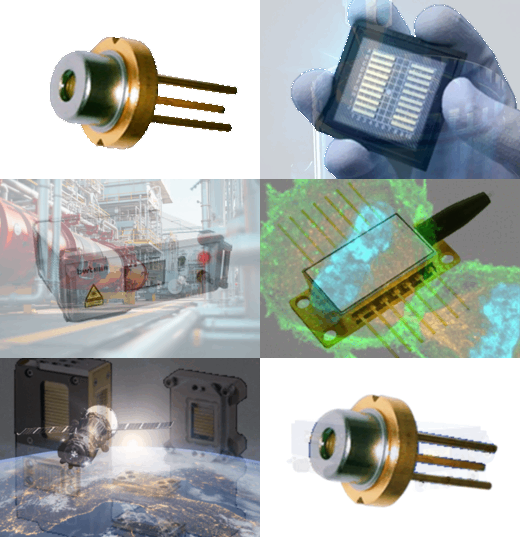
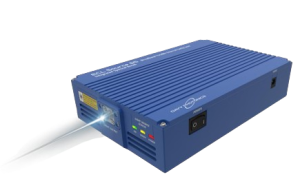
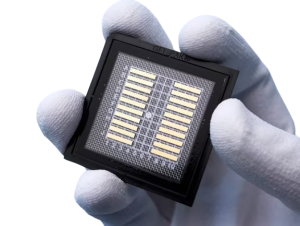
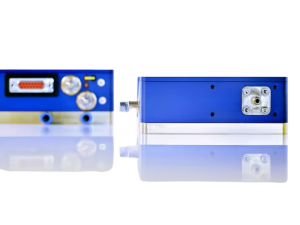
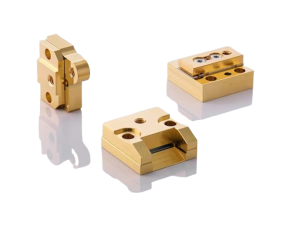
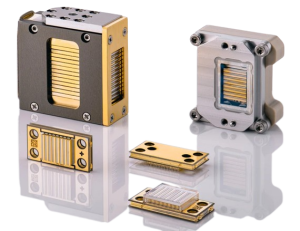
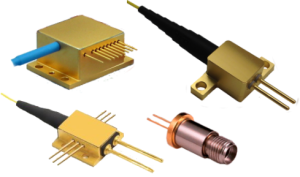
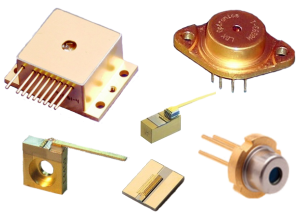
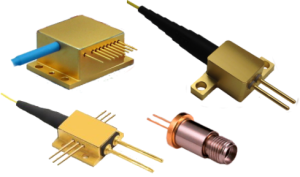
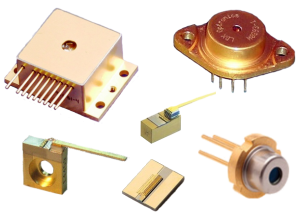
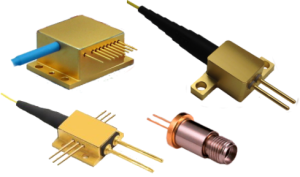
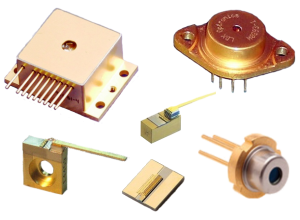
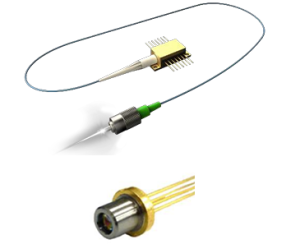
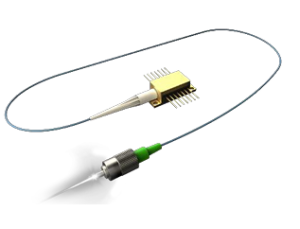
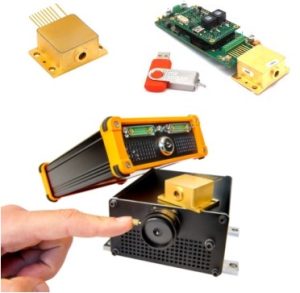
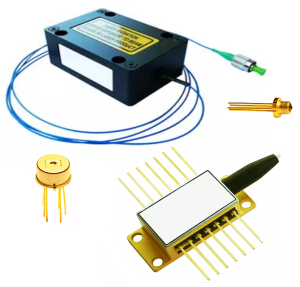
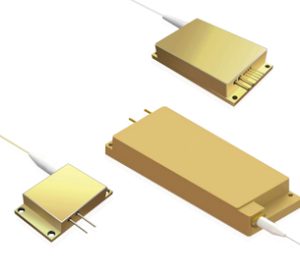
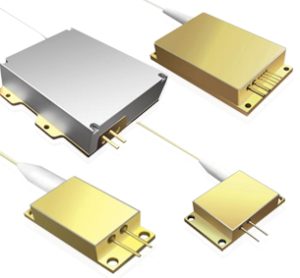
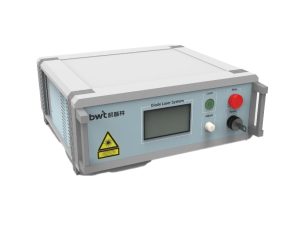
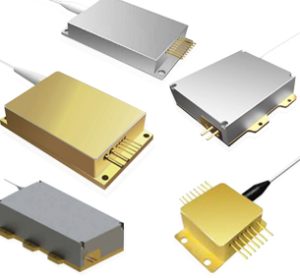
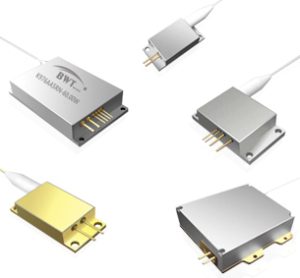
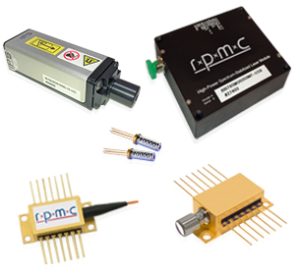
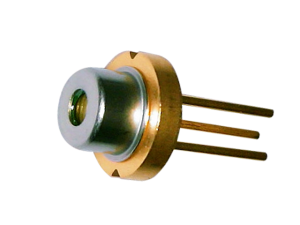
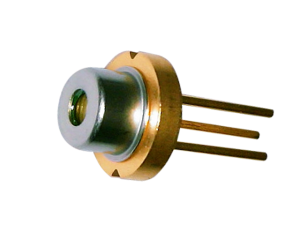
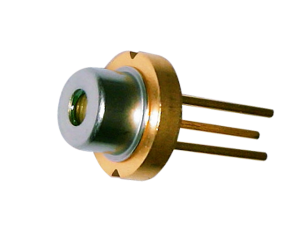
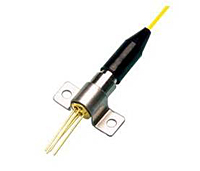
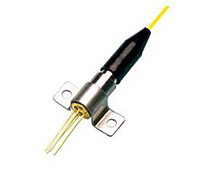
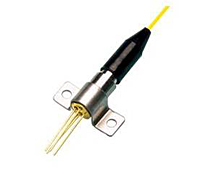
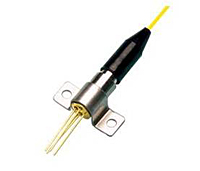
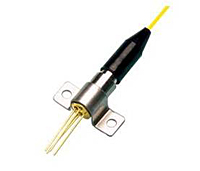
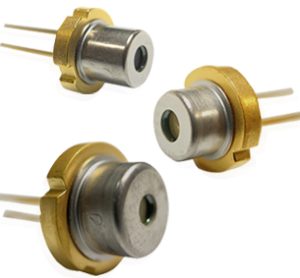
Examples of laser diode packages and configurations

Not sure which laser diode fits your requirements?

RPMC can help compare wavelength, power, output configuration, beam and spectral characteristics, packaging, fiber delivery, and integration requirements before you request a quote.

How Should I Start Narrowing Laser Diode Options?

Laser diode requirements often overlap across wavelength, power, package, beam delivery, spatial mode, and spectral performance. Start with the specifications that are already fixed in your system, then narrow the remaining options. RPMC can help identify the practical tradeoffs when several configurations could fit.

Wavelength & Optical Power

Start here when the required wavelength and output power are already defined for the system.

Use the wavelength and power filters to narrow the available diode sources, then compare the remaining options by configuration, package, beam characteristics, and other requirements.

Output & Beam Delivery

Start here when free-space versus fiber-coupled output is an important part of the design.

Depending on the source, selection may involve fiber core size, numerical aperture, connector type, beam delivery, polarization, collimation, or other optical-interface requirements.

Mode & Spectral Performance

Start here when linewidth, wavelength stability, spatial mode, or spectral behavior is critical to the application.

Available options include single-mode & multimode sources, DFB lasers, wavelength-stabilized or VBG-stabilized diodes, narrow-linewidth sources, and other specialized configurations.

Package & OEM Integration

Start here when mechanical, electrical, thermal, or production requirements narrow the available options.

RPMC can help compare component-level packages, modules, fiber-coupled assemblies, drive and thermal requirements, configurable products, and custom solutions for OEM integration.

Not every requirement is represented by a filter

The product table provides a practical starting point for narrowing the portfolio by category, type, wavelength, and power. Requirements such as package, connector, fiber characteristics, linewidth, wavelength stabilization, beam properties, drive electronics, customization, or OEM quantities may require a closer comparison of individual configurations. If the table does not make the choice obvious, RPMC can help down-select the available options.

Compare Laser Diode Options

The products below include laser diode sources spanning a range of wavelengths, output powers, source architectures, packages & integration formats.

Use the filters to narrow the available sources by category, type, wavelength, and power. If several options appear similar, send us your technical requirements and RPMC can help determine which configurations are the best fit.
Filters Reset

Category

Type

Wavelength Selection

Power Selection

Picture Part Number Wavelength (nm) Description Type
HL-SM: Single-Mode Laser Diode HL-AR 689, 698, 671 Laser Diode, Single mode, 671/689/698nm, AR coated, up to 210mW Single Emitter
HL-MM: Multimode Laser Diode HL-MM 405, 630, 638, 730, 830, 850 Laser Diode, Multimode, 405-850nm, up to 2.4W Single Emitter
HL-SM: Single-Mode Laser Diode HL-SM 405, 630, 660, 730, 830, 850 Laser Diode, Single mode, 405-850nm, up to 300mW Single Emitter
ISB5 integrated spectral bench broadband tunable external cavity laser G5 ISB5 1050, 1250, 930, 785, 850, 1210, 1300, 1350, 1410, 1550, 1590, 1625, 1680, Multiple Wavelength Options, Tunable Laser Diode, Turnkey, Narrow Linewidth, CW, Center wavelength option 785-1680nm, >10 mW per wavelength Broadband Lasers, Tunable Lasers, Narrow Linewidth, Fiber-Coupled, Turn-Key System, Customizable
JDL-Unmounted Bars: 760-1070nm Unmounted Laser Diode Bars & Single Emitters JDL-Unmounted Bars 760-1070, 808, 915, 940, 976 Laser Diode, Multimode, Unmounted bar, Infrared, 760-1070nm, up to 300W CW/500W QCW Single Emitter, Array (Bar), Customizable
JOLD-FC: 760-1070 & 1470nm Fiber-Coupled Laser Diode Modules JOLD-FC 760-1070, 808, 880, 915, 938, 976, 1470 Laser Diode, Multimode, Fiber-coupled, Infrared, 760-1470nm, up to 400W Array (Bar), Fiber-Coupled
JOLD-Open Heatsinks: 760-1070nm Single Laser Diode Bar Package JOLD-Open Heatsinks 760-1070, 808, 880, 915, 938, 976 Laser Diode, Multimode, Bar package, Infrared, 760-1070nm, up to 300W Array (Bar), Customizable
JOLD-Stacks: 760-1070nm High-Power Laser Diode Stacks JOLD-Stacks 760-1070, 808, 940 Laser Diode, Multimode, Bar stack, Infrared, 760-1070nm, up to 2400W Array (Bar), Customizable
LDX-IR-FC: Fiber coupled Infrared Multimode Laser Diode LDX-IR-FC 1015, 750, 780, 797, 808, 830, 860, 915, 940, 980, 1064, 1130, 1210, 1280, 1370 Laser Diode, Multimode, Fiber-coupled, Infrared, 750-1400nm, up to 12.8W Single Emitter, Fiber-Coupled, Made in the USA, Customizable
LDX-IR-FS: Free Space Infrared Multimode Laser Diode LDX-IR-FS 750, 780, 797, 808, 830, 860, 915, 940, 980, 1064, 1130, 1210, 1280, 1370 Laser Diode, Multimode, Infrared, 750-1400nm, up to 16W Single Emitter, Made in the USA, Customizable
LDX-SWIR-FC: Fiber coupled Short-wave Infrared Multimode Laser Diode LDX-SWIR-FC 1470, 1550, 1620, 1640, 1675, 1850 Laser Diode, Multimode, Fiber-coupled, SWIR, 1400-3000nm, up to 5.6W "Eye Safe", Single Emitter, Fiber-Coupled, Made in the USA, Customizable
LDX-SWIR-FS: Free Space Short-Wave Infrared Multimode Laser Diode LDX-SWIR-FS 1470, 1550, 1620, 1675, 1850 Laser Diode, Multimode, SWIR, 1400-3000nm, up to 7W "Eye Safe", Single Emitter, Made in the USA, Customizable
LDX-VIS-FC: Fiber coupled Visible Multimode Laser Diode LDX-VIS-FC 445, 520, 622, 630, 660, 685, 735, 750 Laser Diode, Multimode, Fiber-coupled, Visible, 400-750nm, up to 4W Single Emitter, Fiber-Coupled, Made in the USA, Customizable
LDX-VIS-FS: Free Space Visible Multimode Laser Diode LDX-VIS-FS 445, 520, 622, 630, 660, 685, 735, 750 Laser Diode, Multimode, Visible, 400-750nm, up to 5W Single Emitter, Made in the USA, Customizable
fiber-coupled 14-pin butterfly packaged and TO-Can packaged superluminescent diode SLED optical spectral engine OSE3 1278, 1512, 1531.1, 1650.5, Multiple Wavelength Options Laser Diode, Narrow Linewidth, CW/Pulsed, Center wavelength option 1530-1610nm, ≥10 mW DFB, Narrow Linewidth, Single Longitudinal Mode (SLM), Fiber-Coupled, Customizable
fiber-coupled 14-pin butterfly packaged superluminescent diode SLED optical spectral engine OSE6 1260, 1383, 1648, 1653, 1665, 1550, Multiple Wavelength Options Laser Diode, 14-Pin Butterfly, Narrow Linewidth, CW/Pulsed, Center wavelength option 1260-1665nm, Up to 10 mW CW, 50 mW pulsed FBG, Narrow Linewidth, Long Coherence Length, Single Longitudinal Mode (SLM), Fiber-Coupled, Customizable
PowerMir: 4-9 µm High Power Quantum Cascade Laser PowerMir 4000, 4600, 4800, 9400 Quantum Cascade Laser (QCL), Spectrally Multimode, QCW, 4-9µm, up to 2W LD Module, Single Emitter, QCL, Turn-Key System
REPXXXX-DM: Discrete-Mode (DFB Like) Stabilized Laser Diode REPXXXX-DM 759-764, 1260-1310, 1500-1560, 1550, 1560-1600, 1635-1670, 1720-1770, 2300-2333 Laser Diode, Stabilized, 1278-2327nm, up to 20mW "Eye Safe", LD Module, Single Emitter, Narrow Linewidth, Single Longitudinal Mode (SLM), Fiber-Coupled
REPXXXX-FP: Single-Mode Laser Diode REPXXXX-FP 759-764, 1260-1310, 1500-1560, 1550, 1560-1600, 1635-1670, 1720-1770, 2300-2333, Multiple Wavelength Options Laser Diode, Single mode, 1280-2300nm, up to 20mW "Eye Safe", LD Module, Single Emitter, Fiber-Coupled
RPK-IR-MM: Fiber-Coupled IR Multimode Laser Diodes RPK-IR-MM 793, 808, 940, 976, 980, 1064 Laser Diode, Multimode, Fiber-coupled, 793nm-1940nm, up to 300W Single Emitter, Multi-Emitter, Fiber-Coupled
RPK-IR-STAB: Fiber-Coupled IR Stabilized Laser Diode RPK-IR-STAB 785, 808, 878, 976, 1064 Laser Diode, Wavelength Stabilized, Fiber-coupled, Infrared, 760-1400nm, up to 430W Multi-Emitter, VBG, Narrow Linewidth, Fiber-Coupled
RPK-TK: Fiber-Coupled Turn-Key Direct Diode Laser System RPK-TK 405, 445, 520, 635, 660, 690, 785, 808, 830, 915, 976, 1064 Laser Diode, Wavelength Stabilized, Fiber-coupled, 405-1064nm, up to 3000W Multi-Emitter, Fiber-Coupled, Turn-Key System
RPK-VIS-MM: Fiber-Coupled Visible Multimode Laser Diode RPK-VIS-MM 405, 525, 635 Laser Diode, Multimode, Fiber-coupled, Visible, 400-750nm, up to 200W Single Emitter, Multi-Emitter, Fiber-Coupled
RPK-VIS-SM: Fiber-Coupled Visible Single Mode Laser Diode RPK-VIS-SM 520, 635 Laser Diode, Single mode, Fiber-coupled, Visible, 400-750nm, up to 40mW Single Emitter, Multi-Emitter, Fiber-Coupled
RVBG: Stabilized Laser Diode RVBG 633, 680, 785, 808, 860, 976, 1030, 1064 Laser Diode, Stabilized, 633-1064nm, up to 600mW LD Module, Single Emitter, VBG, Narrow Linewidth, Single Longitudinal Mode (SLM), Fiber-Coupled, Made in the USA
RWLD-DFB: DFB Laser Diode RWLD-DFB 1064, 1270, 1460, 1485, 1660 Laser Diode, Wavelength Stabilized, SWIR, 1270-1600nm, up to 30mW Single Emitter, DFB, Narrow Linewidth, Single Longitudinal Mode (SLM)
RWLD-IR-MM: Infrared Multimode Laser Diode RWLD-IR-MM 760, 780, 808, 850, 880, 915, 940, 980, 1064 Laser Diode, Multimode, Infrared, 760-1064nm, up to 20W Single Emitter
RWLD-IR-SM: Infrared Single Mode Laser Diode RWLD-IR-SM 760, 780, 808, 850, 880, 915, 940, 980, 1064 Laser Diode, Single mode, Infrared, 760-1400nm, up to 300mW Single Emitter
RWLD-SWIR-MM: SWIR Multimode Laser Diode RWLD-SWIR-MM 1450, 1470, 1490, 1535, 1550, 1555, 1570, Multiple Wavelength Options Laser Diode, Multimode, SWIR, 1450-1920nm, up to 3W "Eye Safe", Single Emitter
RWLD-VIS-MM: Visible Multimode Laser Diode RWLD-VIS-MM 445, 520, 635, 660 Laser Diode, Multimode, Visible, 445-660nm, up to 3W Single Emitter
RWLD-VIS-SM: Visible Single Mode Laser Diode RWLD-VIS-SM 405, 460, 480, 488, 495, 505, 510, 520, 635, 650, 660 Laser Diode, Single mode, Visible, 445-660nm, up to 300mW Single Emitter
RWLP-DFB: DFB Stabilized Laser Diode RWLP-DFB 1270, 1310, 1410, 1450, 1470, 1550, 1610, 1650, Multiple Wavelength Options Laser Diode, Wavelength Stabilized, Fiber-coupled, SWIR, 1270-1460nm, up to 100mW Single Emitter, DFB, Narrow Linewidth, Single Longitudinal Mode (SLM), Fiber-Coupled
RWLP-IR-MM: Infrared Multimode Laser Diode RWLP-IR-MM 980, 1064 Laser Diode, Multimode, Fiber-coupled, Infrared, 750-1400nm, up to 12W Single Emitter, Fiber-Coupled
RWLP-IR-SM: Infrared Single Mode Laser Diode RWLP-IR-SM 980, 1064 Laser Diode, Single mode, Fiber-coupled, Infrared, 785-1310nm, up to 100mW Single Emitter, Fiber-Coupled
RWLP-SWIR-MM: Short-Wave Infrared Multimode Laser Diode RWLP-SWIR-MM 1450, 1470, 1490, 1530, 1550, 1570, Multiple Wavelength Options Laser Diode, Multimode, Fiber-coupled, SWIR, 1450-1570nm, up to 12W "Eye Safe", Single Emitter, Fiber-Coupled
RWLP-UV-MM: Ultra Violet Multimode Laser Diode RWLP-UV-MM 375 Laser Diode, Multimode, Fiber-coupled, Ultraviolet, 375nm, up to 100W Single Emitter, Fiber-Coupled
RWLP-VIS-MM: Visible Multimode Laser Diode RWLP-VIS-MM 405, 445, 520, 660 Laser Diode, Multimode, Fiber-coupled, Visible, 405-660nm, up to 12W Single Emitter, Fiber-Coupled
RWLP-VIS-SM: Visible Single Mode Laser Diode RWLP-VIS-SM 405, 445, 520, 660 Laser Diode, Single mode, Fiber-coupled, Visible, 400-660nm, up to 100mW Single Emitter, Fiber-Coupled
RWLS-RGB-TK: White Laser Diode Module RWLS-RGB-TK 445, 520, 635 Laser Diode, Multimode, Fiber-coupled, RGB, White Light, up to 100mW Single Emitter, Multi Wavelength, Fiber-Coupled, Turn-Key System, Customizable
UniMir: 10-17um: DFB Narrow Linewidth Gas Sensing QCL UniMir 13400, 14000, 14900, 16000, Multiple Wavelength Options Quantum Cascade Laser (QCL), Wavelength Stabilized, 10-19um, up to 20mW LD Module, Single Emitter, QCL, DFB, Narrow Linewidth

Related Semiconductor & Broadband Source Technologies

A conventional laser diode is not always the best match for the required wavelength, spectrum, or coherence characteristics. If the available diode options do not fit the requirement, related semiconductor and broadband source technologies may provide a better path.

SLEDs / SLDs

For broadband, low-coherence semiconductor output.
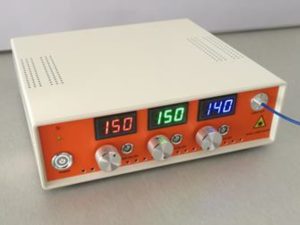
SLEDs combine semiconductor-source brightness with broader spectral output and reduced coherence compared with conventional laser diodes.
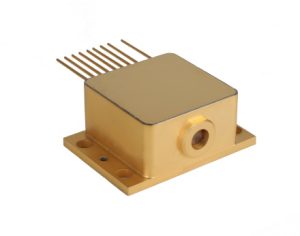
Explore SLEDs / SLDs →

ASE Sources

For broader, low-coherence output at higher power levels.

ASE sources can support sensing, optical testing, metrology, imaging, and other systems where broadband output is more important than narrow-linewidth laser emission.

Explore ASE Sources →

Quantum Cascade Lasers

For semiconductor-laser requirements extending into the MWIR and LWIR.

QCLs use a different semiconductor-laser architecture than conventional interband laser diodes and can be well suited to infrared spectroscopy, sensing, and detection.

Explore Quantum Cascade Lasers →

What If the Product Table Does Not Show an Exact Match?

Many laser diode requirements cannot be reduced to wavelength and power alone. Package, beam delivery, spectral characteristics, thermal design, electrical interface, quantities, and customization can determine which configuration is practical.

RPMC can help compare standard, configurable, and custom options when the product table gets you close but does not provide an obvious answer.

What to Send RPMC

  • required wavelength or wavelength range
  • required optical power
  • free-space or fiber-coupled output
  • spatial mode, linewidth, or wavelength-stability requirements
  • package, connector, fiber, or beam-delivery constraints
  • prototype, OEM, or production quantities

Where We Can Help Narrow the Options

  • source architecture and performance tradeoffs
  • package, fiber, connector, and integration choices
  • standard versus configurable or custom designs
  • unusual wavelength or spectral requirements
  • thermal and electrical integration
  • OEM quantities and longer-term supply needs

About “Eye-Safe” and Retina-Safe Wavelengths

The term “eye-safe” is commonly used for wavelength regions in which more optical radiation is absorbed before reaching the retina, sometimes described more specifically as retina-safe.

This does not mean that a laser is harmless under all operating conditions. Actual laser safety depends on wavelength, power, exposure, beam characteristics, classification, and the applicable safety limits. Explore RPMC “Eye-Safe” Laser Options →

Still narrowing the laser diode options?

Tell us the wavelength, power, output, spectral, packaging, and integration requirements you already know. RPMC can help identify the most practical standard, configurable, or custom options for your application.
Component FAQs

Can I operate multiple laser diodes from the same power supply?

Can I operate multiple laser diodes from the same power supply?

The same power supply can drive multiple laser diodes if they are connected in series, but they must never be connected in parallel. When two diodes are connected in series, they will function properly as long as the compliance voltage is large enough to cover the voltage drop across each diode. For example, suppose you are trying to power two diode lasers, each with an operating voltage of 1.9 V, and connect the two in series. In that case, the pulsed or CW laser driver must have a total voltage capacity greater than 3.8 V. This configuration works because diodes share the same current when connected in series. In contrast, when two diodes are connected in parallel, the current is no longer shared between the two diodes. Get more details on the topic in this article: “Can I Operate Multiple Laser Diodes From the Same Power Supply?” Get more information from our Lasers 101, Blogs, Whitepapers, FAQs, and Press Release pages in our Knowledge Center!

Can laser diodes emit green, blue, or UV light?

Can laser diodes emit green, blue, or UV light?

The output wavelength of a semiconductor laser is based on the difference in energy between the valance and conduction bands of the material (bandgap energy). Since the energy of a photon is inversely proportional to its wavelength, this means that a larger bandgap energy will result in a shorter emission wavelength. Due to the relatively wide bandgap energy of 3.4 eV, gallium nitride (GaN) is ideal for the production of semiconductor optoelectronic devices, producing blue wavelength light without the need for nonlinear crystal harmonic generation. Since the mid-’90s, GaN substrates have been the common material utilized for blue LEDs. In recent years, GaN based laser technology has provided blue, green and UV laser diodes, now available in wavelengths from 375 nm to 521 nm, with output powers exceeding 100 watts. Read our article, titled “Gallium Nitride (GaN) Laser Diodes: Green, Blue, and UV Wavelengths” to learn more about GaN Based Laser Diodes, available through RPMC. Get more information from our Lasers 101, Blogs, Whitepapers, and FAQs pages in our Knowledge Center!

How long will a laser diode last?

Honestly, it depends on several factors, and there is no simple chart to cover everything. Typical diode lifetimes are in the range of 25,000 to 50,000 hours. Though, there are lifetime ratings outside this range, depending on the configuration. Furthermore, there are a wide range of degradation sources that contribute to a shorter lifespan of laser diodes. These degradation sources include dislocations that affect the inner region, metal diffusion and alloy reactions that affect the electrode, solder instability (reaction and migration) that affect the bonding parts, separation of metals in the heatsink bond, and defects in buried heterostructure devices. Read more about diode lifetime and contributing factors in this article: “Understanding Laser Diode Lifetime.” Get more information from our Lasers 101, Blogs, Whitepapers, FAQs, and Press Release pages in our Knowledge Center!

What factors affect the lifetime of laser diodes?

There are a great many factors that can increase or decrease the lifetime of a laser diode. One of the main considerations is thermal management. Mounting or heatsinking of the package is of tremendous importance because operating temperature strongly influences lifetime and performance. Other factors to consider include electrostatic discharge (ESD), voltage and current spikes, back reflections, flammable materials, noxious substances, outgassing materials (even thermal compounds), electrical connections, soldering method and fumes, and environmental considerations including ambient temperature, and contamination from humidity and dust. Read more about these critical considerations and contributing factors in this article: “How to Improve Laser Diode Lifetime: Advice and Precautions on Mounting.” Get more information from our Lasers 101, Blogs, Whitepapers, FAQs, and Press Release pages in our Knowledge Center!

What is a laser diode?

A Laser Diode or semiconductor laser is the simplest form of Solid-State Laser. Laser diodes are commonly referred to as edge emitting laser diodes because the laser light is emitted from the edge of the substrate. The light emitting region of the laser diode is commonly called the emitter. The emitter size and the number of emitters determine output power and beam quality of a laser diode. Electrically speaking, a laser diode is a PIN diode. The intrinsic (I) region is the active region of the laser diode. The N and P regions provide the active region with the carriers (electrons and holes). Initially, research on laser diodes was carried out using P-N diodes. However, all modern laser diodes utilize the double-hetero-structure implementation. This design confines the carriers and photons, allowing a maximization of recombination and light generation. If you want to start reading more about laser diodes, try this whitepaper “How to Improve Laser Diode Lifetime.” If you want to read more about the Laser Diode Types we offer, check out the Overview of Laser Diodes section on our Lasers 101 Page!

What is the difference between laser diodes and VCSELs?

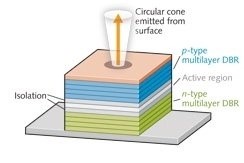
Laser Diodes and VCSELs are semiconductor lasers,  the simplest form of Solid State Lasers.  Laser diodes are commonly referred to as edge emitting laser diodes because the laser light is emitted from the edge of the substrate. The light emitting region of the laser diode is commonly called the emitter.  The emitter size and the quantity of emitters determine output power and beam quality of a laser diode. These Fabry Perot Diode Lasers with a single emission region (Emitter) are typically called laser diode chips, while a linear array of emitters is called laser diode bars. Laser diode bars typically use multimode emitters, the number of emitters per substrate can vary from 5 emitters to 100 emitters. VCSELs (Vertical Cavity Surface Emitting Laser) emit light perpendicular to the mounting surface as opposed to parallel like edge emitting laser diodes.  VCSELs offer a uniform spatial illumination in a circular illumination pattern with low speckle. If you want to read more about lasers in general, and help narrowing down the selection to find the right laser for you, check out our Knowledge Center for our Blogs, Whitepapers, and FAQ pages, as well as our Lasers 101 Page!VCSEL

What’s the difference between single transverse mode & single longitudinal mode?

What’s the difference between single transverse mode & single longitudinal mode?

Within the laser community, one of the most overused and often miscommunicated terms is the phrase “single mode.”  This is because a laser beam when traveling through air takes up a three-dimensional volume in space similar to that of a cylinder; and just as with a cylinder, a laser beam can be divided into independent coordinates each with their own mode structure.  For a cylinder we would call these the length and the cross-section, but as shown in the figure below for a laser beam, we define these as the transverse electromagnetic (TEM) plane and the longitudinal axis.   Both sets of modes are fundamental to the laser beam’s properties, since the TEM modes determine the spatial distribution of the laser beams intensity, and the longitudinal modes determine the spectral properties of the laser.  As a result, when a laser is described as being “single-mode” first you need to make sure that you truly understand which mode is being referred to.  Meaning that you must know if the laser is single transverse mode, single longitudinal mode, or both. Get all the information you need in this article: “What is Single Longitudinal Mode?” Get more information from our Lasers 101, Blogs, Whitepapers, FAQs, and Press Release pages in our Knowledge Center!