 BUY NOW
 Picosecond Lasers
DPSS, fiber, microchip, tunable, broadband, and multi-regime short-pulse laser sources spanning UV, visible, and infrared wavelengths.
RPMC offers dedicated picosecond lasers along with configurable platforms that extend into adjacent nanosecond or femtosecond pulse widths. This gives you access to a wider range of architectures, wavelengths, pulse energies, repetition rates, and integration formats when picosecond output is part of the requirement.
- Multiple ps source types & architectures: Compare DPSS, fiber, microchip, tunable, broadband, supercontinuum, and other short-pulse platforms.
- Dedicated & multi-regime options: Compare picosecond-specific sources with platforms that also extend into nanosecond or femtosecond pulse-width ranges.
- Application-driven selection: RPMC can help narrow the options based on wavelength, pulse width, pulse energy, repetition rate, power, beam characteristics, timing, packaging, and integration requirements.
Not sure which picosecond laser fits your requirements?
RPMC can help compare wavelength, pulse width, pulse energy or power, repetition rate, architecture, packaging, and integration needs before you request a quote.
Which Type of Picosecond Laser Should I Start With?
Picosecond sources can overlap in wavelength, pulse width, energy, repetition rate, and configuration. Start with the architecture or operating range that most closely matches what your system needs to do. RPMC can help confirm the final platform and configuration.
DPSS Picosecond Lasers
Start here when wavelength, harmonic options, pulse energy, or free-space output are important parts of the requirement.
DPSS platforms can provide a wide range of short-pulse configurations for scientific, industrial, sensing, and OEM applications.
Fiber Picosecond Lasers
Start here when a fiber-based architecture or compact integration is important to the system design.
Available platforms may combine picosecond operation with high repetition rates, fiber delivery, OEM packaging, or operating ranges that extend into adjacent pulse regimes.
Tunable & Broadband Sources
Start here when wavelength flexibility or spectral coverage is central to the experiment or measurement.
These sources expand the selection beyond fixed-wavelength picosecond lasers when tunability or broadband output is a primary requirement.
Multi-Regime ns/ps or fs/ps Lasers
Start here when you need picosecond operation but also want flexibility into an adjacent pulse-width range.
These platforms can also make sense when energy, wavelength, repetition rate, packaging, timing, or other requirements narrow the choices more than pulse width alone.
Why are some ns/ps or fs/ps lasers included?
RPMC includes a laser on this page when picosecond output is part of its specified operating capability, even if the same platform also extends into nanosecond or femtosecond pulse widths. This provides a more complete view of the available options without limiting your search to lasers designed exclusively for picosecond operation.
Compare Picosecond Laser Options
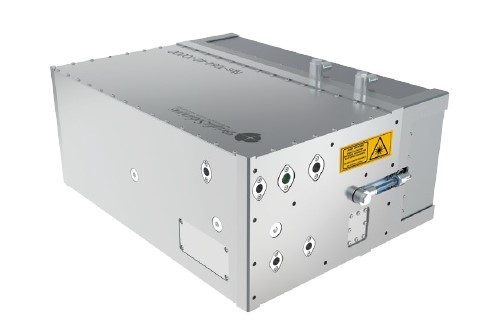
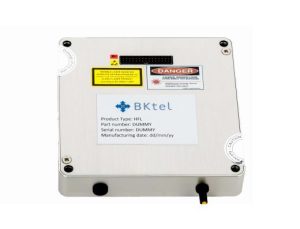
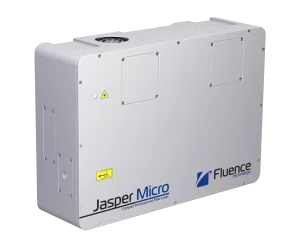
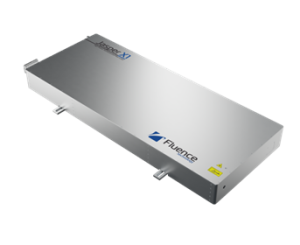
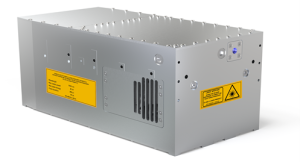
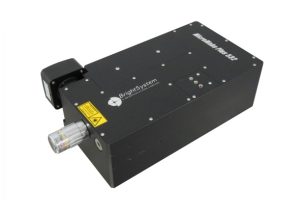
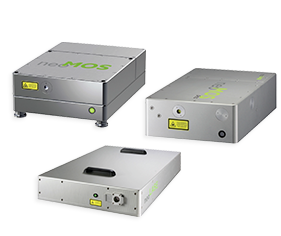
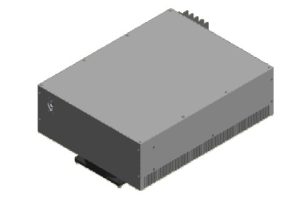
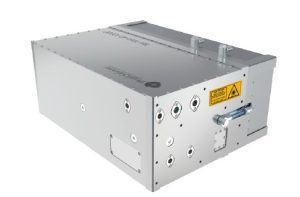
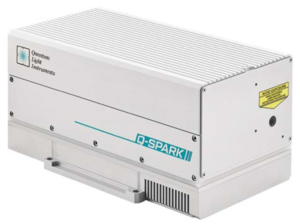
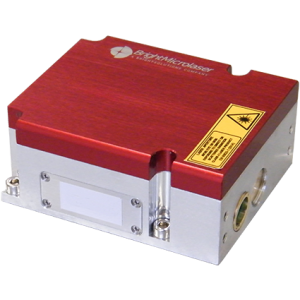
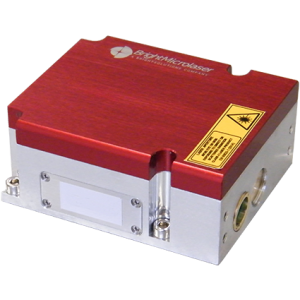
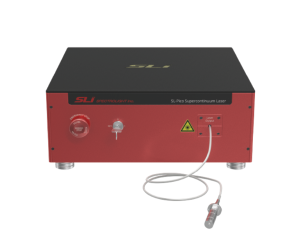
The products below include dedicated picosecond lasers and configurable platforms whose specified operating ranges extend into nanosecond or femtosecond pulse widths.
Use the filters to narrow the available sources by architecture, wavelength, power, pulse energy, repetition rate, and other system requirements. If several options look similar, send us your application requirements and RPMC can help down-select them.
How to Choose a Picosecond Laser
Pulse width is important, but it rarely determines the right laser by itself. The best starting point depends on the operating combination your application actually requires and how the source must integrate into the larger system.
| Selection Factor | Why It Matters |
|---|---|
| Pulse Width | Determines the pulse-duration regime and influences peak power and the time scale of the interaction. Some platforms operate only in the picosecond range, while others extend into ns or fs operation. |
| Wavelength | The application, target material, detector, optical system, or experiment may drive the required wavelength. Options can include fundamental, harmonic, tunable, and broadband output depending on the laser. |
| Pulse Energy & Peak Power | Consider the energy delivered in each pulse together with pulse duration. Shorter pulses and higher pulse energy can increase peak power, but the complete operating point must be evaluated. |
| Repetition Rate & Average Power | Repetition rate can affect throughput, measurement speed, signal averaging, and thermal loading. Available pulse energy and average power can also vary with the operating condition. |
| Beam Characteristics | Beam quality, diameter, divergence, polarization, and output format can affect focusing, coupling, optical-system design, and final integration. |
| Triggering, Timing & Jitter | Applications requiring synchronization with detectors, scanners, other lasers, or external electronics may need specific trigger modes or timing performance. |
| Architecture & Output | DPSS, fiber, microchip, supercontinuum, and other architectures offer different combinations of wavelength, pulse format, beam delivery, packaging, and configurability. |
| Packaging & Integration | Consider whether the system requires a turnkey laboratory source, compact module, OEM configuration, fiber delivery, specific interfaces, low SWaP, or other mechanical and environmental constraints. |
Already have a target specification?
Send RPMC the wavelength, pulse width, pulse energy or power, repetition rate, beam requirements, package constraints, and a short description of the application. We can help narrow the available sources before moving into detailed configuration and quotation.
Picosecond Laser Applications
The right source depends on much more than pulse duration. Picosecond-capable platforms can support a range of technical applications when the wavelength, energy, repetition rate, beam characteristics, and integration format match the system requirements.
| Application Area | Selection Considerations |
|---|---|
| Precision Materials Processing & Micromachining | Wavelength, pulse energy, repetition rate, peak power, beam quality, and process throughput can all influence the appropriate short-pulse source. |
| Scientific Research & Spectroscopy | Experiments may prioritize wavelength access, tunability, spectral bandwidth, pulse timing, repetition rate, narrow linewidth, or synchronization with other instrumentation. |
| LiDAR, Rangefinding & Sensing | Pulse energy, peak power, wavelength, timing, repetition rate, beam quality, package size, and environmental requirements may drive the source selection. |
| Biophotonics, Imaging & Medical Research | Wavelength, pulse duration, repetition rate, average power, spectral characteristics, and system integration should be matched carefully to the specific optical technique or research application. |
| Industrial & OEM Systems | Beyond optical performance, OEM projects may require compact packaging, electrical interfaces, environmental robustness, repeatability, lifecycle support, and application-specific customization. |
Picosecond vs. Nanosecond vs. Femtosecond Lasers
Shorter is not automatically better. The appropriate pulse regime depends on the interaction you need, the optical performance required, and the practical constraints of the system.
| Pulse Regime | Useful Starting Point When… | What Else to Consider |
|---|---|---|
| Nanosecond | The application does not require ultrashort interaction times and other requirements such as pulse energy, wavelength, timing, or system simplicity are more important. | Longer pulse duration changes peak power and interaction dynamics compared with ps or fs sources. |
| Picosecond | You need very short pulses and high peak-power potential but the application does not necessarily require femtosecond operation. | Available architectures span a wide range of energy, repetition rate, wavelength, spectral, package, and pulse-width characteristics. |
| Femtosecond | Extremely short interaction times, ultrafast phenomena, or another application requirement specifically drives the need below the picosecond regime. | Confirm that the shorter pulse width provides a meaningful application benefit before allowing it to drive the entire laser architecture. |
Picosecond Laser FAQs
Common questions about picosecond laser architectures, wavelength options, and operating characteristics.
What is a picosecond laser?
A picosecond is one trillionth of a second (10-12 s). Picosecond lasers generate very short optical pulses between the longer nanosecond regime and the shorter femtosecond regime. The right source still depends on wavelength, pulse energy, repetition rate, average power, beam characteristics, and integration requirements.
Are fiber picosecond lasers available?
Yes. RPMC offers fiber-based platforms capable of picosecond operation, including products whose operating ranges may extend into adjacent pulse-width regimes. Fiber architecture can be useful when packaging, beam delivery, repetition rate, or system integration are important requirements.
What wavelengths are available from picosecond lasers?
RPMC’s current picosecond-capable portfolio spans UV, visible, and infrared wavelengths and includes fixed-wavelength, harmonic, tunable, and broadband options. The available wavelength range depends on the laser architecture and configuration.
Need Help Selecting a Picosecond Laser?
Tell us what the laser needs to do, which specifications are fixed, and where you have flexibility. RPMC can help compare the practical options across multiple laser manufacturers and configurations.