 BUY NOW
PICOSECOND & FEMTOSECOND LASER SELECTION
Ultrafast Lasers
Picosecond & femtosecond sources for experiments, process development & OEM systems
Ultrafast lasers generate very short optical pulses, commonly in the picosecond (ps) and femtosecond (fs) regimes. But shorter pulses are not automatically better. The right pulse duration depends on what the light needs to do in the application and whether the interaction time, peak intensity, nonlinear response, thermal interaction, temporal resolution, or another requirement actually justifies ultrafast operation.

The first selection question is therefore not simply “How short can the pulse be?” It is:
When Does Your Application Actually Need Ultrafast Pulses?
Start with the interaction or measurement requirement. If nanosecond or longer pulses can meet it, moving to picosecond or femtosecond operation may add cost, complexity, dispersion sensitivity, integration constraints, or unnecessary performance. Ultrafast becomes useful when the shorter pulse regime produces a meaningful technical benefit.
When Does Ultrafast Actually Matter?
Picosecond or femtosecond operation may be worth considering when pulse duration directly affects the physics, measurement, or process.
Time-Resolved Measurements
The laser pulse must be short enough to resolve the dynamics being measured. The useful pulse duration also depends on the timescale of the event, instrument response, timing jitter, and any required pump-probe or trigger synchronization.
Nonlinear Optical Experiments
High peak intensity or temporal overlap may be required for multiphoton excitation, harmonic generation, Raman techniques, OPO/OPA pumping, or other nonlinear interactions.
High Peak Intensity
Concentrating pulse energy into a shorter time can increase instantaneous power without requiring the same increase in average power.
Materials Research & Process Development
Shorter interaction times can reduce thermal interaction in some regimes and can change how energy is deposited into the material.
Precision Micromachining or Ablation
ps or fs pulses may help when feature size, heat-affected zone, material response, or process repeatability requires a shorter interaction.
Fast Excitation or Spectroscopy
Pulse duration, spectral characteristics, repetition rate, and timing may all affect the measurement.
Synchronization-Sensitive Experiments
Pump-probe, fluorescence lifetime, nonlinear spectroscopy, and other setups may depend as much on triggering, timing jitter, temporal overlap, or repetition rate as on pulse width itself.
Shorter is not automatically better. None of these applications automatically means “use the shortest pulse available.” The useful regime depends on the complete experiment or system.
Picosecond vs. Femtosecond Lasers
Picosecond and femtosecond sources overlap across many applications. The practical distinction is not that femtosecond is inherently superior, but whether the application specifically benefits from moving below the picosecond regime.
| Pulse Regime | Start Here When… | Then Check… |
|---|---|---|
| Picosecond Lasers | The application needs very short pulses and high peak-power potential, but does not specifically require sub-picosecond interaction times. | Pulse energy, wavelength, repetition rate, linewidth or bandwidth, timing, packaging, and whether available ps architectures better fit the system. |
| Femtosecond Lasers | Ultrafast temporal behavior, nonlinear interaction, very high peak intensity, reduced thermal interaction, or another real requirement specifically drives the pulse duration below the picosecond regime. | Pulse energy, spectral bandwidth, dispersion, repetition rate, synchronization, wavelength, beam delivery, cooling, package size, and integration requirements. |
Pulse Width Alone Does Not Define the Laser
Two lasers with similar pulse durations can differ substantially in wavelength, pulse energy, repetition rate, average power, beam quality, spectrum, timing behavior, delivery method, package size, and control architecture. Establish the pulse regime first, then down-select using the specifications that actually constrain the application.
Compare Ultrafast Laser Options
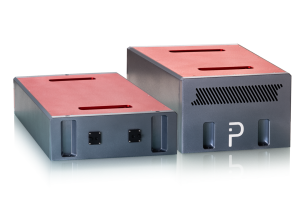
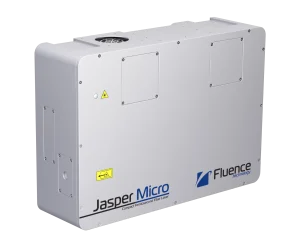
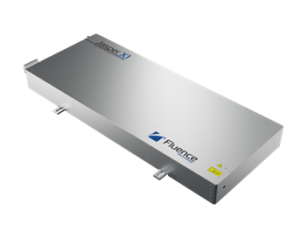
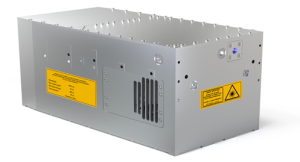
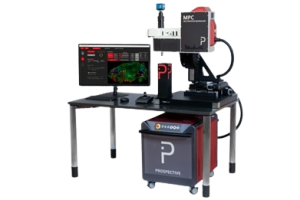
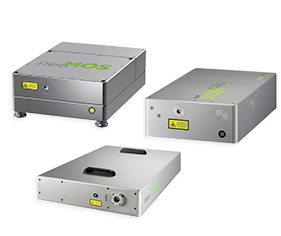
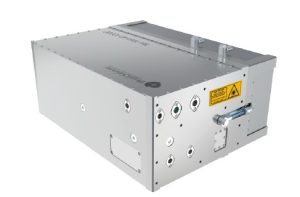
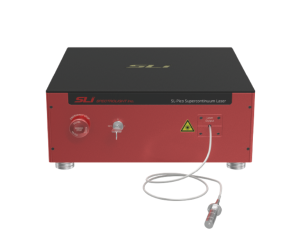
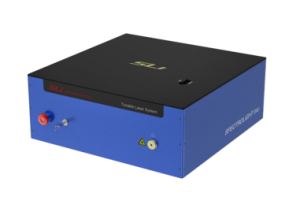
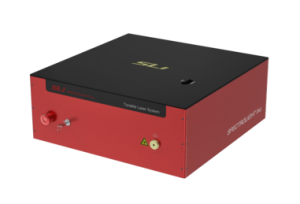
RPMC offers dedicated picosecond and femtosecond lasers, multi-regime sources that span both ps and fs operation, broadband and tunable picosecond sources, and selected integrated ultrafast systems.
Use the filters below to narrow the available options by source type, wavelength, output characteristics, repetition rate, and other requirements. If pulse regime is your first decision, start with the dedicated Picosecond Lasers or Femtosecond Lasers pages.

What Else Defines the Ultrafast Source?
Once the required pulse regime is established, the shortest pulse is rarely the only specification that matters. The practical laser choice is usually constrained by several parameters at the same time.
Optical & Pulse Requirements
- Wavelength: fixed, harmonic, tunable, or broadband
- Pulse duration: required ps or fs range
- Pulse energy: energy available in each pulse
- Repetition rate: from single-shot operation through MHz regimes
- Average power: total delivered optical power and thermal load
- Peak power: instantaneous power during the pulse
- Beam quality / M²: important for focusing and propagation
- Polarization: where the experiment or downstream optics require it
- Spectral bandwidth / linewidth: particularly important in spectroscopy, nonlinear optics, and pulse compression
Timing & Integration Requirements
- Triggering: internal, external, or pulse-on-demand operation
- Synchronization: timing relative to another laser, detector, camera, RF clock, or experimental event
- Timing jitter: when temporal precision affects the measurement or process
- Beam delivery: free-space or fiber-coupled where available
- Package / footprint: lab, machine, airborne, portable, or OEM constraints
- Cooling: passive, air, or water cooling
- Control interface: GUI, TTL, analog, serial, software/API, or automation needs
- System format: standalone source, OEM module, turnkey laser, or integrated instrument
Peak Power Is Only One Part of the Decision
Ultrashort pulses can produce very high instantaneous power because the pulse energy is delivered over a very short time. That can be important for nonlinear interactions, ablation, spectroscopy, and other applications, but high peak power alone does not determine whether a source is suitable.
Pulse energy, pulse duration, repetition rate, average power, wavelength, beam size, focusing conditions, and the interaction itself all affect the result. For a deeper explanation of how pulse duration and pulse energy influence peak power, see Understanding Peak Power in Nanosecond and Sub-Nanosecond Lasers.
Ultrafast Laser Applications: Where Short Pulses Change the Experiment
Ultrafast sources support R&D across many markets. The important question is not the market label, but what the experiment, process, or instrument requires from the pulse.
Nonlinear Optics & Spectroscopy
High peak intensity, temporal overlap, narrow or controlled spectral characteristics, and synchronization can drive selection for nonlinear experiments, Raman techniques, multiphoton processes, OPO/OPA pumping, and other spectroscopy and analysis work.
Time-Resolved Measurements & Imaging
Fluorescence lifetime, pump-probe measurements, fast excitation, multiphoton imaging, and other imaging and analysis techniques may require short excitation pulses, controlled repetition rate, low jitter, or synchronization with the detection system.
Materials Research & Process Development
Picosecond and femtosecond sources can help researchers study how pulse duration, fluence, repetition rate, wavelength, and thermal interaction affect ablation, modification, cutting, drilling, or other material-processing and surface-modification processes.
Sensing, Characterization & Experimental Systems
Some sensing, measurement, and characterization systems use ps or fs sources because timing, broadband output, nonlinear response, spectral resolution, or another experimental constraint requires short pulses.
OEM Instruments & Machine Integration
For an OEM or integrated system, the laser also has to fit the machine. Footprint, cooling, mounting, external triggering, timing behavior, software control, beam delivery, serviceability, and production quantity can become just as important as the pulse duration itself.
About “Cold” Ablation
Ultrafast pulses can reduce thermal interaction and heat-affected zones in some materials and processing regimes, but “shorter” does not automatically mean a process is thermally insignificant. Material properties, wavelength, fluence, pulse duration, repetition rate, scanning strategy, focusing, and accumulated heat all affect the result.
What Should I Specify for an Ultrafast Laser?
You do not need every laser parameter finalized before contacting RPMC. Start with the application, the requirements you already know, and which parameters are flexible.
Start With the Experiment or Process
- What interaction or measurement are you trying to produce?
- What wavelength or wavelength range is required?
- Is picosecond or femtosecond operation known to be necessary?
- What pulse energy, peak power, or average power is needed?
- What repetition-rate range is useful?
- What beam quality or focused spot is required?
Then Define the System Constraints
- External triggering or synchronization requirements
- Timing-jitter tolerance
- Free-space or fiber delivery
- Package and footprint limits
- Cooling and operating environment
- Control / automation interface
- OEM or turnkey configuration
- Prototype or production quantity
Not sure whether picosecond or femtosecond pulses are actually required?
Tell us what the light needs to do, which specifications are fixed, and where you have flexibility. RPMC can help determine which requirements actually constrain the source and down-select the practical options across multiple laser technologies and manufacturers.
Ultrafast Laser FAQs
What is an ultrafast laser?
Ultrafast lasers generate very short optical pulses, commonly in the picosecond and femtosecond regimes. The pulse duration is only one part of the source definition; wavelength, pulse energy, repetition rate, average power, beam quality, spectrum, timing, and system architecture also matter.
What is the difference between a picosecond and femtosecond laser?
A picosecond is 10-12 seconds, while a femtosecond is 10-15 seconds. Femtosecond pulses are shorter, but that does not make them automatically better. The useful regime depends on the required interaction time, peak intensity, thermal behavior, temporal resolution, available laser architecture, and other system requirements.
When should I choose a femtosecond laser instead of a picosecond laser?
Start with femtosecond operation when the application specifically requires sub-picosecond temporal behavior, nonlinear interaction, very high peak intensity, reduced thermal interaction, or another performance characteristic that cannot be met adequately in the picosecond regime. Otherwise, a picosecond source may provide a more practical starting point.
Do femtosecond lasers always produce less heat?
No. Shorter pulses can reduce thermal interaction in some material-processing regimes, but the result also depends on wavelength, fluence, repetition rate, focusing, scanning conditions, material properties, and accumulated heating. Pulse duration should be evaluated as part of the complete process.
What specifications matter besides pulse width?
Key specifications can include wavelength, pulse energy, repetition rate, average and peak power, beam quality, polarization, spectral bandwidth or linewidth, timing jitter, triggering, synchronization, beam delivery, package size, cooling, and the required control interface. RPMC can help determine which of these actually constrain the laser selection.