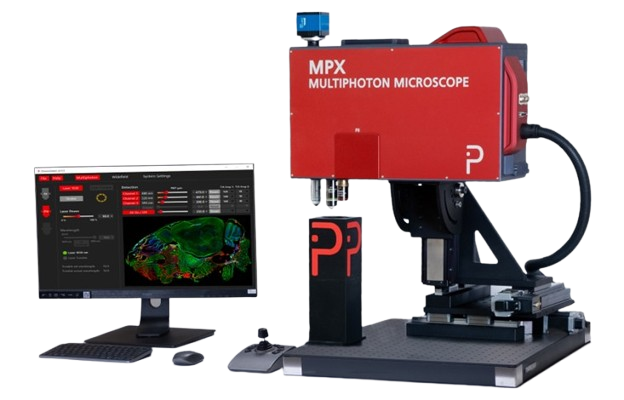
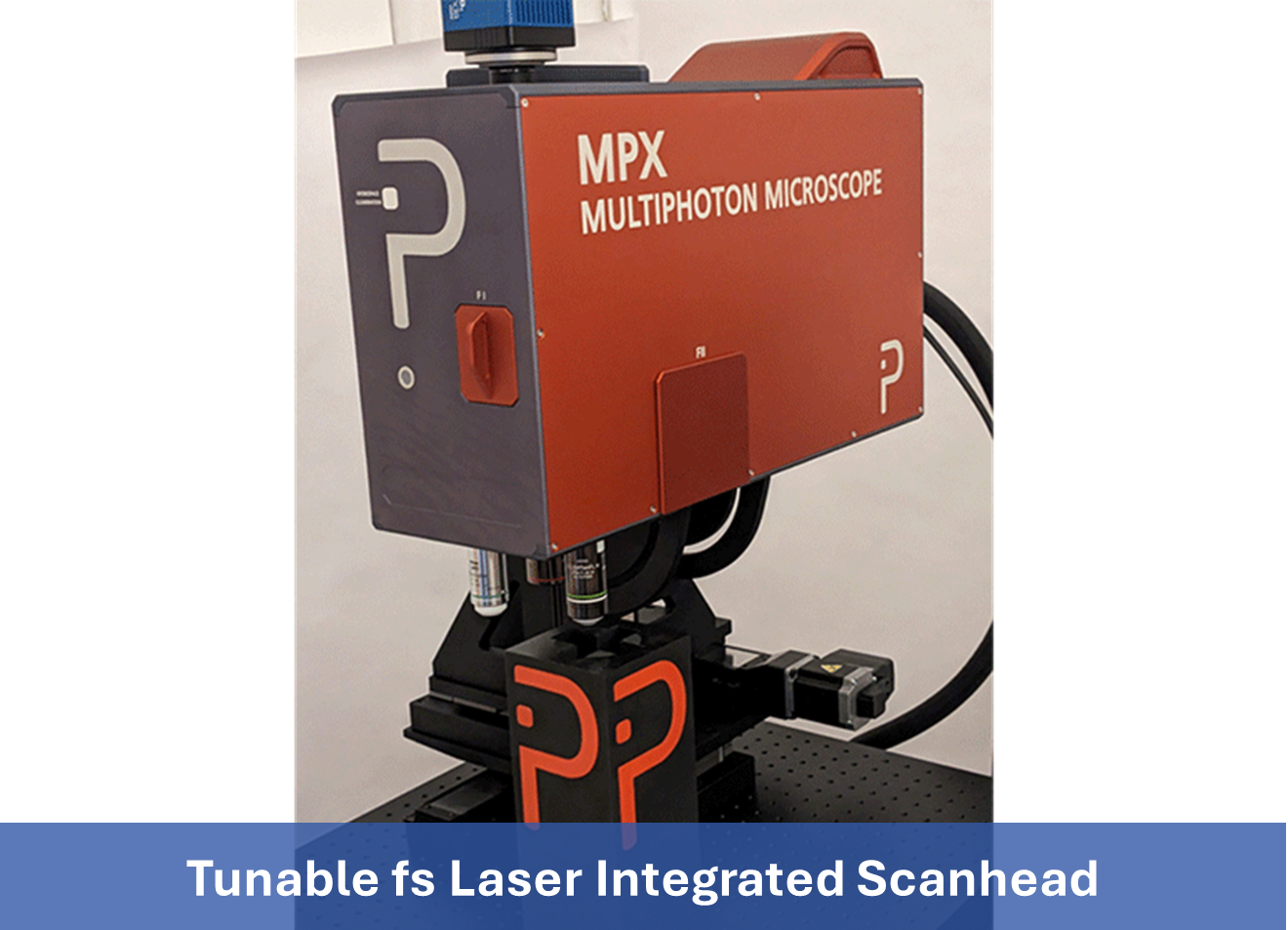
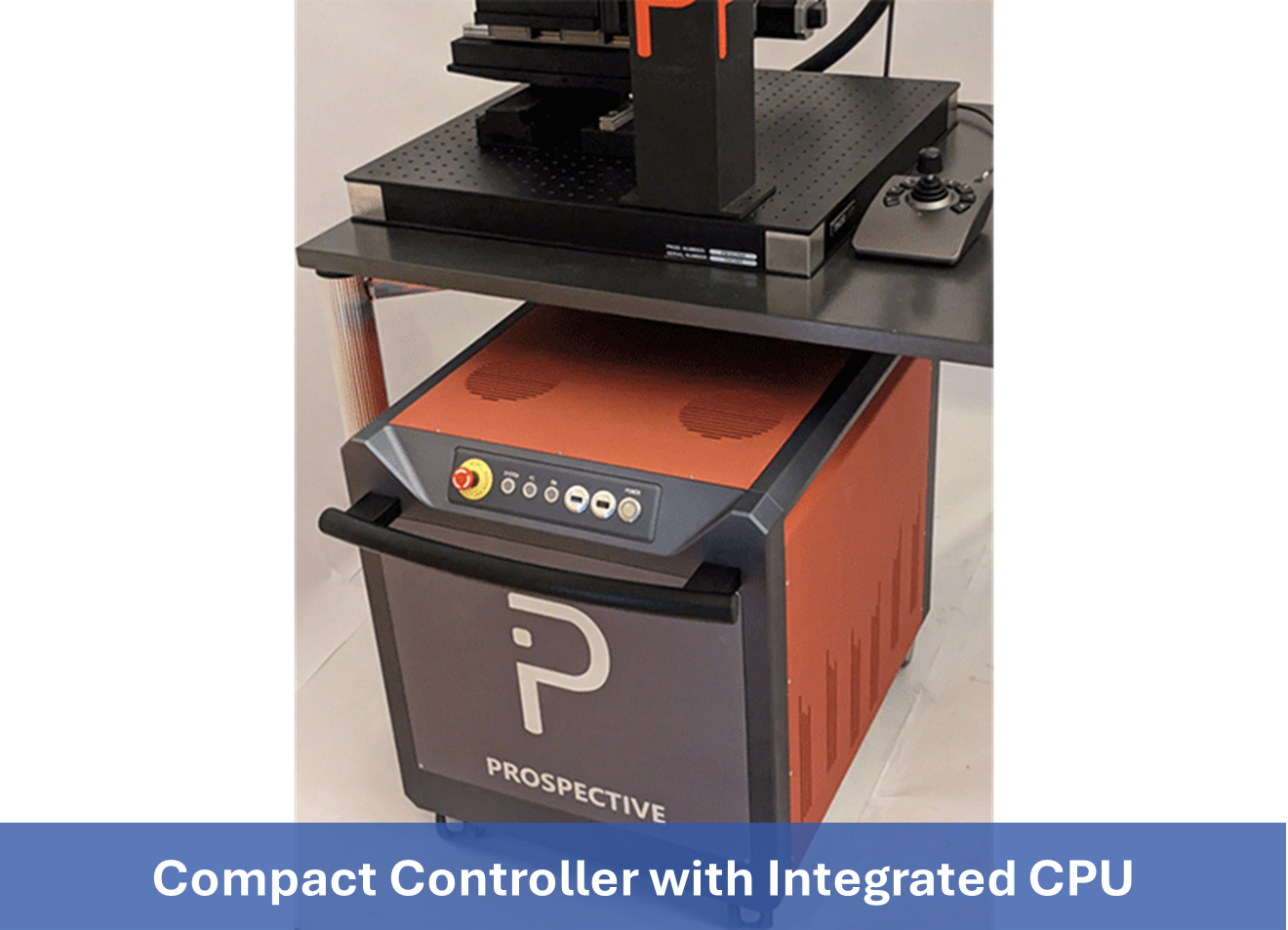
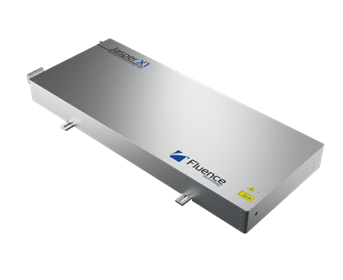
The MPX-series is a groundbreaking turn-key, compact, and fully integrated multiphoton microscopy platform, ready to go out of the box, combining single-photon, two-photon, higher harmonics (SHG & THG), bright field, widefield epi-fluorescence, and fluorescence lifetime imaging. It offers confocal resolution with deep penetration for non-destructive 2D/3D/4D imaging, supporting label-free (e.g., collagen in tissue) and IHC/ICC applications from single cells to in-vivo whole-slide studies in animals like zebrafish, drosophila, and mice. Models include MPX-FIXED (single wavelengths: 780/920/1030 nm) and MPX-TUNE (tunable 765-940 nm + fixed 1030 nm), with a 360° flexible scanhead for inverted/upright/oblique setups, integrated femtosecond lasers, resonant-galvo-galvo scanning (up to 30 fps at 512×512 pixels), and air-cooled design for easy installation.
MPX Series Feature Highlights:
Ready to go out of the box – plug-and-play, no setup required
All-in-one design – microscope + femtosecond laser in one unit
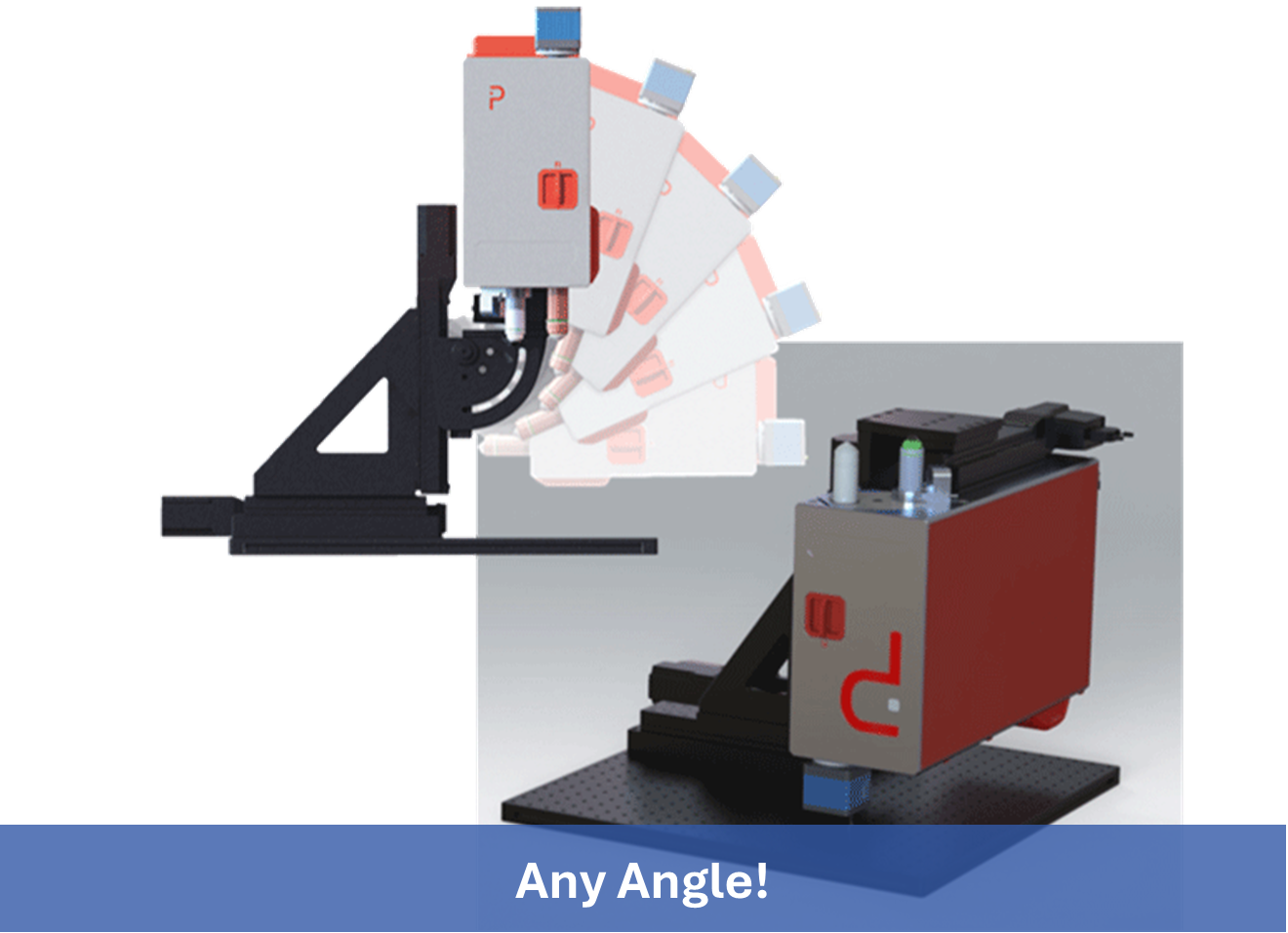
360° scanhead – upright, inverted, and oblique imaging
Designed for non-experts – no prior know-how needed for adv. imaging
Integrated control software – ScanImage Basic or Premium
Ideal for rapid deployment in clinical, educational & mobile settings
Fast setup and mobility – great for field labs or shared facilities
Unique Features of the MPX All-in-One Multimodal Microscope
Learn more about what makes the MPX stand out from the competition:
Most compact & portable plug & play turn-key widefield and multiphoton microscope in the market.
Designed from scratch for non-experts and untrained users. All-integrated and fully software-controlled approach requires no prior know-how about femtosecond lasers, optics alignment, laser safety or other do´s and don’ts of complex laser scanning microscopes.
Integrated, permanently aligned wavelength tunable (765nm – 935nm) ultra-low noise femtosecond laser AND 1030nm fixed wavelength low-noise femtosecond laser. Both lasers are temporally synchronized and spatially overlapped.
Industry-leading laser scanning beam diameter of >22mm at objective back aperture to overfill state-of-the-art high NA, low magnification, long working distance objective.
Extra-large 2” achromatically compensated non-descanned detection optics for maximum fluorescence collection efficiency, lowest photo-bleaching, and phototoxicity. Captures fluorescence photons from a +/- 12° cone. Up to 4 special selected low dark count rate GaAsP PMTs, SiPMs, HPDs or other single photon counting detectors can be mounted.
Built-in multimodality at its best: Experience the convenience and power of multimodal imaging in a flexible, upgradable, modular package. “Widefield guided multi-photon imaging”. Combines high performance wide field epifluorescence and multiphoton imaging in a single fully flexible 360°- frontend (scanhead). Integrated widefield epi-fluorescence imaging with software-controlled (motorized) modality & objective change allows correlative widefield and multi-photon imaging across scales. It makes multimodal imaging super easy, super-fast focus finder, fast overview of specimen, ROI finder, WSI capable, “point and shoot” imaging.
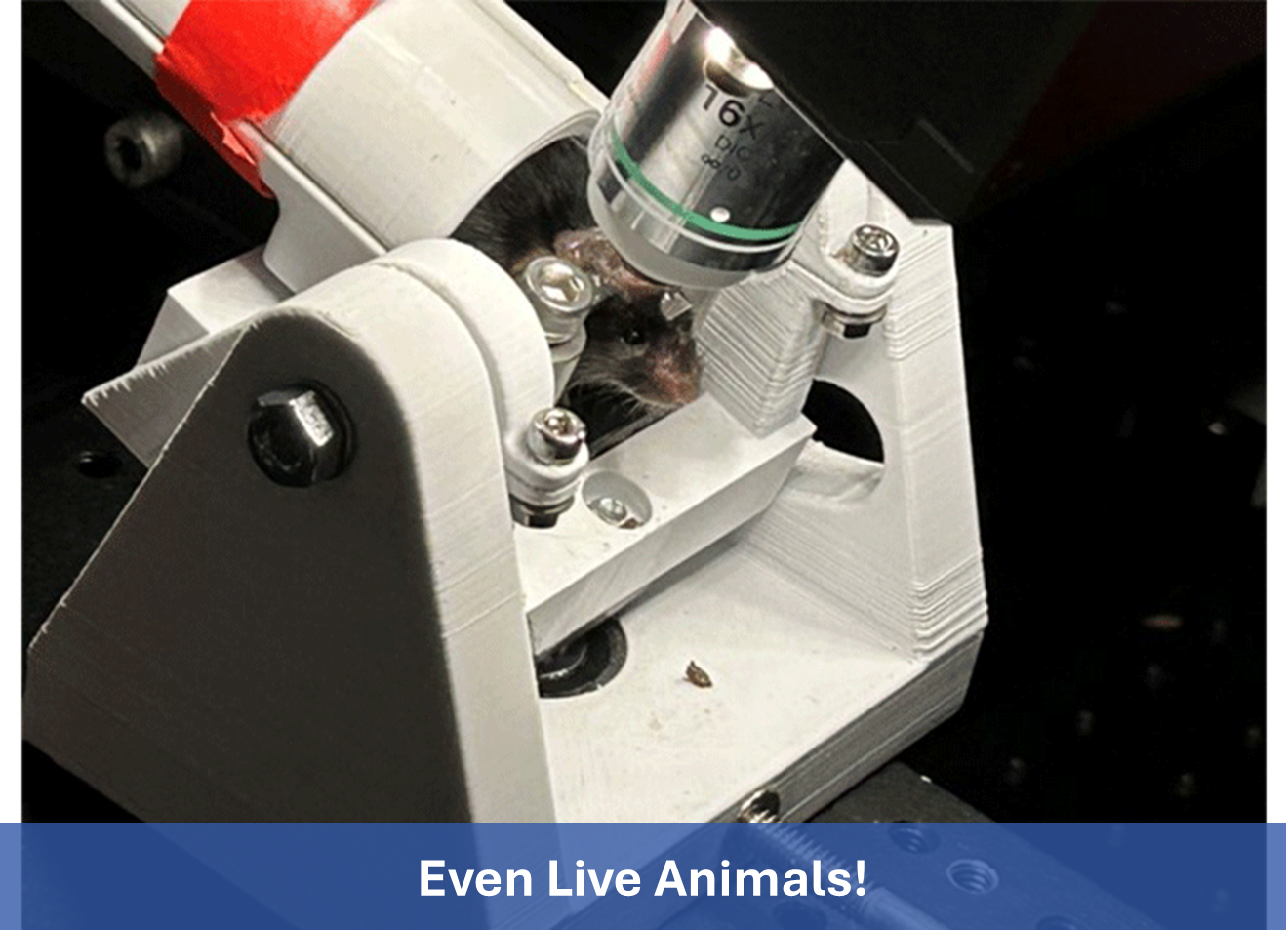
Effortless transition from upright to inverted imaging with the same hardware. Upright, inverted, and oblique angle imaging within minutes, 5-axis high-precision motion control without laser alignment and optics tweaking. Enables easy and precise alignment to any experimental setting, such as implanted GRIN lenses, large mouse cages or perpendicular scanning through cranial windows.
Rugged industrial design for a broad range of user groups, especially for high usage core facilities with diverse imaging needs. Industry-ready, built for 24/7 operation. Permanently aligned lasers (widefield & multi-photon) maximize system up-time, enabling long imaging sequences, time laps, large scale mosaics & 3D stacks with maintained performance and image quality.
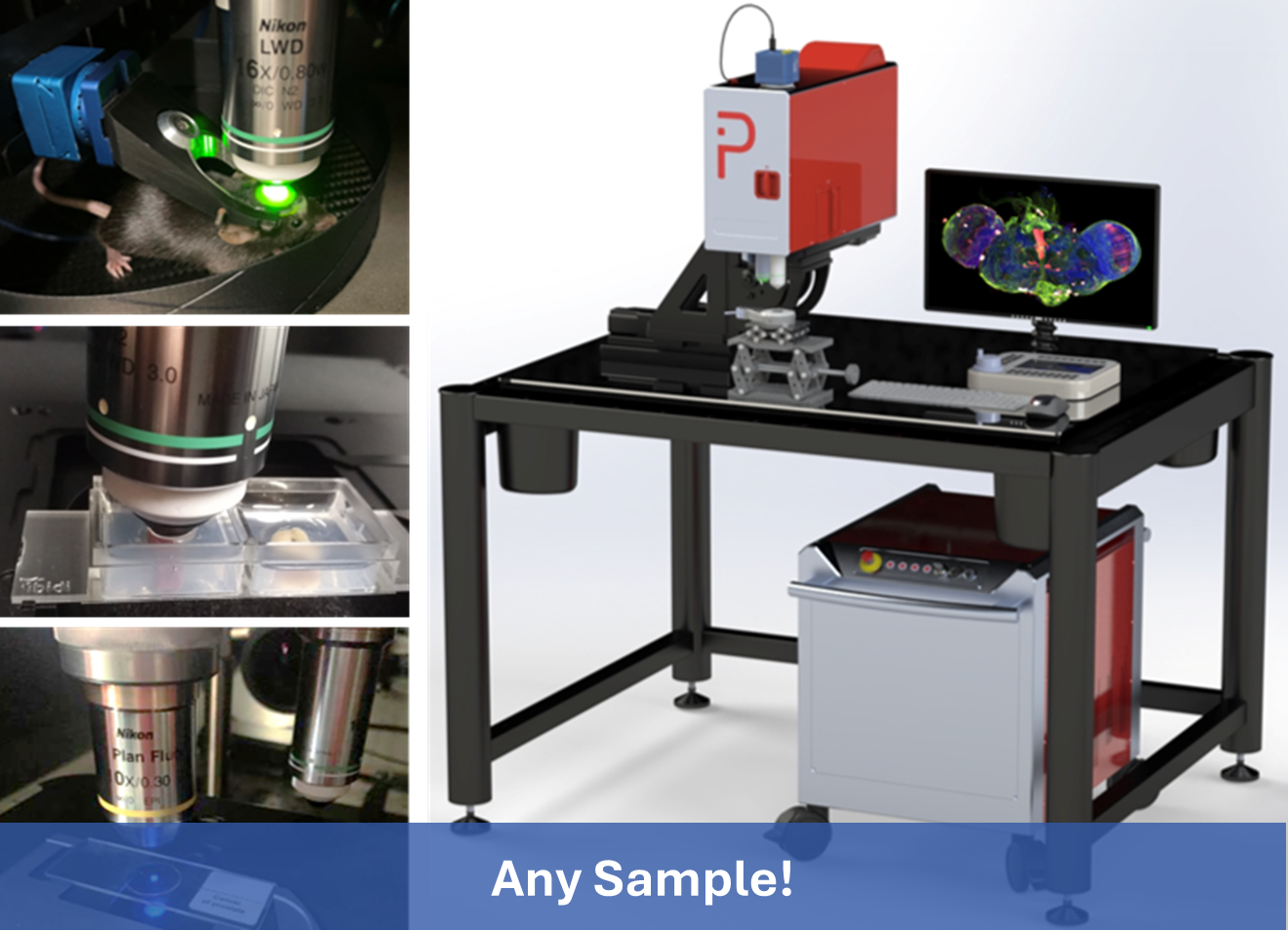
Large Area/Volume under the objective allows large complex setups e.g., for electrophysiology or life support setups for plants or animals or fluidic experiments.
Open layout: whole workspace and system not encapsulated in a tightly confined housing, thus enabling freedom to install any experimental setting during system lifetime.
Built-in workspace illumination underneath the objective for easy specimen handling in darkness. No need to switch on the flashlight of your smart phone to look for the sample.
Motorized & software-controlled 3 position objective turret with M32x075 threading.
Full remote control. Easy-to-use ChromoGazer™ software allows software-controlled modality changes, objective turret rotation, 5-axis motion control, complete system control and monitoring, settings, automatic error reporting and multimodal imaging. Microscope (lasers, imaging, modalities, objectives, etc.) can be fully remote controlled.
Highly portable, lightweight, easy to transport, and conveniently movable to almost any location. Whole microscope is easy to move around as it comes on wheels, can be used by other user groups in their respective labs. The microscope moves to the experiment, not the experiment to the microscope.
Air-cooled, no special facility requirements or laboratory construction needed, and minimal installation space.
Fiber delivered, built-in dual wavelength tunable femtosecond laser, therefore lowers safety risk from free-space beam and ensures permanent alignment.
No costly service contract necessary; fiber laser components are proven the most reliable, environmentally economic, easily serviceable, and have a low failure rate.
Whole microscope, including femtosecond laser, is manufactured, delivered, and serviced from one single manufacturer. One number to call. No blame-gaming between laser company and microscope company when the system does not meet specifications. Reduces risk, turnaround, cost, and component-confusion.
Modular design allows expandability and upgradable options, e.g. 3P, FLIM, CARS, SRS, etc., so the microscope can be updated and grow with your research.
The MPX can be equipped with a high-power multi-channel solid-state widefield illumination light source with external trigger function, combined with a highperformance sCMOS camera for epifluorescence widefield imaging.
The 360-frontend can be upgraded to resonant-galvo-galvo scanning; piezo controlled objective z-stacking and optogenetics.
The MPX runs industry leading scan software “ScanImage” with more than 1100 citations in peer-reviewed publications.
The microscope is powered by a built-in high-end PC, comes with a mouse, keyboard, display, all necessary software packages pre-installed and is completely air-cooled.
MPX Options & Modalities
Learn more about the optional add-ons and modality capabilities of the MPX:
Resonant-galvo-galvo*: 30 fps at 512 x 512 pixels (8 kHz resonant galvo CRS8K) @ full FOV | * up to 100 Hz @ line scan
Motion Control / Upright and Inverted:
Microscope Body (Scanhead) Motion:
Fully flexible 360° scanhead for inverted, upright or oblique angle imaging. Up to 5-axis system with tip-tilt function. Easily changeable to an inverted setup within minutes by the user.
Piezo Objective Scanner
Various piezo objective scanners can be integrated for fast z-scanning
Adaptive Optics: Adaptive optics transmissive wavefront modulator (Phaseform) for enhanced image quality and penetration depth with up to 7th radial order Zernikes, 63 actuators.
Neuroexplorer Bundle: The Neuroexplorer has been unveiled for deep tissue imaging. This device combines various imaging techniques to simplify functional and intravital imaging. It offers bundles tailored for awake and sleeping mouse experiments, including features like stable head fixation and wireless vital signs monitoring during in vivo imaging.
FLIM: Providing pixel, line, frame clocks and laser synchronization for FLIM imaging. Detectors can be upgraded to single-photon counting. Easy upgradeable to widefield FD-FLIM.
Optogenetics: Photostimulation via dual-path galvo-galvo beam steering for simultaneous imaging and stimulation.
THG & 3P Imaging: Fully custom-designed laser scanning optics, achromatically compensated from 680 nm to 1700 nm, covering the full range of Ti:Sapphire lasers, fiber lasers as well as OPO/OPA/OPCPA systems up to 1700 nm allowing THG and 3P imaging.
CARS & SRS: MPX scan optics are optimized for label-free coherent Raman imaging. The MPX can be configured for CARS/SRS microscopy by using Prospective’s built-in FSX-dual output laser, a built-in time delay & AOM as well as detectors in epi and/or transmission.
MPX Live Imaging Examples
See the MPX's Live Imaging Capabilities in Action:
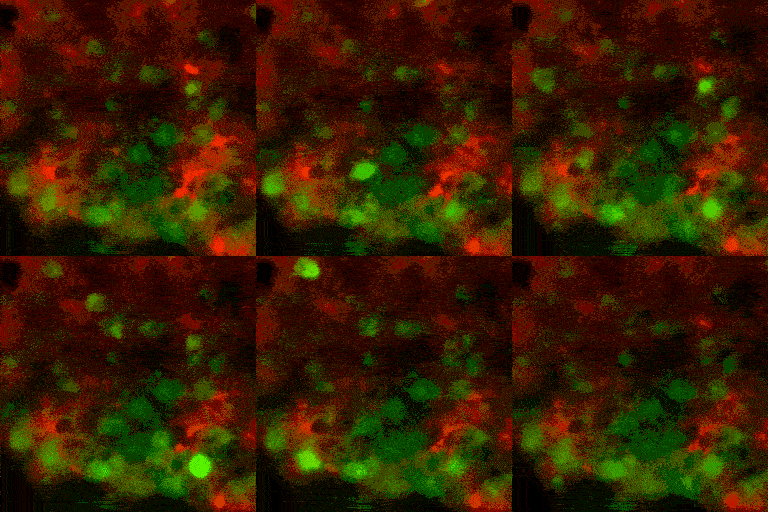
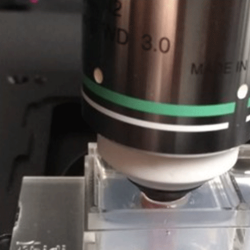
Neurons (GCaMP) and Astrocytes (TexasRed) in the cortex:
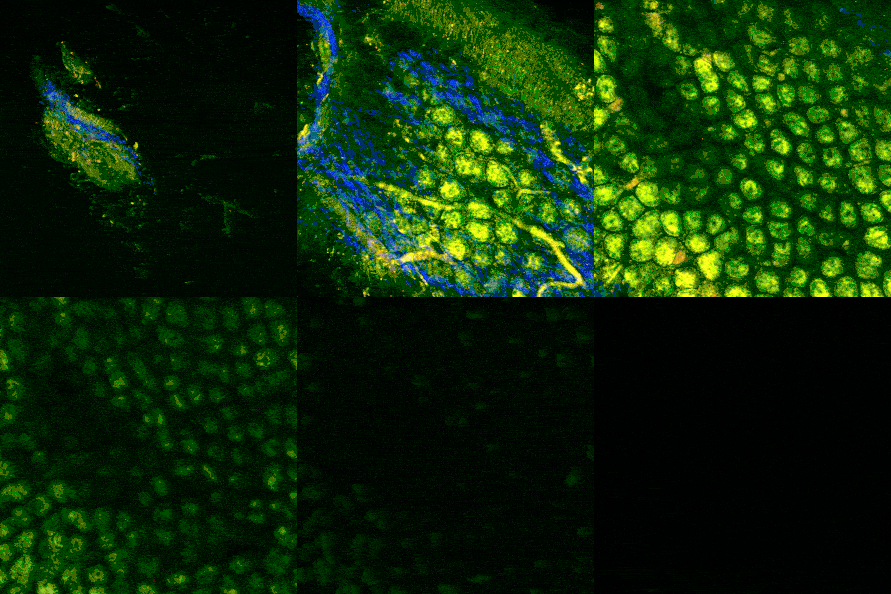
Label-Free Mouse Colon
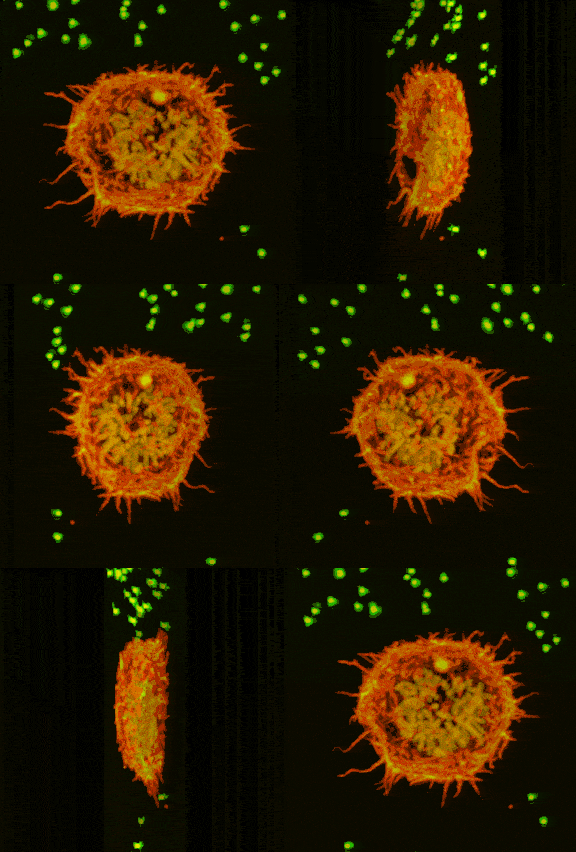
Single Cell Imaging
Neuronal Tracking in Drosophila
Testimonials from Satisfied Customers:
“For my research I focus on how progenitor cells self-organize in the zebrafish liver. For that 3D imaging of the whole organ and ideally the whole animal model is crucial…”Dr. Sara Caviglia, University of Zurich
“Multiphoton imaging with the MPX allows us to image our 3D tissue-engineered constructs… The high penetration depth combined with the intrinsic confocal features makes it a suitable tool…”Dr. Stefanie Sudhop, CANTER Lab, Munich
“Using the MPX multiphoton setup we could easily image spheroids up to 200 µm without clearing methods…”Dr. Christine Heinzle, VIVIT, Dornbirn
“The MPX enables z-stack imaging with high resolution which is a requirement for the analysis of 3D traction force microscopy”Stefan Stöberl, LMU Munich
“For me, multiphoton imaging with the MPX was a great opportunity to create 3D z-stacks of the whole drosophila brain without any need of slicing or clearing procedures…”Dr. Tongchao Li
Your user-friendly, plug-and-play microscopy laser solution awaits!
There is no need for a technician to screw things together at the customer site. Our microscopes ship fully assembled and ready to use right out of the box.
Plug & Play:
Our microscopes are easy to setup and easy to use. They are designed fundamentally to be used by anyone in any location.
Multimodality at its best:
Experience the convenience and power of multimodal imaging in a flexible, upgradable, modular package.
No Optical Table:
There is no need for an optical table. Our microscopes are designed to be used anywhere, by anyone.
Energy Efficient:
No excessive heat and quiet operation that helps save energy and reduces the cost of system maintenance.
Easy to Transport:
Our system is easy to transport, making it the ideal system for a flexible working space and sharing it with other groups.
Always Aligned:
The lasers and optics are permanently aligned and ready for use, allowing you to spend more time on your imaging.
No Water Cooling:
Our air cooled system is not only energy efficient but also ready within a few minutes (short laser warm up time) and can be set up in almost any indoor working space.
Free-Moving Scanhead:
With our unique free-moving scan head, you can image samples of varying sizes from every angle.
These benefits make the MPX series a versatile and reliable choice for anyone from beginners to experts, seeking high-quality multimodal microscopy solutions. Talk to us today to find your perfect fit.
MPX Applications:
2D/3D/4D Imaging
In-Vitro & In-Vivo
Label-Free
Deep Tissue Imaging
Pathology & Cancer
Neuroscience
Optogenetics
Tissue Engineering & Bioprinting
Spheroids/Organoids/Tumoroids
MPX vs MPC Multimodal Multiphoton Microscopes
Feature
MPX
MPC
Type
Plug-and-Play All-in-One
Fully Customizable
Integrated Laser
Yes (Tunable fs laser)
No – Supports External Lasers
Wavelength Range
680–1700 nm (integrated)
680–1750 nm (external)
Customization Level
Medium
High
Best For
Ease of use & fast setup
Advanced research & flexibility
Olympus Compatibility
Full
Full (Highest flexibility)
Need help choosing? Contact us to discuss your imaging requirements.
A pulsed laser is any laser that does not emit a continuous-wave (CW) laser beam. Instead, they emit light pulses at some duration with some period of ‘off’ time between pulses and a frequency measured in cycles per second (Hz). There are several different methods for pulse generation, including passive and active q-switching and mode-locking. Pulsed lasers store energy and release it in these pulses or energy packets. This pulsing can be very beneficial, for example, when machining certain materials or features. The pulse can rapidly deliver the stored energy, with downtime in between, preventing too much heat from building up in the material. If you would like to read more about q-switches and the pros and cons of passive vs active q-switches, check out this blog “The Advantages and Disadvantages of Passive vs Active Q-Switching,” or check out our Overview of Pulsed Lasers section on our Lasers 101 Page!
What is the best laser for LIDAR?
What is the best laser for LIDAR?
There are actually numerous laser types that work well for various LIDAR and 3D Scanning applications. The answer comes down to what you want to measure or map. If your target is stationary, and distance is the only necessary measurement, short-pulsed lasers, with pulse durations of a few nanoseconds (even <1ns) and high pulse energy are what you’re looking for. This is also accurate for 3D scanning applications (given a stationary, albeit a much closer target), but select applications can also benefit from frequency-modulated, single-frequency (narrow-linewidth) fiber lasers. If your target is moving, and speed is the critical measurement, you need a single-frequency laser to ensure accurate measurement of the Doppler shift. If you want to learn more about the various forms of LIDAR and the critical laser source requirements, check out our LIDAR page for a list of detailed articles, as well as all the LIDAR laser source products we offer. Get more information from our Lasers 101, Blogs, Whitepapers, FAQs, and Press Release pages in our Knowledge Center!
What is the best laser for tattoo removal?
What is the best laser for tattoo removal?
The best laser for tattoo removal depends on factors like wavelength versatility, pulse duration, and energy output to effectively target various ink colors while minimizing skin damage. Q-switched or ultrafast lasers with pulse durations of 100 ps to 10 ns and a fluence of ~10 J/cm² are ideal for fragmenting ink via selective photothermolysis. For example, the Lampo 266-1064 nm offers multiple wavelengths (266 nm, 532 nm, 1064 nm) for multi-color tattoos, while the Nimbus 770-1064 nm provides customizable sub-nanosecond pulses for precision. The Quantas-Q1 delivers high pulse energy (up to 32 mJ at 1064 nm) for efficient treatments.
We’re here to offer expert advice & to you help select the right laser for your application. Contact Us Here or email us at [email protected]!
What is the difference between active and passive q-switching?
What is the difference between active and passive q-switching?
There are a wide variety of q-switch technologies, but the technique as a whole can be broken down into two primary categories of q-switches, passive and active. Active q-switches could be a mechanical shutter device, an optical chopper wheel, or spinning mirror / prism inside the optical cavity, relying on a controllable, user set on/off ability. Passive q-switches use a saturable absorber, which can be a crystal (typically Cr:YAG), a passive semiconductor, or a special dye, and automatically produce pulses based on it’s design. Both passive and active q-switching techniques produce short pulses and high peak powers, but they each have their pros and cons. When choosing between actively q-switched and passively q-switched lasers, the key is to understand the tradeoffs between cost/size and triggering/energy and decide which is best for your particular application. Read more about these tradeoffs in this article: “The Advantages and Disadvantages of Passive vs Active Q-Switching.” Get more information from our Lasers 101, Blogs, Whitepapers, FAQs, and Press Release pages in our Knowledge Center!
What type of laser is used for LIBS?
What type of laser is used for LIBS?
A laser source used for LIBS must have a sufficiently large energy density to ablate the sample in as short a time possible. Typically, pulsed DPSS lasers take center stage here. However, it’s been shown that pulsed fiber lasers can also be a great option. For example, you could utilize fiber lasers to measure detection limits as low as micrograms per gram (µg/g) for many common metals and alloys, including aluminum, lithium, magnesium, and beryllium. Analytical performances showed to be, in some cases, close to those obtainable with a traditional high-energy Nd:YAG laser. The beam quality of fiber lasers, in conjunction with longer pulse widths, resulted in significantly deeper and cleaner ablation craters. If you want to learn more about LIBS and ideal laser sources, check out either this blog: “OEM Fiber Lasers for Industrial Laser Induced Breakdown Spectroscopy,” or this blog: “Laser Induced Breakdown Spectroscopy (LIBS) in Biomedical Applications.” Get more information from our Lasers 101, Blogs, Whitepapers, FAQs, and Press Release pages in our Knowledge Center!
Which IR laser is best for laser target designation?
Which IR laser is best for laser target designation?
There are many different types of laser designation systems used by the military today. Still, they all share the same basic functionality and outcome. At a glance, the laser requirements seem relatively straightforward. The laser needs to be invisible to the human eye, and it needs to have a programmable pulse rate. Still, when you look in more detail, many small factors add up to big problems if not appropriately addressed. Excellent divergence and beam pointing stability, low timing jitter, and rugged, low SWaP design are all critical features of a good laser designation source. Read more on these critical features in this article: “What are the Critical Laser Source Requirements for Laser Designation?” Get more information from our Lasers 101, Blogs, Whitepapers, FAQs, and Press Release pages in our Knowledge Center!

 BUY NOW