 BUY NOW
 UniMir
Quantum Cascade Laser (QCL), Wavelength Stabilized, 10-19um, up to 20mW
Key Features:
- DFB single-mode QCL for 10-17+ µm LWIR applications
- Wavelength-stabilized for gas sensing/molecular spectroscopy
- Approx. 5-20 mW CW output power, per wavelength/config.
- Pulsed operation available
- Mode-hop-free thermal tuning over a limited range
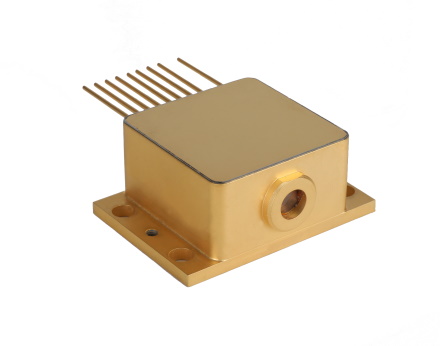
- HHL package with collimating lens, TEC, and thermistor
Need help matching UniMir to a molecule or absorption feature? Share your target molecule, wavelength, linewidth/tuning range, power, CW or pulsed, packaging, detector/sensor architecture & integration environment.
RPMC can help determine whether UniMir, PowerMir, or a custom mirSense path is the right starting point.

POPULAR CONFIGURATIONS:
Picture |
Part Number |
Part Description |
Datasheet |
|
|---|---|---|---|---|
|
UN0746C005HNA |
DFB QCL, 13.4um, 5mW, HHL Package w/ TEC, Thermistor, and Collimating lens |

|
Get Quote |
|
|
UN0713C005HNA |
DFB QCL, 14.0um, 5mW, HHL Package w/ TEC, Thermistor, and Collimating lens |
|
Get Quote |
|
|
UN0674C005HNA |
DFB QCL, 14.9um, 5mW, HHL Package w/ TEC, Thermistor, and Collimating lens |
|
Get Quote |
|
|
UN0628C003HNA |
DFB QCL, 16.0um, 3mW, HHL Package w/ TEC, Thermistor, and Collimating lens |
|
Get Quote |
The UniMir series is a DFB narrow-linewidth quantum cascade laser platform for gas sensing, molecular spectroscopy, and other LWIR applications that require wavelength-stabilized output in the 10-17 µm region. UniMir is a strong starting point when the project depends on a specific molecule, absorption feature, or spectroscopy requirement rather than maximum optical output power.
UniMir is commonly considered for environmental monitoring, industrial process sensing, molecular detection, research spectroscopy, combustion diagnostics, and other applications where linewidth, tuning behavior, wavelength stability, and HHL integration matter.
Start with UniMir when your application depends on:
- A target molecule or absorption feature in the 10-17 µm LWIR region
- DFB single-mode QCL output
- Narrow-linewidth or wavelength-stabilized emission
- Mode-hop-free thermal tuning over a limited tuning range
- HHL packaging with TEC, thermistor, and collimating lens
- Gas sensing, molecular spectroscopy, environmental monitoring, or industrial sensing requirements
If your application instead requires higher-power QCW QCL output in the 4-9 µm range, compact OEM driver/modules options, or defense/security-style IR testing needs, PowerMir may be the better starting point. RPMC can help compare UniMir and PowerMir based on wavelength, molecule, output power, linewidth, package, cooling, driver, and integration constraints.
Technical Notes on UniMir DFB QCL Operation
UniMir is a single-mode DFB quantum cascade laser platform for spectroscopy applications that require wavelength-stabilized LWIR output from 10 µm to 17 µm. The laser is mounted in a sealed HHL package with an integrated thermoelectric cooler, collimation lens, and thermistor for chip-temperature readout.
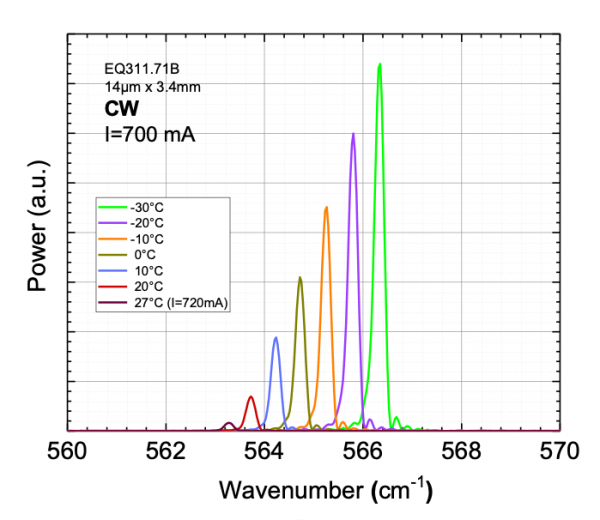
By controlling the chip operating temperature through the package’s Peltier element, UniMir can tune the emission wavelength without mode hopping while maintaining longitudinal single-mode operation. Depending on the model, UniMir supports CW or pulsed operation for applications where linewidth, tuning behavior, wavelength stability, and package integration matter.
For applications with specific requirements for target molecule, wavelength or wavenumber, linewidth, tuning range, output power, beam quality, divergence, or package format, RPMC can help compare available UniMir configurations against the sensing architecture and integration environment.
Technical Specifications Discussion
UniMir is a single-mode DFB quantum cascade laser platform for spectroscopy applications requiring wavelength-stabilized LWIR output from 10 µm to 17 µm. The series supports CW or pulsed operation and is designed for applications where the laser must be matched to a specific molecule, absorption feature, or wavenumber range.
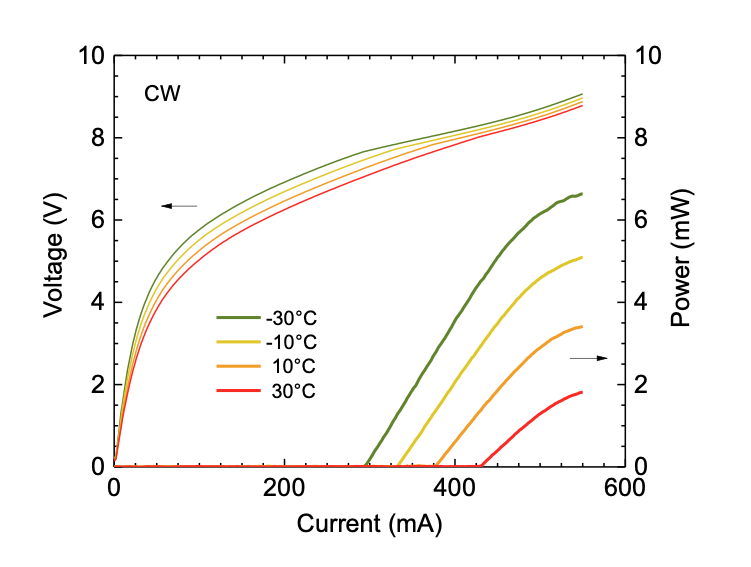
Typical optical power is 5-10 mW for wavelengths below 15 µm and 1-5 mW for wavelengths above 15 µm, depending on model. Thermal tuning provides a full accessible wavelength range of approximately 3 cm-1 typically, with continuous tuning greater than 1 cm-1 typically.
UniMir supports longitudinal single-mode operation with side-mode suppression greater than 25 dB. With suitable electronics for CW operation, linewidth is specified below 100 MHz. The output beam is TM00, linearly vertically polarized, with a typical 4 mm output beam diameter and divergence below 10 mrad.
The sealed HHL package integrates a collimation lens, thermoelectric cooler, and thermistor for chip-temperature readout. For molecule-specific sensing, spectroscopy, or OEM integration, RPMC can help compare wavelength, output power, tuning, linewidth, beam, package, and driver requirements before quoting.
UniMir Technical Highlights
- Single-mode DFB QCL architecture
- 10-17+ µm LWIR wavelength range
- CW or pulsed operation
- Typical optical power: 5-10 mW below 15 µm and 1-5 mW above 15 µm, depending on model
- Full accessible wavelength range: approximately 3 cm-1 typically
- Continuous tuning range: >1 cm-1 typically
- Side-mode suppression ratio: SMSR >25 dB
- Linewidth: <100 MHz with suitable electronics for CW operation
- Divergence: <10 mrad
- TM00 beam quality with typical 4 mm output beam diameter
- Sealed HHL package with collimation lens, TEC, and thermistor
QCL Articles
Combustion Diagnostics: UCLA’s Quantum Cascade Laser Advancements in OH Radical Sensing
MWIR & LWIR QCLs Enable Efficient & Cost-Effective Material Characterization
Key Benefits:
- DFB narrow-linewidth output: Supports molecule-specific sensing and spectroscopy where spectral selectivity matters.
- 10-17+ µm LWIR coverage: Useful when target absorption features fall beyond more common mid-IR source ranges.
- Thermal tuning: Helps tune around a selected absorption feature within the limits of the specific model.
- Compact HHL package: Includes collimating optics, TEC, and thermistor for integration into sensing or spectroscopy systems.
- CW and pulsed operation options: Supports different measurement approaches depending on the application and system design.
- RPMC selection help: RPMC can help match target molecule, wavelength/wavenumber, linewidth, output power, package, and integration needs.
Applications:
- Environmental Monitoring (pollutants and emissions tracking): Supports detection of compounds like carbon dioxide, sulfur hexafluoride, ammonia, nitrous oxide, and volatile organics such as BTEX groups (benzene, toluene, ethylbenzene, xylene), enabling precise air quality assessments and sub-ppm thresholds for substances like benzene in ambient conditions.
- Industrial Process Optimization (manufacturing and safety): Ideal for analyzing flames, profiling substances in energy sectors, and monitoring toxic agents like phosgene, hydrogen cyanide, propane, methyl iodide (key in atomic energy), and fuel additives such as hydrazine, streamlining operations and enhancing workplace safety.
- Health and Medical Diagnostics (non-invasive assessments): Facilitates contactless evaluations using thermal or acoustic detectors, with applications in quantifying molecular levels for diagnostics and research into hydroxyl groups in high-heat reactions or trace gases for health-related insights.
- Scientific Research and Spectroscopy (lab-based studies and specialized sensing): Enables high-resolution infrared absorption analysis across gases, liquids, and solids, proven in scenarios like rapid combustion tests for hydroxyl detection or detailed breakdowns of aromatics, supporting ecology, energy safety, and fundamental inquiries.
HHL Package
For clients who wish to purchase only the laser without the driving electronics, all of our laser wavelengths are available in a packaged version alone. Our standard offer is in an HHL package including the thermal regulation and a collimating lens. We are used to developing and supplying custom packages as well. For specific projects, mirSense can also supply QCL chips on submounts on demand.
HHL Features:
- Standard high heat loads package (9-pins HHL) or custom package on request
- Integrated Peltier TEC cooler
- Integrated collimating lens (High beam quality, M²<1.5)
- Possibility of chips on submount delivery
- Optional circular beam with 2.5mrad divergence
Ready to confirm a UniMir configuration?
UniMir is a strong starting point when your application depends on a target molecule, absorption feature, or DFB narrow-linewidth QCL output in the 10-17+ µm LWIR region.
Send RPMC the details below and we can help confirm whether UniMir, PowerMir, or a custom mirSense configuration is the right fit.
- Target molecule or absorption feature
- Target wavelength or wavenumber
- Required output power
- CW or pulsed operation
- Linewidth or spectral purity requirements
- Tuning range or mode-hop-free tuning needs
- HHL package, optics, TEC, or thermistor requirements
- Detector, sensor, or spectroscopy setup
- Lab,field, embedded, or OEM environment
- Timeline, quantity, and integration constraints
RPMC will help compare molecule/wavelength fit, linewidth, tuning behavior, output power, package, cooling, and integration requirements before quoting.
| Wavelength (nm) | |
|---|---|
| Description | Quantum Cascade Laser (QCL), Wavelength Stabilized, 10-19um, up to 20mW |
| Type |