 BUY NOW
 Laser Diodes
Standard, configurable, and custom laser diode sources for OEM, research, industrial, sensing, medical, and other technical applications.
RPMC offers a broad range of laser diode technologies and configurations, from low-power emitters through high-power and fiber-coupled sources. Start with the requirements you already know, then use the available filters or work with RPMC to narrow the options.
- Wavelength & power: Compare diode sources by required wavelength or wavelength range and optical output power.
- Output & configuration: Evaluate free-space and fiber-coupled options, package styles, fiber characteristics, connectors, and other integration requirements.
- Beam & spectral requirements: Narrow the selection by spatial mode, linewidth, wavelength stability, DFB, VBG stabilization, single-frequency behavior, and other source requirements.
Not sure which laser diode fits your requirements?
RPMC can help compare wavelength, power, output configuration, beam and spectral characteristics, packaging, fiber delivery, and integration requirements before you request a quote.
How Should I Start Narrowing Laser Diode Options?
Laser diode requirements often overlap across wavelength, power, package, beam delivery, spatial mode, and spectral performance. Start with the specifications that are already fixed in your system, then narrow the remaining options. RPMC can help identify the practical tradeoffs when several configurations could fit.
Wavelength & Optical Power
Start here when the required wavelength and output power are already defined for the system.
Use the wavelength and power filters to narrow the available diode sources, then compare the remaining options by configuration, package, beam characteristics, and other requirements.
Output & Beam Delivery
Start here when free-space versus fiber-coupled output is an important part of the design.
Depending on the source, selection may involve fiber core size, numerical aperture, connector type, beam delivery, polarization, collimation, or other optical-interface requirements.
Mode & Spectral Performance
Start here when linewidth, wavelength stability, spatial mode, or spectral behavior is critical to the application.
Available options include single-mode & multimode sources, DFB lasers, wavelength-stabilized or VBG-stabilized diodes, narrow-linewidth sources, and other specialized configurations.
Package & OEM Integration
Start here when mechanical, electrical, thermal, or production requirements narrow the available options.
RPMC can help compare component-level packages, modules, fiber-coupled assemblies, drive and thermal requirements, configurable products, and custom solutions for OEM integration.
Not every requirement is represented by a filter
The product table provides a practical starting point for narrowing the portfolio by category, type, wavelength, and power. Requirements such as package, connector, fiber characteristics, linewidth, wavelength stabilization, beam properties, drive electronics, customization, or OEM quantities may require a closer comparison of individual configurations. If the table does not make the choice obvious, RPMC can help down-select the available options.
Compare Laser Diode Options
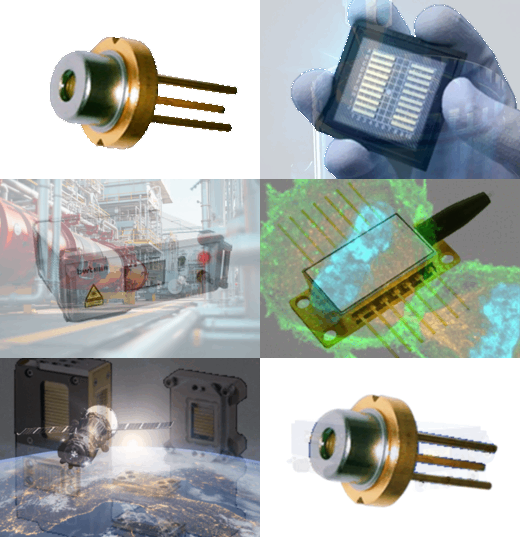
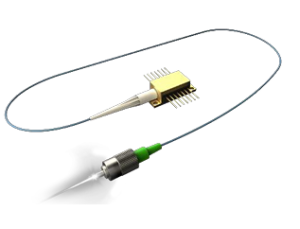
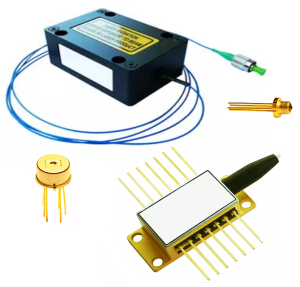
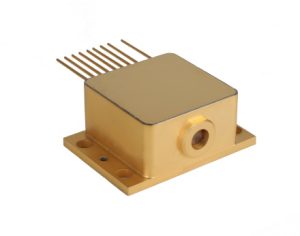
The products below include laser diode sources spanning a range of wavelengths, output powers, source architectures, packages & integration formats.
Use the filters to narrow the available sources by category, type, wavelength, and power. If several options appear similar, send us your technical requirements and RPMC can help determine which configurations are the best fit.

Related Semiconductor & Broadband Source Technologies
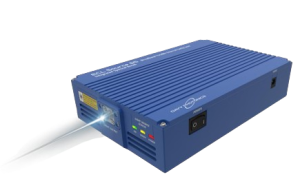
A conventional laser diode is not always the best match for the required wavelength, spectrum, or coherence characteristics. If the available diode options do not fit the requirement, related semiconductor and broadband source technologies may provide a better path.
SLEDs / SLDs
For broadband, low-coherence semiconductor output.
SLEDs combine semiconductor-source brightness with broader spectral output and reduced coherence compared with conventional laser diodes.
ASE Sources
For broader, low-coherence output at higher power levels.
ASE sources can support sensing, optical testing, metrology, imaging, and other systems where broadband output is more important than narrow-linewidth laser emission.
Quantum Cascade Lasers
For semiconductor-laser requirements extending into the MWIR and LWIR.
QCLs use a different semiconductor-laser architecture than conventional interband laser diodes and can be well suited to infrared spectroscopy, sensing, and detection.
What If the Product Table Does Not Show an Exact Match?
Many laser diode requirements cannot be reduced to wavelength and power alone. Package, beam delivery, spectral characteristics, thermal design, electrical interface, quantities, and customization can determine which configuration is practical.
RPMC can help compare standard, configurable, and custom options when the product table gets you close but does not provide an obvious answer.
What to Send RPMC
- required wavelength or wavelength range
- required optical power
- free-space or fiber-coupled output
- spatial mode, linewidth, or wavelength-stability requirements
- package, connector, fiber, or beam-delivery constraints
- prototype, OEM, or production quantities
Where We Can Help Narrow the Options
- source architecture and performance tradeoffs
- package, fiber, connector, and integration choices
- standard versus configurable or custom designs
- unusual wavelength or spectral requirements
- thermal and electrical integration
- OEM quantities and longer-term supply needs
About “Eye-Safe” and Retina-Safe Wavelengths
The term “eye-safe” is commonly used for wavelength regions in which more optical radiation is absorbed before reaching the retina, sometimes described more specifically as retina-safe.
This does not mean that a laser is harmless under all operating conditions. Actual laser safety depends on wavelength, power, exposure, beam characteristics, classification, and the applicable safety limits. Explore RPMC “Eye-Safe” Laser Options →
Still narrowing the laser diode options?
Tell us the wavelength, power, output, spectral, packaging, and integration requirements you already know. RPMC can help identify the most practical standard, configurable, or custom options for your application.