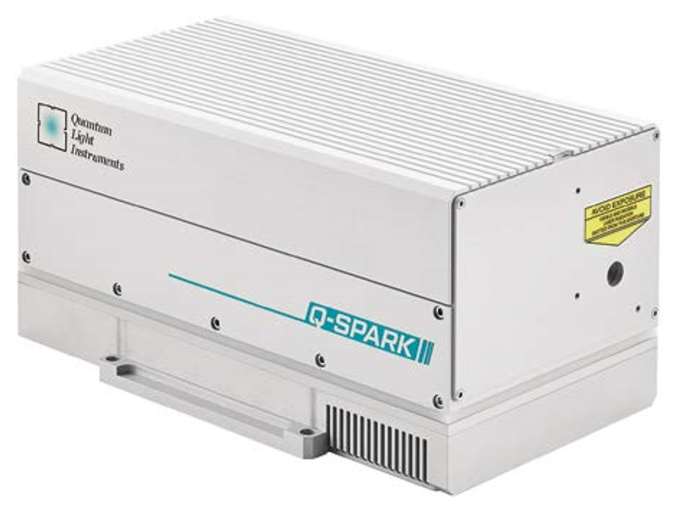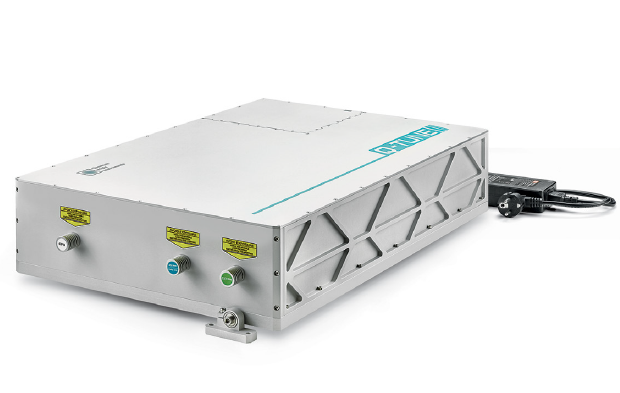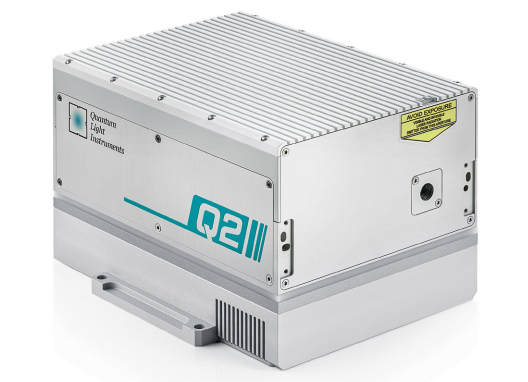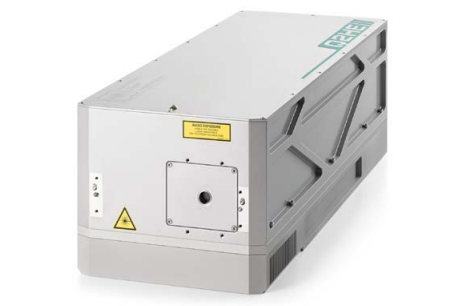

Q-SHIFT

DPSS Laser, ns pulsed, 290-1572nm, up to 50mJ, up to 100Hz

Key Features:

  • 1159, 1272, 1551 & 1572 nm
  • Options for up to 4th harmonic
  • Air-cooled (water-free)
  • Little to no maintenance
  • Remote monitoring, control & diagnostics
  • Turnkey performance & user-friendly web interface
  • >2 G shot pump diode lifetime
  • Many options, configurable & customizable

Get help selecting the right configuration for you!

If you do not see exactly what you need, please contact us!
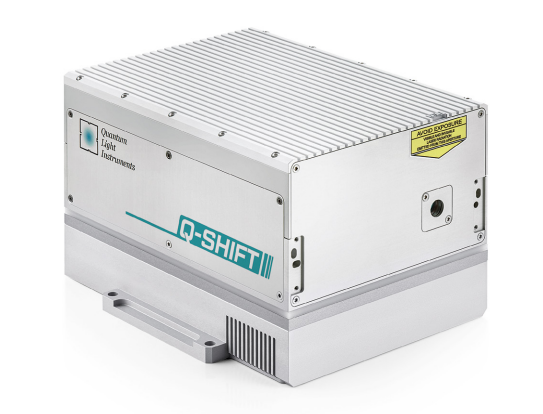
The Q-SHIFT series of Q-switched DPSS lasers is designed for researchers and application specialists working in micromachining, dermatology, LIDAR, time-resolved laser spectroscopy, and LIBS applications. With its built-in nonlinear wavelength conversion stage, this series can produce unconventional DPSS wavelengths: 1159, 1272, 1551 & 1572 nm. The optional harmonics generator can generate up to the 4th harmonic for each fundamental wavelength, providing even more versatility. This series can produce up to 50 mJ/1W @ 1551nm with 20 Hz repetition rate (other configurations from 10 Hz up to 100 Hz).

We’re experts in selecting the right laser for your application!

Benefits:

  • Unconventional fundamental DPSS wavelengths – 1159, 1272, 1551 & 1572 nm
    • Provides access to a wider range of wavelengths, enabling new possibilities and more precise results.
  • Optional – up to 4th harmonic for each fundamental wavelength: 
    • Offers greater versatility and flexibility in wavelength options, making it easier to adapt the laser to different applications and experiment designs.
  • Remote monitoring and control via built-in Ethernet interface: 
    • Allows for convenient and easy control of the laser from a remote location, including support and diagnostics, saving time and increasing efficiency.
  • Air-cooled – water-free: 
    • Requires less maintenance and is more environmentally friendly than water-cooled systems, reducing operating costs and increasing efficiency.
  • Sync pulses for triggering of user equipment: 
    • Enables synchronization with other equipment in the laboratory, ensuring accurate and precise timing and facilitating more complex experiments.
  • Optional stand-alone pulse generator for variable rep. rate: 
    • Provides greater control over the laser’s output, making it easier to adjust the laser to different experimental conditions and parameters.
  • Stand-alone air purging unit for long lifetime of UV optics: 
    • Provides protection and prolongs the lifetime of the laser, even in harsh or demanding conditions, reducing maintenance and replacement costs.
  • Guaranteed pump diode lifetime:
    • Greater than 2 giga-shots pump diode lifetime provides long-term stability and reduces downtime.
  • High-speed triggering, <0.5ns RMS jitter: 
    • Allows for faster and more precise control over the laser, ensuring accurate timing and minimizing errors and inconsistencies.

Q1 Optional Equipment:

Attachable 2nd harmonic generator, model SHG H-SMART series stand-alone 2nd, 3rd, or 4th harmonic generators Attachable motorized attenuator for fundamental wavelength beam
Attachable pulse energy monitor with analog and/or digital output Stand-alone Air-Purging unit for long lifetime of UV optics or operation in harsh environments Stand-alone two-channel pulse generator for smoothly variable pulse repetition rate, burst, double-pulse and other user-configurable modes of operation

Don’t hesitate to ask us anything!


This air-cooled series of lasers builds on the Q2 and Q2HE series and the guaranteed > 2 G shot lifetime, utilizing the same time tested Nd:YAG and Nd:YLF lasers as pump sources. It provides high-speed triggering pulses with RMS jitter > 0.5 ns with respect to Q-switch triggering edge of the pulse and both internal and external triggering. The Quantas-Q-SHIFT laser is controlled via a built-in Ethernet port with the option to add Wi-Fi adapter, allowing users to monitor and control laser remotely.


Due to a short laser cavity and excellent thermal properties of the crystal, this series produces high peak intensity pulses (up to 50mJ @ 1551 nm), with typical pulse durations from 2-5ns, and a repetition rate up to 100Hz, even at visible wavelengths (blue, yellow and red) when the Quantas-Q-SHIFT laser is combined with our attachable SHG or stand-alone H-SMART harmonic generator. This laser’s functionality can be further extended by auxiliary equipment, including an attachable motorized attenuator for fundamental wavelength beam, attachable pulse energy monitor with analog and/or digital output, and a stand-alone two-channel pulse generator.


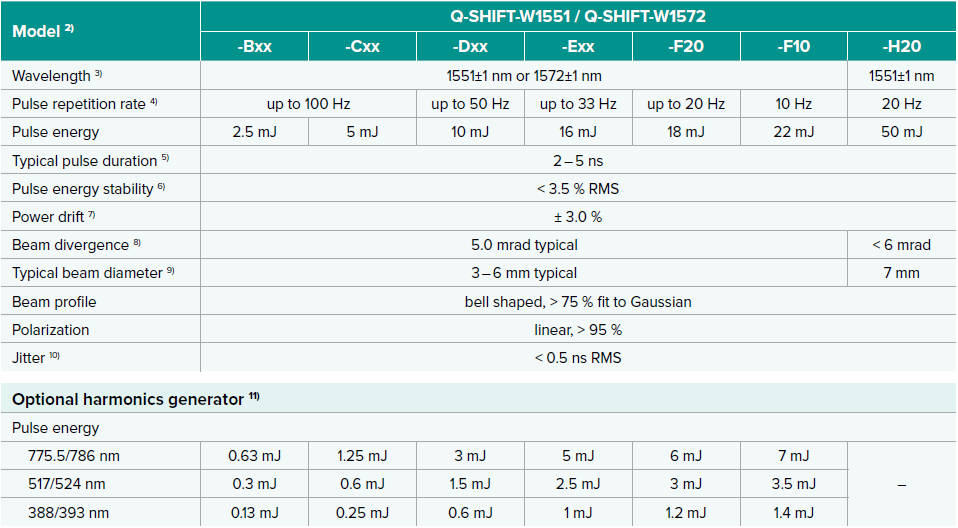
The tables below show configurations by Wavelength, Rep. Rate, and Pulse Energy.

Check out the datasheet for expanded tables and more technical information.


1159 & 1272 nm Basic Configuration Table:
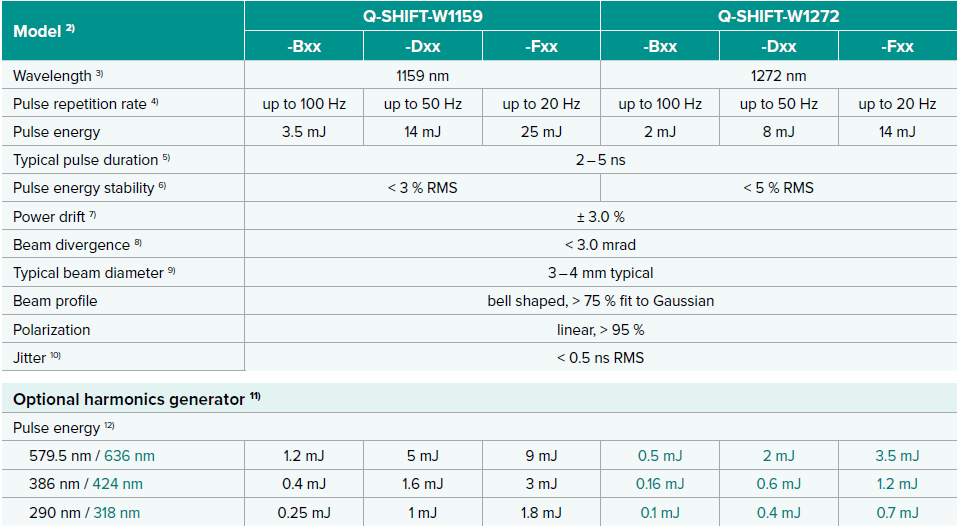
configuration table for quantas Q-SHIFT shifted wavelength DPSS laser

1551 & 1572 nm Basic Configuration Table:
Don’t hesitate to ask us anything!

Back to all QLI products

How can we help you?

Talk to one of our experienced product managers today!

Contact us

Pulsed Lasers FAQs

What is a Pulsed Laser?

A pulsed laser is any laser that does not emit a continuous-wave (CW) laser beam. Instead, they emit light pulses at some duration with some period of ‘off’ time between pulses and a frequency measured in cycles per second (Hz). There are several different methods for pulse generation, including passive and active q-switching and mode-locking. Pulsed lasers store energy and release it in these pulses or energy packets. This pulsing can be very beneficial, for example, when machining certain materials or features. The pulse can rapidly deliver the stored energy, with downtime in between, preventing too much heat from building up in the material. If you would like to read more about q-switches and the pros and cons of passive vs active q-switches, check out this blog “The Advantages and Disadvantages of Passive vs Active Q-Switching,” or check out our Overview of Pulsed Lasers section on our Lasers 101 Page!

What is the best laser for LIDAR?

What is the best laser for LIDAR?

There are actually numerous laser types that work well for various LIDAR and 3D Scanning applications. The answer comes down to what you want to measure or map. If your target is stationary, and distance is the only necessary measurement, short-pulsed lasers, with pulse durations of a few nanoseconds (even <1ns) and high pulse energy are what you’re looking for. This is also accurate for 3D scanning applications (given a stationary, albeit a much closer target), but select applications can also benefit from frequency-modulated, single-frequency (narrow-linewidth) fiber lasers. If your target is moving, and speed is the critical measurement, you need a single-frequency laser to ensure accurate measurement of the Doppler shift. If you want to learn more about the various forms of LIDAR and the critical laser source requirements, check out our LIDAR page for a list of detailed articles, as well as all the LIDAR laser source products we offer. Get more information from our Lasers 101, Blogs, Whitepapers, FAQs, and Press Release pages in our Knowledge Center!

What is the best laser for tattoo removal?

What is the best laser for tattoo removal?

The best laser for tattoo removal depends on factors like wavelength versatility, pulse duration, and energy output to effectively target various ink colors while minimizing skin damage. Q-switched or ultrafast lasers with pulse durations of 100 ps to 10 ns and a fluence of ~10 J/cm² are ideal for fragmenting ink via selective photothermolysis. For example, the Lampo 266-1064 nm offers multiple wavelengths (266 nm, 532 nm, 1064 nm) for multi-color tattoos, while the Nimbus 770-1064 nm provides customizable sub-nanosecond pulses for precision. The Quantas-Q1 delivers high pulse energy (up to 32 mJ at 1064 nm) for efficient treatments.

For more details on pulsed lasers for tattoo removal applications, see our blog, “Choosing the Right Laser for Tattoo Removal: Key Considerations‘! Get more information from our Lasers 101, Blogs, Whitepapers, and FAQ pages in our Knowledge Center!

We’re here to offer expert advice & to you help select the right laser for your application.
Contact Us Here or email us at [email protected]!

What is the difference between active and passive q-switching?

There are a wide variety of q-switch technologies, but the technique as a whole can be broken down into two primary categories of q-switches, passive and active. Active q-switches could be a mechanical shutter device, an optical chopper wheel, or spinning mirror / prism inside the optical cavity, relying on a controllable, user set on/off ability. Passive q-switches use a saturable absorber, which can be a crystal (typically Cr:YAG), a passive semiconductor, or a special dye, and automatically produce pulses based on it’s design. Both passive and active q-switching techniques produce short pulses and high peak powers, but they each have their pros and cons. When choosing between actively q-switched and passively q-switched lasers, the key is to understand the tradeoffs between cost/size and triggering/energy and decide which is best for your particular application. Read more about these tradeoffs in this article: “The Advantages and Disadvantages of Passive vs Active Q-Switching.” Get more information from our Lasers 101, Blogs, Whitepapers, FAQs, and Press Release pages in our Knowledge Center!

What type of laser is used for LIBS?

A laser source used for LIBS must have a sufficiently large energy density to ablate the sample in as short a time possible. Typically, pulsed DPSS lasers take center stage here. However, it’s been shown that pulsed fiber lasers can also be a great option. For example, you could utilize fiber lasers to measure detection limits as low as micrograms per gram (µg/g) for many common metals and alloys, including aluminum, lithium, magnesium, and beryllium. Analytical performances showed to be, in some cases, close to those obtainable with a traditional high-energy Nd:YAG laser. The beam quality of fiber lasers, in conjunction with longer pulse widths, resulted in significantly deeper and cleaner ablation craters. If you want to learn more about LIBS and ideal laser sources, check out either this blog: “OEM Fiber Lasers for Industrial Laser Induced Breakdown Spectroscopy,” or this blog: “Laser Induced Breakdown Spectroscopy (LIBS) in Biomedical Applications.” Get more information from our Lasers 101, Blogs, Whitepapers, FAQs, and Press Release pages in our Knowledge Center!

Which IR laser is best for laser target designation?

There are many different types of laser designation systems used by the military today. Still, they all share the same basic functionality and outcome. At a glance, the laser requirements seem relatively straightforward. The laser needs to be invisible to the human eye, and it needs to have a programmable pulse rate. Still, when you look in more detail, many small factors add up to big problems if not appropriately addressed. Excellent divergence and beam pointing stability, low timing jitter, and rugged, low SWaP design are all critical features of a good laser designation source. Read more on these critical features in this article: “What are the Critical Laser Source Requirements for Laser Designation?” Get more information from our Lasers 101, Blogs, Whitepapers, FAQs, and Press Release pages in our Knowledge Center!