 BUY NOW
 BK-FL-Pulsed
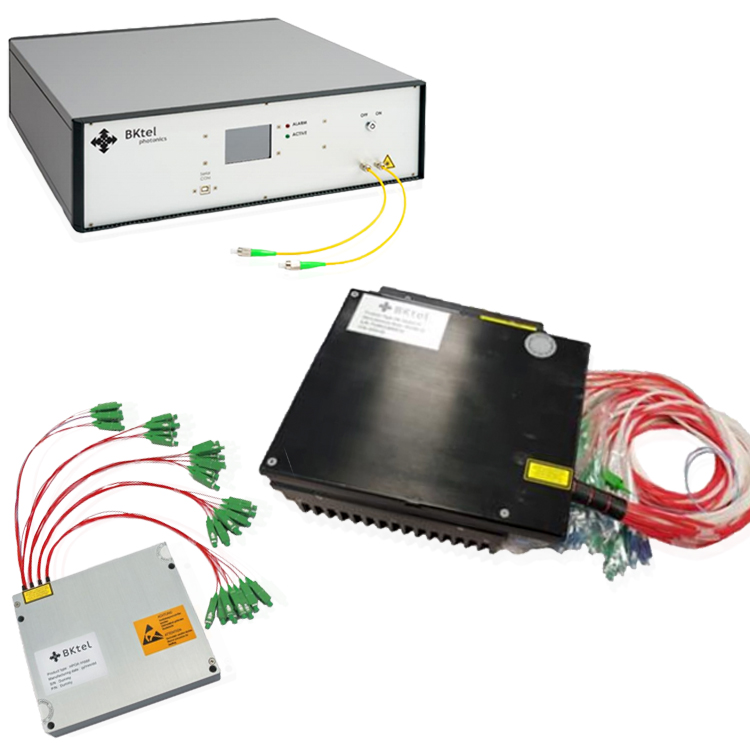
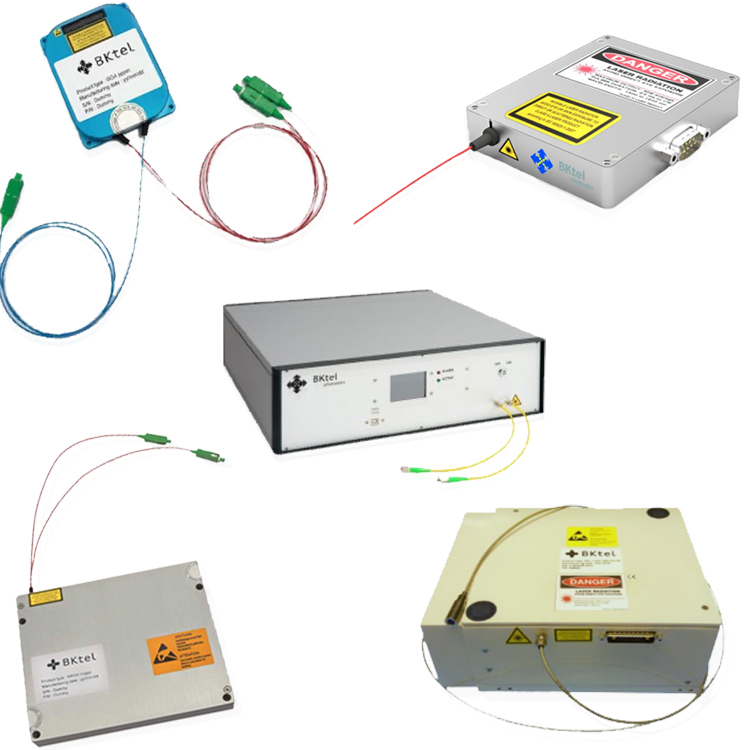
Pulsed fiber lasers, 1 & 1.5 µm, 200 ps-50 ns, up to 5 W average, 25 kW peak, compact OEM and high-power options
Key Features:
- 1 and 1.5 µm pulsed fiber laser options for LiDAR, ranging, scanning and test systems
- Pulse widths from 200 ps to 50 ns depending on configuration
- Up to 5 W average and 25 kW peak power on selected configurations
- Compact 1.55 µm “eye-safe” LiDAR modules: high-energy and wavelength-stabilized options
- Ext. triggering: TTL or TTL/LVDS
depending on product family - Fiber-coupled or collimated output options with custom configurations available
Start with the wavelength band and pulse requirements, then narrow the pulse energy, peak and average power, repetition rate, package size, triggering, polarization and output interface.
Not sure where to start? Send RPMC your wavelength, pulse width, pulse energy or peak power, repetition rate, package constraints & application. We’ll help narrow the BK-FL-Pulsed configuration.
POPULAR CONFIGURATIONS:
Picture |
Part Number |
Part Description |
Datasheet |
|
|---|---|---|---|---|
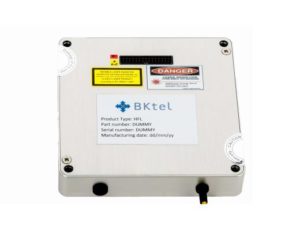
|
HFL-1 |
Pulsed Fiber Laser, 1030-1053nm, Up to 5W |

|
Get Quote |
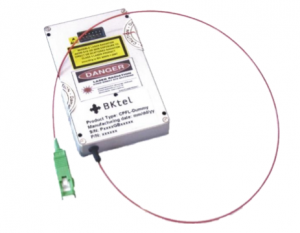
|
CPFL-1.5t |
Pulsed Fiber Laser, 1530-1560nm, Up to 150mW, |
|
Get Quote |
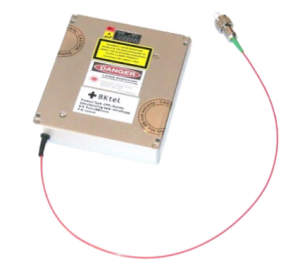
|
CPFL-1.5at |
Pulsed Fiber Laser, 1540-1560nm, Up to 1W, |
|
Get Quote |
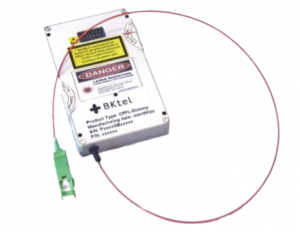
|
CPFL-1.5a |
Pulsed Fiber Laser, 1540-1560nm, Up to 1W, |
|
Get Quote |
|
|
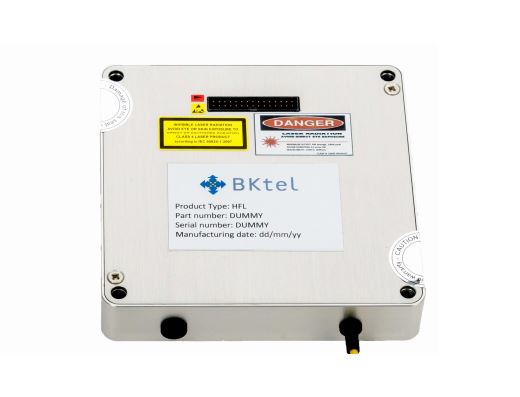
HFL |
Pulsed Fiber Laser, 1540-1560nm, Up to 4W, |
|
Get Quote |
Overview: BK-FL-Pulsed 1 & 1.5 µm Pulsed Fiber Lasers
The BK-FL-Pulsed family combines high-power 1 µm and 1.5 µm fiber lasers with compact 1.55 µm modules designed around pulsed LiDAR, rangefinding, 3D scanning and related measurement requirements.
The HFL family is the stronger starting point when higher average power, pulse energy or peak power is the priority. Compact CPFL configurations emphasize smaller package size, lower power consumption and 1.55 µm operation, with versions that differ in pulse duration, wavelength stabilization and energy capability.
Depending on the model, configuration choices include wavelength, pulse width, repetition rate, pulse energy, polarization, external triggering, output termination and package format. Custom variants are also available when a standard configuration does not fully match the system requirement.
RPMC can help determine whether the application is better served by a high-power HFL platform, a compact CPFL module, or another BKtel source architecture.
HFL vs. CPFL: Which BKtel Pulsed Fiber Laser Should You Start With?
| Selection Factor | HFL | CPFL |
|---|---|---|
| Primary role | Higher-power pulsed fiber laser | Compact 1.55 µm pulsed LiDAR source |
| Wavelength | 1 µm or 1540-1560 nm families | Approximately 1.55 µm |
| Average power | Up to 5 W on published 1 µm configurations | Up to 1 W on published compact high-energy configurations |
| Pulse energy | Up to 150 µJ on published 1 µm configurations | Up to 80 µJ on published CPFL-1.5a / CPFL-1.5at configurations |
| Package emphasis | High-power compact module / system architecture | Compact and ultra-compact OEM modules |
| Start here when… | Higher power, energy or broader 1 µm / 1.5 µm pulsed-source flexibility drives the requirement. | Compact 1.55 µm LiDAR integration, low power consumption or wavelength/pulse stabilization is the priority. |
How to Configure a BK-FL-Pulsed Fiber Laser
The final configuration is driven by the relationship between wavelength, pulse duration, pulse energy, repetition rate and the mechanical and timing requirements of the system.
- Choose the wavelength band.
Start with the required 1 µm or 1.55 µm operating wavelength and any wavelength-stability requirements. - Define the pulse width and energy requirement.
Pulse duration and energy determine the peak-power regime and often narrow the practical source architecture quickly. - Set the repetition rate and average-power requirement.
The required pulse frequency must be considered together with pulse energy and allowable average optical power. - Define triggering and timing.
Specify external triggering, TTL or LVDS requirements, synchronization needs and any timing-jitter constraints that matter to the system. - Choose the package and optical output.
Consider package size, power consumption, operating temperature, fiber termination, collimated output and polarization requirements. - Identify any application-specific constraints.
Beam divergence, environmental conditions, SWaP, quantity, interface requirements or special pulse behavior may determine whether a standard or custom configuration is appropriate.
Need a Pulsed Fiber Laser Outside the Standard Configurations?
BKtel supports custom pulsed fiber laser variants when a standard HFL or CPFL configuration is close to the requirement but does not fully address the wavelength, pulse format, energy, repetition rate, polarization, package or interface requirements of the system.
Send RPMC the requirements that must stay fixed and where the design has flexibility. We can help determine which existing platform is the practical starting point and coordinate the configuration with BKtel.
BK-FL-Pulsed Fiber Laser Applications
BKtel pulsed fiber lasers are well suited to systems where pulse timing, energy, peak power, wavelength and compact fiber-based integration determine source performance.
LiDAR & Time-of-Flight Rangefinding
1 and 1.55 µm pulsed sources support time-of-flight LiDAR and rangefinding systems that require controlled pulse energy, high peak power and repeatable triggering. Compact 1.55 µm versions are available for systems using the commonly described “eye-safe” wavelength region.
3D Scanning & Autonomous Systems
Compact CPFL and higher-power HFL sources can support scanning and autonomous-system architectures where wavelength, pulse timing, repetition rate, package size and power consumption must be balanced.
Airborne & Fieldable Sensing
BKtel identifies the 1 µm HFL family for airborne LiDAR, while compact 1.55 µm architectures can support systems where size, weight, power consumption or wider operating-temperature requirements are important.
Test, Measurement & OEM Integration
Configurable triggering, polarization, repetition rate, output termination and package formats make the family useful for laboratory measurement systems and OEM instruments that require a pulsed fiber source matched to the larger system architecture.
What Does RPMC Need to Help Configure Your Pulsed Fiber Laser?
Send as many of these as you know:
- Required wavelength or acceptable wavelength range
- Pulse width or acceptable pulse-width range
- Required pulse energy and/or peak power
- Required average optical power
- Repetition rate or repetition-rate range
- Triggering, synchronization or timing requirements
- Polarization requirements
- Fiber connector, collimated output or beam-delivery requirements
- Package-size, SWaP or operating-temperature constraints
- Beam divergence or beam-quality requirements, if critical
- Application, quantity and project timeline
You do not need to choose HFL or CPFL before contacting RPMC.
We can help translate the ranging, sensing or integration requirements into the appropriate BKtel pulsed-laser architecture.
BKtel Pulsed Fiber Laser FAQs
Common questions about BKtel 1 and 1.5 µm pulsed fiber lasers, HFL and CPFL configurations, pulse characteristics, “eye-safe” options and LiDAR source selection.
What is the difference between BKtel HFL and CPFL pulsed fiber lasers?
HFL is the higher-power family and includes both 1 µm and 1.5 µm pulsed sources. CPFL focuses on compact 1.55 µm modules for LiDAR and related systems, with different versions available for pulse-duration, energy and wavelength-stability requirements.
What pulse widths are available from BKtel pulsed fiber lasers?
Published HFL and CPFL configurations span approximately 200 ps to 50 ns. The available range depends on the selected laser family and model, so pulse width should be evaluated together with pulse energy, repetition rate and average power.
Does BKtel offer “eye-safe” pulsed fiber lasers for LiDAR?
Yes. BKtel offers multiple pulsed fiber laser configurations around 1.55 µm for LiDAR, rangefinding and scanning applications and describes these products as operating in the “eye-safe” wavelength region. Final laser-safety classification still depends on the complete system and operating conditions.
How much pulse energy is available?
Published configurations vary substantially by family. HFL-1 reaches up to 150 µJ at 1 µm, while current compact 1.55 µm CPFL configurations reach up to 80 µJ. The required energy should be evaluated together with pulse width, repetition rate and average-power limits.
Can BKtel pulsed fiber lasers be customized for OEM systems?
Yes. BKtel states that custom variants are available for its HFL and CPFL families. Depending on the starting platform, RPMC can help evaluate requirements involving wavelength, pulse format, repetition rate, polarization, triggering, package, output termination and other integration constraints.
| Wavelength (nm) | 1030, 1030-1100, 1053, 1064, 1540-1560, 1550, Multiple Wavelength Options |
|---|---|
| Description | Fiber Laser, ns/ps pulsed, 1030-1053nm, up to 150uJ, up to 5W, 200ps to 50ns |
| Type | "Eye Safe", Pulsed Fiber Lasers, Low SWaP, Ruggedized, Fiber-Coupled, High Peak Power, Customizable |