
MicroCutter

Micromachining System, ns pulsed, 266-1064nm, 1 ns, up to 10kW, up to 10kHz fixed PRR

Key Features:

  • Modular Design: Independent wavelength selection, fits most commercial microscopes
  • Intuitive GUI, aiming beam, vision camera port & additional optional add-ons
  • Up to 3 Wavelengths: 1064/532/355/266nm
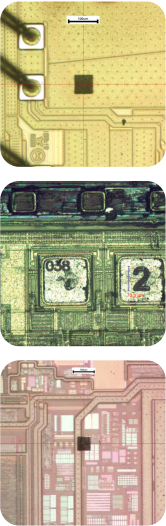
  • For IC Diagnostics & Repair: laser ablation & cutting, selective material removal of IC stack layers
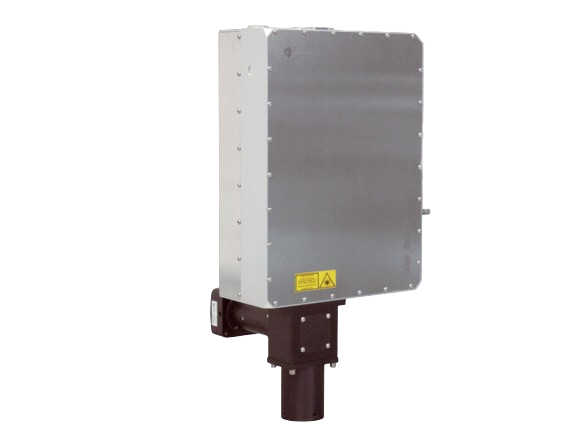
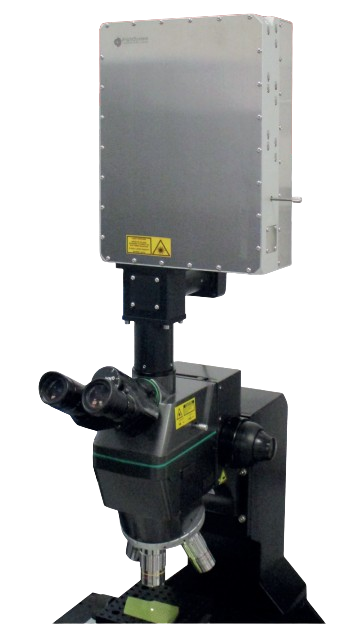
The Laser MicroCutter from Bright System is a compact laser tool designed for seamless integration with commercial optical microscopes in probe stations for integrated circuit (IC) failure analysis. This system enables precise microsurgery on semiconductor dies to address production defects and faults through efficient, selective material removal via direct laser ablation. It effectively targets metal lines, passivation layers, and polysilicon conductors, with the optimal laser wavelength and process parameters controlled via an intuitive software interface. The innovative modular design supports unrestricted combinations of up to three wavelengths, while advanced scanning capabilities allow the creation of arbitrary shapes for applications extending beyond conventional material removal.

Contact us today to discuss your unique requirements. We can easily configure a MicroCutter for your specific application, tailored to perfectly suit your needs.


Your All-in-One Micromachining Solution Awaits!

Benefits:

Precision at the Microscale:
  • Achieves spatial resolutions down to 1 μm, enabling highly accurate targeting of intricate IC features like metal lines and passivation layers without collateral damage.

Versatile Material Processing:
  • Selectable wavelengths (1064 nm NIR for metals like aluminum and chrome; 532 nm VIS for gold, copper, and polysilicon; 355 nm NUV and 266 nm DUV for oxides, nitrides, and polymers) ensure efficient, selective ablation of diverse semiconductor stack materials.
Rapid Operation:
  • Processes small 20×20 μm² areas in as little as 0.05 seconds, accelerating failure analysis, repair workflows, and production debugging.
Customizable Cutting Capabilities:
  • Programmable arbitrary shapes, including rectangles, ellipses, text, and vector imports, support advanced applications like micro-coding, patterning, and component isolation beyond simple straight cuts.
Flexible Modular Design:
  • Independent selection of up to three wavelengths with no restrictions, allowing tailored configurations for specific tasks such as photomask repair or exposure of buried layers.
Seamless Integration:
  • Compatible with most commercial optical microscopes in probe stations, minimizing setup time and leveraging existing lab infrastructure.

User-Friendly Control:
  • Intuitive software interface simplifies parameter adjustments (wavelength, power, frequency, geometry), while aiming beam and vision camera port provide real-time previews for error-free execution.

Compact & Practical:
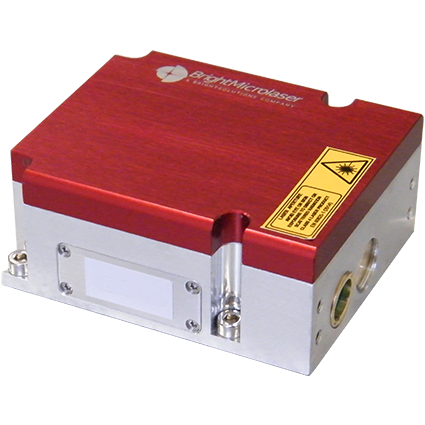
  • Air-cooled, lightweight (<6.5 kg) design with small footprint (44x22x15 cm) fits easily into lab environments, with full 0-100% attenuation for safe, precise power control.

Broad Application Impact:
  • Facilitates critical tasks like IC microsurgery, LCD repair, passivation peeling, and conductive line trimming, reducing downtime and improving yield in semiconductor diagnostics.

We’re experts in selecting the right laser for your application!
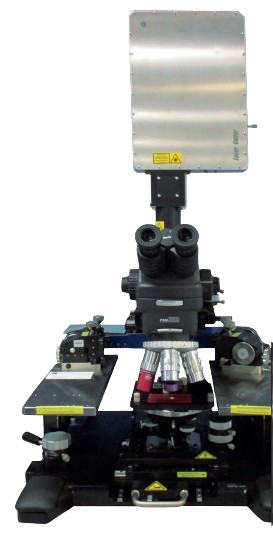
laser microcutter for integrated circuit diagnostics, mounted to a microscope

laser microcutter for integrated circuit diagnostics mounted to a microscope

MicroCutter Options:

The MicroCutter series provides a host of options, enhancing its capabilities to perfectly suit your needs.

Different Objective Lenses Versatile magnification & focus options for diverse needs
Digital Camera with Software Real-time imaging, process documentation & enhanced alignment accuracy
Arbitrary Cutting Shapes Programmable geometries, facilitating advanced patterning beyond straight lines
Ability to Generate Text, Import Vector Allows micro-coding, labeling, DXF-based designs, expanding capabilities

MicroCutter Applications:

The MicroCutter series is perfect for various, advanced integrated circuit diagnostic & repair applications.

Precise IC microsurgery microcutter laser for integrated circuit diagnostics application examples showing various microelectronics under microscope
Photomask and LCD repair
Exposure of buried lower layers
Peeling off thin passivation layers
Semiconductor die failure analysis
Micro-coding, patterning and scribing
Isolation of single electronic components
Trimming and interruption of conductive lines

Don’t hesitate to ask us anything!

Back to all Bright Solutions products

How can we help you?

Talk to one of our experienced product managers today!

Contact us

Pulsed Lasers FAQs

What is a Pulsed Laser?

A pulsed laser is any laser that does not emit a continuous-wave (CW) laser beam. Instead, they emit light pulses at some duration with some period of ‘off’ time between pulses and a frequency measured in cycles per second (Hz). There are several different methods for pulse generation, including passive and active q-switching and mode-locking. Pulsed lasers store energy and release it in these pulses or energy packets. This pulsing can be very beneficial, for example, when machining certain materials or features. The pulse can rapidly deliver the stored energy, with downtime in between, preventing too much heat from building up in the material. If you would like to read more about q-switches and the pros and cons of passive vs active q-switches, check out this blog “The Advantages and Disadvantages of Passive vs Active Q-Switching,” or check out our Overview of Pulsed Lasers section on our Lasers 101 Page!

What is the best laser for LIDAR?

What is the best laser for LIDAR?

There are actually numerous laser types that work well for various LIDAR and 3D Scanning applications. The answer comes down to what you want to measure or map. If your target is stationary, and distance is the only necessary measurement, short-pulsed lasers, with pulse durations of a few nanoseconds (even <1ns) and high pulse energy are what you’re looking for. This is also accurate for 3D scanning applications (given a stationary, albeit a much closer target), but select applications can also benefit from frequency-modulated, single-frequency (narrow-linewidth) fiber lasers. If your target is moving, and speed is the critical measurement, you need a single-frequency laser to ensure accurate measurement of the Doppler shift. If you want to learn more about the various forms of LIDAR and the critical laser source requirements, check out our LIDAR page for a list of detailed articles, as well as all the LIDAR laser source products we offer. Get more information from our Lasers 101, Blogs, Whitepapers, FAQs, and Press Release pages in our Knowledge Center!

What is the best laser for tattoo removal?

What is the best laser for tattoo removal?

The best laser for tattoo removal depends on factors like wavelength versatility, pulse duration, and energy output to effectively target various ink colors while minimizing skin damage. Q-switched or ultrafast lasers with pulse durations of 100 ps to 10 ns and a fluence of ~10 J/cm² are ideal for fragmenting ink via selective photothermolysis. For example, the Lampo 266-1064 nm offers multiple wavelengths (266 nm, 532 nm, 1064 nm) for multi-color tattoos, while the Nimbus 770-1064 nm provides customizable sub-nanosecond pulses for precision. The Quantas-Q1 delivers high pulse energy (up to 32 mJ at 1064 nm) for efficient treatments.

For more details on pulsed lasers for tattoo removal applications, see our blog, “Choosing the Right Laser for Tattoo Removal: Key Considerations‘! Get more information from our Lasers 101, Blogs, Whitepapers, and FAQ pages in our Knowledge Center!

We’re here to offer expert advice & to you help select the right laser for your application.
Contact Us Here or email us at [email protected]!

What is the difference between active and passive q-switching?

There are a wide variety of q-switch technologies, but the technique as a whole can be broken down into two primary categories of q-switches, passive and active. Active q-switches could be a mechanical shutter device, an optical chopper wheel, or spinning mirror / prism inside the optical cavity, relying on a controllable, user set on/off ability. Passive q-switches use a saturable absorber, which can be a crystal (typically Cr:YAG), a passive semiconductor, or a special dye, and automatically produce pulses based on it’s design. Both passive and active q-switching techniques produce short pulses and high peak powers, but they each have their pros and cons. When choosing between actively q-switched and passively q-switched lasers, the key is to understand the tradeoffs between cost/size and triggering/energy and decide which is best for your particular application. Read more about these tradeoffs in this article: “The Advantages and Disadvantages of Passive vs Active Q-Switching.” Get more information from our Lasers 101, Blogs, Whitepapers, FAQs, and Press Release pages in our Knowledge Center!

What type of laser is used for LIBS?

A laser source used for LIBS must have a sufficiently large energy density to ablate the sample in as short a time possible. Typically, pulsed DPSS lasers take center stage here. However, it’s been shown that pulsed fiber lasers can also be a great option. For example, you could utilize fiber lasers to measure detection limits as low as micrograms per gram (µg/g) for many common metals and alloys, including aluminum, lithium, magnesium, and beryllium. Analytical performances showed to be, in some cases, close to those obtainable with a traditional high-energy Nd:YAG laser. The beam quality of fiber lasers, in conjunction with longer pulse widths, resulted in significantly deeper and cleaner ablation craters. If you want to learn more about LIBS and ideal laser sources, check out either this blog: “OEM Fiber Lasers for Industrial Laser Induced Breakdown Spectroscopy,” or this blog: “Laser Induced Breakdown Spectroscopy (LIBS) in Biomedical Applications.” Get more information from our Lasers 101, Blogs, Whitepapers, FAQs, and Press Release pages in our Knowledge Center!

Which IR laser is best for laser target designation?

There are many different types of laser designation systems used by the military today. Still, they all share the same basic functionality and outcome. At a glance, the laser requirements seem relatively straightforward. The laser needs to be invisible to the human eye, and it needs to have a programmable pulse rate. Still, when you look in more detail, many small factors add up to big problems if not appropriately addressed. Excellent divergence and beam pointing stability, low timing jitter, and rugged, low SWaP design are all critical features of a good laser designation source. Read more on these critical features in this article: “What are the Critical Laser Source Requirements for Laser Designation?” Get more information from our Lasers 101, Blogs, Whitepapers, FAQs, and Press Release pages in our Knowledge Center!