
 BUY NOW
Exclusive North American Source Through RPMC
LDX Optronics Laser Diodes
US-made multimode laser diodes with standard, configurable & custom options across visible, near-IR & SWIR wavelengths
- Choose the spectral region: Visible, near-IR, or SWIR configurations across LDX’s current 405–1900 nm standard catalog.
- Choose the output format: Free-space and fiber-coupled diode families with multiple package, emitter, fiber, and optical configurations.
- Configure around the application: RPMC can help evaluate wavelength, output power, fiber or emitter requirements, FAC, TEC, photodiode, packaging, environmental needs, and custom options.
Not Sure Which LDX Configuration Fits?
RPMC can help narrow the available LDX options around wavelength, optical power, free-space vs. fiber-coupled output, package, fiber core, beam requirements, thermal control, qualification needs, and production quantities before you request a quote.
You do not need every specification finalized before contacting us.
Discuss Your LDX Laser Diode Requirements
Choose Your LDX Laser Diode Family
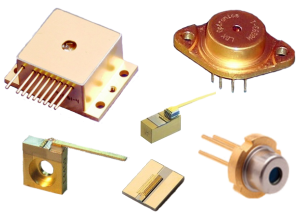
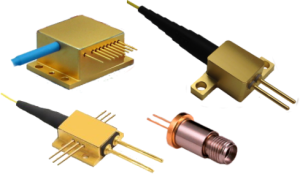
Start with the wavelength region and whether the system requires free-space or fiber-coupled output. Each family includes multiple wavelengths, power levels, and package options, with additional customization available when a standard configuration does not meet the application.
Visible
405–750 nm
Start here for visible multimode diode requirements spanning violet, blue, green, red, and near-visible wavelengths.
Near-Infrared
750–1400 nm
Start here for common NIR diode wavelengths used across pumping, sensing, illumination, medical, industrial, and OEM systems.
SWIR
1400–1900 nm
Start here when the application requires short-wave infrared diode output, including common 1.5 µm and longer-wavelength configurations.
Why LDX Optronics?
LDX Optronics has specialized in high-power multimode laser diodes since 1990, with manufacturing, packaging, burn-in, and characterization performed at its Tennessee facility. For OEMs and technical programs, the value is not simply the number of wavelengths available; it is the ability to combine diode, package, optical, thermal, and qualification requirements into a practical configuration.
US-Based Manufacturing & Program Support
LDX manufactures and packages its laser diodes in Tennessee. For OEM and long-term programs, LDX can also support production planning approaches such as just-in-time delivery and buffer stock, helping RPMC work with customers around forecast, continuity, and production requirements.
Packaging & Optical Integration
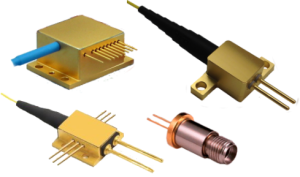
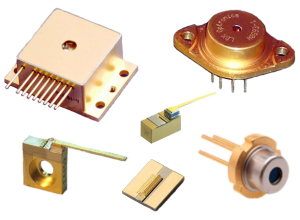
Available configurations include exposed-emitter, hermetically sealed, and fiber-coupled packages, with options that may include fast-axis collimation, TECs, thermistors, photodiodes, electrical isolation, and different fiber-coupling arrangements.
Qualification & Device Characterization
LDX performs wafer qualification and life testing, device burn-in, and individual electrical and optical characterization. Additional testing can be discussed when a program has specific environmental, shock, vibration, temperature, or lifetime requirements.
Standard, Configurable or Fully Custom?
The LDX catalog is a useful starting point, but the listed part numbers do not represent every possible solution. Depending on the requirement, RPMC can help determine whether an existing part, a configured version of an established design, or a more fully customized diode is the appropriate path.
Standard
Start with an existing LDX wavelength, emitter, output-power level, and package configuration when the catalog already meets the system requirements.
Configurable
When the core diode is appropriate but the integration is different, options may include package type, emitter size, fiber coupling, FAC lensing, TEC, photodiode, thermistor, electrical isolation, hermetic sealing, or related package features.
Fully Custom
For requirements outside the standard portfolio, RPMC can work with LDX to evaluate custom wavelength, emitter, output-power, chip, optical, or package requirements from prototype through production.
The Catalog Is a Starting Point
LDX’s current standard catalog includes wavelengths from 405–1900 nm, but availability, output power, emitter size, and package compatibility vary by wavelength and configuration. If you do not see an exact match, send RPMC the requirements rather than assuming the diode is unavailable.
What Should I Specify for an LDX Laser Diode?
You do not need every specification finalized before contacting RPMC. Start with what the application requires, identify which parameters are fixed, and let us know where there is flexibility.
Optical Requirements
- Required wavelength or acceptable wavelength range
- Required optical output power
- Free-space or fiber-coupled output
- Emitter size or fiber core / NA requirements
- Beam size, divergence, or focusing requirements
- Fast-axis collimation or other optical requirements
Package & Program Requirements
- Package or footprint constraints
- TEC, thermistor, photodiode, or electrical-isolation needs
- Operating temperature or environmental requirements
- Qualification or additional testing requirements
- Prototype, evaluation, or production quantity
- Forecast, delivery, or long-term program considerations
Not sure which of these specifications actually matter? Share the application and the requirements you already know. RPMC can help determine which parameters constrain the diode selection and which can remain flexible.
LDX Laser Diode Resources
- 2026 LDX Multimode Laser Diode Catalog – Current wavelength, power, emitter, and package information.
- Custom Fiber-Coupled Laser Diodes for Dental OEM Systems – An example of RPMC and LDX moving from an initial diode requirement into a customized fiber-coupled solution.
- Space-Qualified Laser Diodes: Development, Qualification & Acceptance – What qualification can involve when a diode is intended for a space program.
- LDX Optronics Capabilities & Technology – Additional manufacturer information on packages, lensing, soldering, customization, and testing.
Need Help Selecting or Configuring an LDX Laser Diode?
Tell us the wavelength, output power, package, fiber, optical, environmental, and production requirements you already know. RPMC can help compare the available LDX options and determine whether a standard, configured, or custom solution is the best starting point.
LDX Optronics Laser Diode FAQs
What wavelength range does LDX Optronics offer?
LDX’s current standard catalog includes multimode laser diode wavelengths from 405 nm through 1900 nm across visible, near-infrared, and SWIR families. Available output power, emitter size, package, and fiber options depend on the specific wavelength. Custom requirements can also be evaluated.
Can LDX laser diodes be customized?
Yes. Depending on the requirement, LDX can support changes to wavelength, emitter size, output power, package, fiber coupling, FAC lensing, temperature control, photodiodes, electrical isolation, hermetic sealing, and other design or integration requirements. RPMC can help determine whether the need is best met by a standard, configured, or fully custom solution.
Should I choose a free-space or fiber-coupled LDX laser diode?
That depends on how the light must be delivered into the system. Free-space configurations provide direct access to the emitted beam and package, while fiber-coupled configurations simplify delivery to a remote or constrained location. Required power, fiber core and NA, coupling efficiency, package size, alignment, and system architecture can all affect the choice.
Are LDX laser diodes space-qualified?
An LDX diode should not be assumed to be space-qualified simply because the underlying design is suitable for demanding environments. Space programs can require configuration-specific screening, testing, documentation, and acceptance criteria. RPMC and LDX can review those requirements when qualification is part of the program.
What information should I provide when requesting an LDX recommendation or quote?
Provide the application, wavelength, required optical power, free-space or fiber delivery, package constraints, emitter or fiber requirements, operating environment, quantity, and any special optical, thermal, electrical, or qualification requirements you already know. You do not need every parameter finalized before contacting RPMC.