 BUY NOW
 LGR-XXX
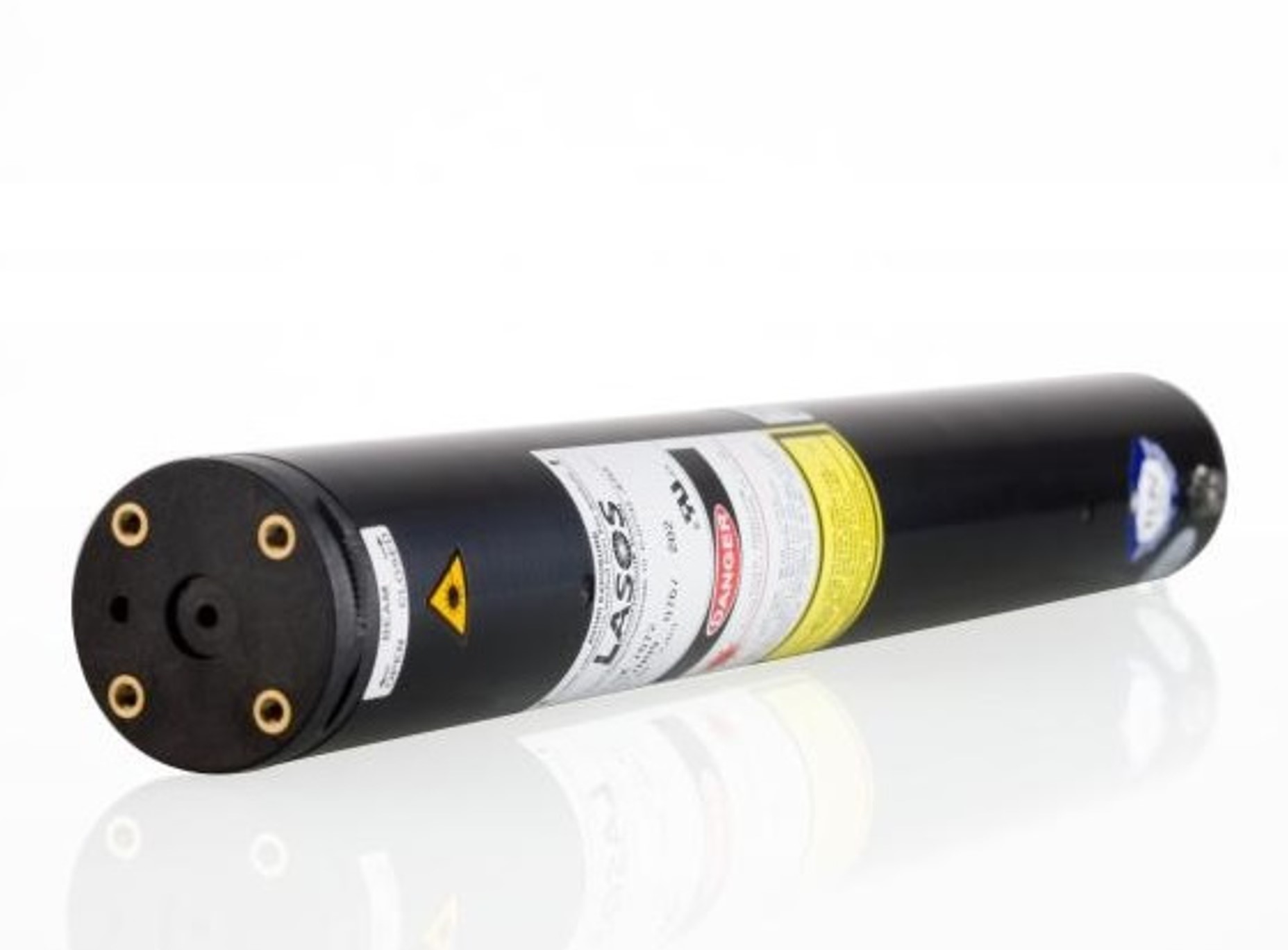
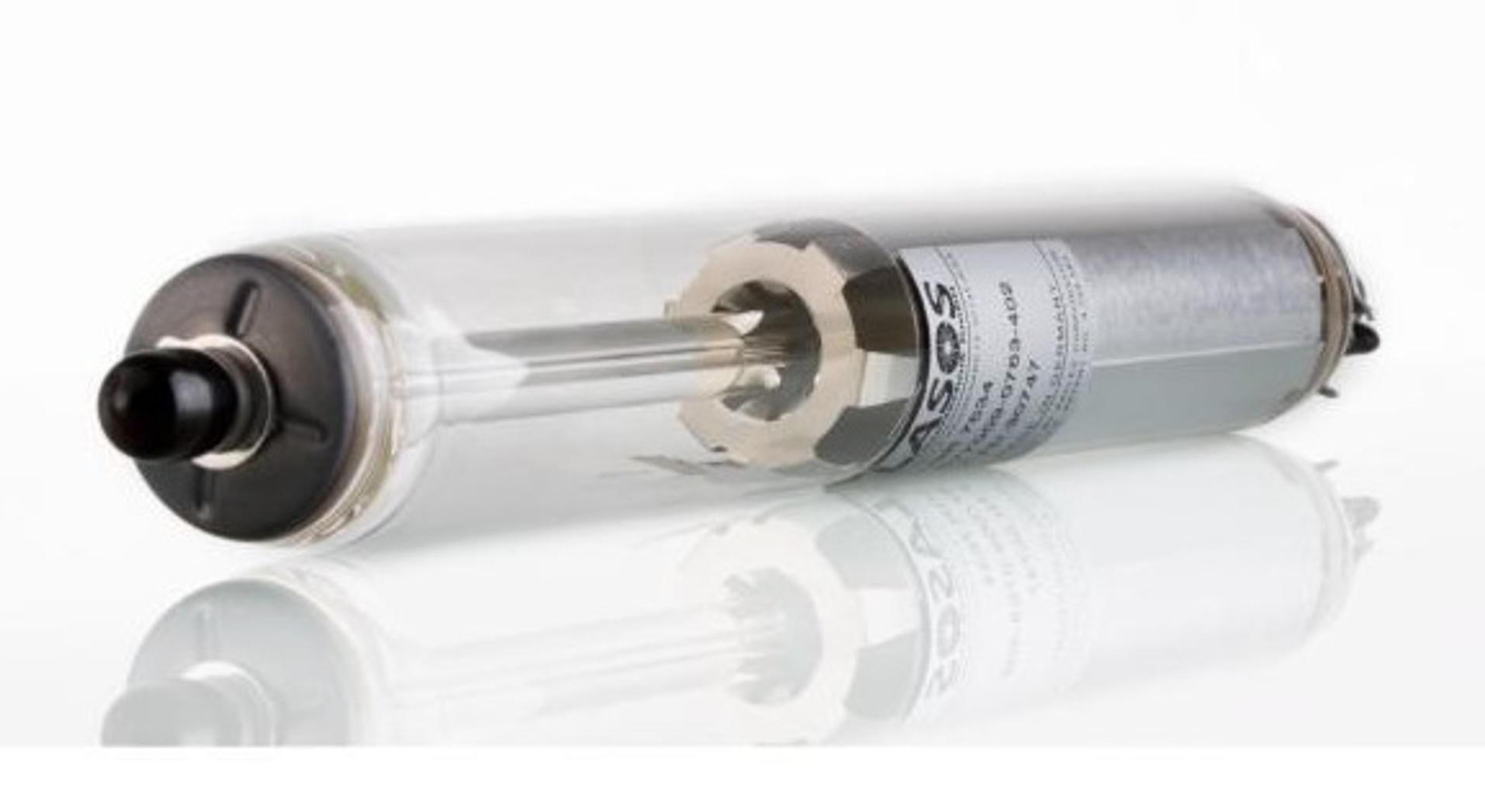
He-Ne Laser Replacement Tube, Single mode, 543-633nm, up to 20mW
Key Features:
- Absolute wavelength accuracy
- 30,000 hour lifetime
- Low noise and high stability
- Excellent beam quality
- Maintenance free
- Excellent pointing stability
- Compact design
- Stand-alone and OEM designs
- Reliable and robust
- Random or linear polarization
There are many different package types, wavelengths, output powers, and options to choose from. Get help selecting the right configuration for you!

POPULAR CONFIGURATIONS:
Picture |
Part Number |
Part Description |
Datasheet |
|
|---|---|---|---|---|
|
LGR 7610 |
He-Ne laser tube 632.8nm, 2mW with a 0.63 mm Beam Diameter |

|
Get Quote |
|
|
LGR 7610 P |
Polarized He-Ne laser tube 632.8nm, 2mW with a 0.63 mm Beam Diameter without sidelines |
|
Get Quote |
|
|
LGR 7610-02 |
Polarized He-Ne laser tube 632.8nm, 2mW with a 0.63 mm, No Polarization Switching |
Get Quote | |
|
|
LGR 7621 MM |
Multimode He-Ne laser tube 632.8nm, 5mW with a 1.4 mm Beam Diameter |
|
Get Quote |
|
|
LGR 7621 S |
He-Ne laser tube 632.8nm, 2mW with a 0.75 mm Beam Diameter |
|
Get Quote |
|
|
LGR 7621 S03 |
He-Ne laser tube 632.8nm, 2mW with a 0.75 mm Beam Diameter and no polarization switching |
|
Get Quote |
|
|
LGR 7627 |
He-Ne laser tube 632.8nm, 5mW with a 0.8 mm Beam Diameter |
|
Get Quote |
|
|
LGR 7627 BF |
He-Ne laser tube 632.8nm, 5mW with a 0.8 mm Beam Diameter and a Brewster window termination |
|
Get Quote |
|
|
LGR 7627 MM |
Multimode He-Ne laser tube 632.8nm, 10mW with a 1.5 mm Beam Diameter |
|
Get Quote |
|
|
LGR 7628 |
Polarized He-Ne laser tube 632.8nm, 5mW with a 0.8 mm Beam Diameter |
|
Get Quote |
|
|
LGR 7634 |
Polarized He-Ne laser tube 632.8nm, 2mW with a 0.75 mm Beam Diameter |
|
Get Quote |
|
|
LGR 7650 |
Polarized He-Ne laser tube 632.8nm, 0.5mW with a 0.49 mm Beam Diameter |
|
Get Quote |
|
|
LGR 7650-2 |
He-Ne laser tube 632.8nm, 0.5mW with a 0.49 mm Beam Diameter |
Get Quote | |
|
|
LGR 7655 |
He-Ne laser tube 632.8nm, 0.6mW with a 0.49 mm Beam Diameter |
|
Get Quote |
|
|
LGR 7655 S |
He-Ne laser tube 632.8nm, 1mW with a 0.49 mm Beam Diameter |
|
Get Quote |
|
|
LGR 7655-07 |
He-Ne laser tube 632.8nm, 0.6mW with a 0.49 mm Beam Diameter |
|
Get Quote |
|
|
LGR 7656 |
He-Ne laser tube 632.8nm, 0.5mW with a 0.34 mm Beam Diameter |
|
Get Quote |
|
|
LGR 7660 BF 01 |
He-Ne laser tube 632.8nm, 1mW with a 0.8 mm Beam Diameter and a Brewster window termination |
|
Get Quote |
|
|
LGR 7695 |
He-Ne laser tube 632.8nm, 0.75mW with a 0.49 mm Beam Diameter |
|
Get Quote |
|
|
LGR 7695-01 |
He-Ne laser tube 632.8nm, 0.75mW with a 0.49 mm Beam Diameter and a split frequency <2.3MHz at 200G |
|
Get Quote |
|
|
LGR 7695-02 |
He-Ne laser tube 632.8nm, 0.75mW with a 0.49 mm Beam Diameter and a split frequency of 2.3 – 2.8MHz at 260G |
|
Get Quote |
|
|
LGR 7696 |
He-Ne laser tube 632.8nm, 0.75mW with a 0.49 mm Beam Diameter and a random split frequency |
Get Quote |
The LGR-XXX HeNe laser replacement tubes boast an excellent TEM00 beam, robust mechanical design, a long service life of up to 30,000 hours, and are available in 543, 594, and 633nm wavelengths, with output powers up to 20mW. Choose between standard and customized models, with options for single or multimode, random or linear polarization, Brewster window tubes, and fiber coupling options. Designed for long life, low noise, and high stability, with many customization options, these HeNe lasers are perfect for multipurpose applications such as laser scanning microscopy, spectroscopy, digital imaging, metrology, industrial measurement, medical, research, education, or entertainment. Customized solutions for specific applications can be provided and all laser models can be provided with adequate OEM and laboratory power supplies, meeting European and American standards with the availability of approvals and certificates: CDRH, IEC, CSA, CE, TÜV, and UL.
RPMC Lasers’ series of Helium-Neon modules provides customers with a high-quality, reliable, and flexible solution for their laser needs. With a focus on quality and precision, these modules are designed to minimize risk and provide peace of mind for customers. Whether for scientific, industrial, or medical applications, these Helium-Neon modules are a proven and trusted choice.
If your exact needs are not in our popular configurations, define your ideal laser module and let us find the best solution!
Product Range:
Wavelength Selection:
Absolute wavelength accuracy in a wide spectral range with green, yellow, and red wavelengths.
| Green | Yellow | Red |
| 543nm | 594nm | 633nm |
Output Power Selection:
Output powers may vary based on wavelength and options.
| 2mW | 5mW | 10mW | 15mW | 18mW | 20mW |
Beam Diameter:
Beam diameters may vary based on wavelength and mode.
| 0.49mm | 0.63mm | 0.75mm | 0.8mm | 0.88mm | 1mm | 1.5mm |
Polarization:
| Randomly Polarized | Random polarization has an electric field vector that fluctuates randomly. |
| Linearly Polarized | Linear polarization has an electric field vector that doesn’t change over time or position |
Other Options:
| Brewster Window Tubes | Produce a laser beam that is not only monochromatic but polarized as well. |
| Fiber Coupling | Can be fiber coupled into a single mode or polarization-maintaining fiber. |
| Power Supply | OEM and laboratory power supply options are available. |
Benefits:
- High stability and Low Noise:
- Ensure consistent and accurate results, minimizing the risk of errors and reducing the need for adjustments or recalibrations.
- Long Life and Robust Mechanical Design:
- Minimize downtime and replacement costs, providing peace of mind for customers and reducing the risk of unexpected failures.
- Custom Models:
- Tailor the Helium-Neon modules to your specific needs, ensuring optimal performance for your unique applications.
- Versatile Power Supply Options:
- Use your module in a variety of settings, reducing the risk of compatibility issues and providing flexibility for future changes in power requirements.
- High Coherence Length:
- Coherence length varies from 20 cm (multimode) to more than 100 m, depending on cavity parameters, mirrors, and etalons used.
- Stable Central Wavelength:
- Very stable oscillation frequency of <1 MHz (<0.001 pm @633 nm) with stabilization measures. Non-stabilized lasers can drift in the range of 1 pm.
- High Spectral Purity:
- We can force the laser to oscillate in just one of several emission bands. No spontaneous emission or emission from other bands is detectable.
- Good Beam Quality and Alignment:
- The longer the tube, the easier it is to get a good Gaussian beam profile, good beam quality, and very good angular and spatial alignment with respect to the laser housing.
- Low-Cost:
- Many years of HeNe laser manufacturing have allowed for a more efficient, time-tested process, providing cost-effective, repeatable performance.
If you have any questions or need more information, please contact us.
| Wavelength (nm) | |
|---|---|
| Description | He-Ne Laser Replacement Tube, Single mode, 543-633nm, up to 20mW |
| Type | HeNe Lasers, Narrow Linewidth, Long Coherence Length, Single Longitudinal Mode (SLM), Collimated Beam, Fiber-Coupled |