 BUY NOW
 BK-FA-CW
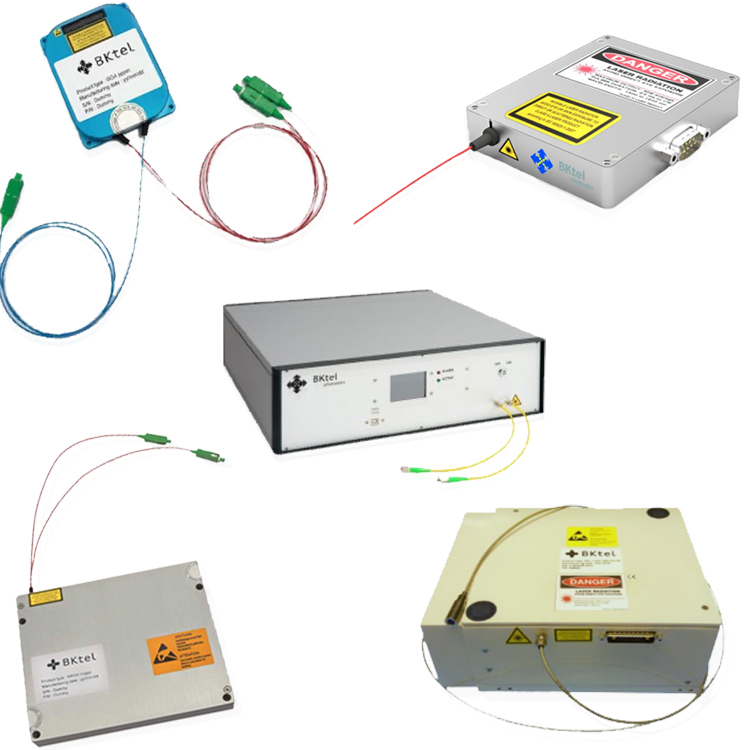
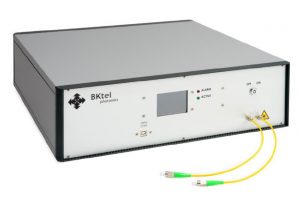
CW fiber amplifiers, 1030-2050 nm, -14 to +15 dBm input, up to 40 W output, OEM and turnkey options
Key Features:
- 1030-2054 nm family coverage across 1, 1.5 and 2 µm bands
- Up to 40 W CW output on selected configurations
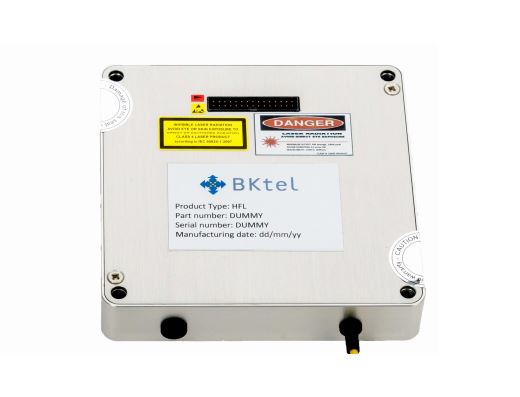
- Compact OEM modules or turnkey tabletop systems
- Narrow-linewidth and low-RIN options
- Linear or random polarization options
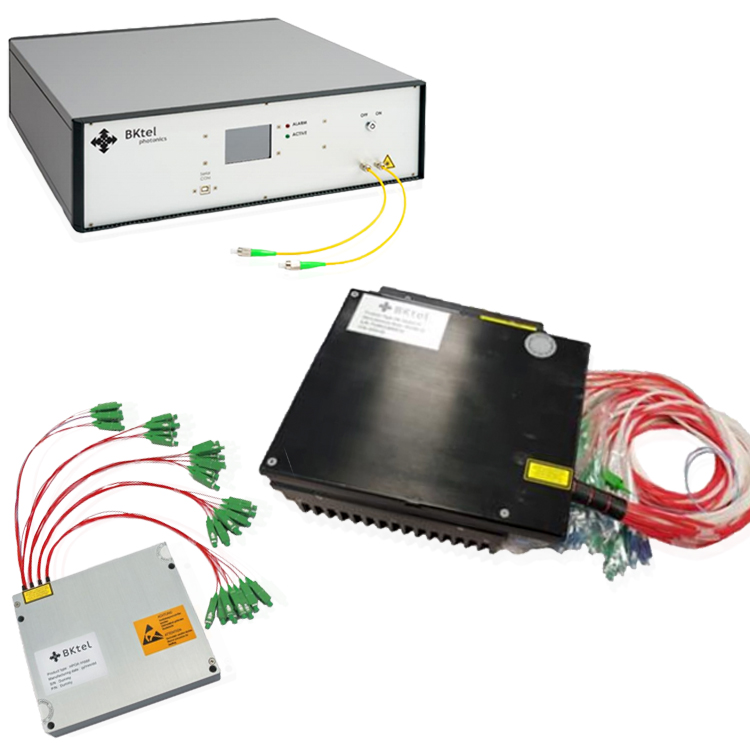
- Single or multiple output ports with configurable monitoring and optical interfaces
Choose the wavelength band and amplifier architecture, then narrow the output power, seed / input requirements, polarization, linewidth or noise performance, gain behavior, package & output interface.
Not sure where to start? Send RPMC any known requirements, OEM vs. tabletop preference, quantity & application. We’ll help narrow the BK-FA-CW configuration.
POPULAR CONFIGURATIONS:
Picture |
Part Number |
Part Description |
Datasheet |
|
|---|---|---|---|---|
|
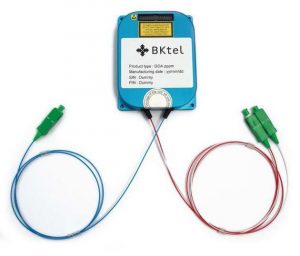
GOA-F |
Fiber Amplifier, 1528 – 1564nm, 316mW, Fixed Gain, OEM |

|
Get Quote |
|
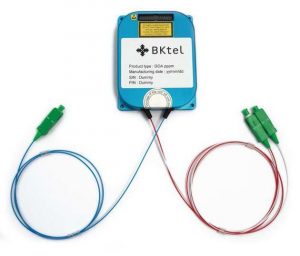
GOA-V |
Fiber Amplifier, 1528 – 1564nm, 316mW, Variable Gain, Telecom, OEM |
|
Get Quote |
|
GRA-F |
Fiber Amplifier, 1529 – 1563, 500mW, Raman Pump Module, Backward Direction, OEM |
|
Get Quote |
|
|
GRA-B |
Fiber Amplifier, 1529 – 1563, 500mW, Raman Pump Module, Backward Direction, OEM |
|
Get Quote |
|
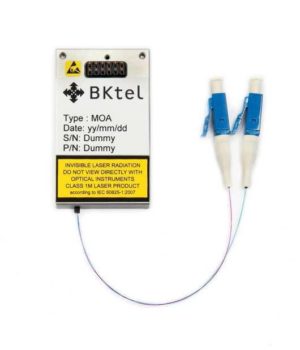
MOA |
Fiber Amplifier, 1529 – 1564nm, up to 50mW, Telecom, OEM |
|
Get Quote |
|
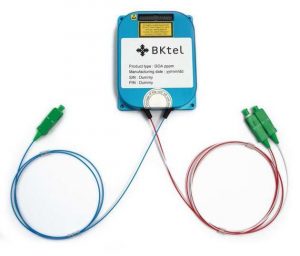
GOA-B |
Fiber Amplifier, 1530 – 1564nm, up to 200mW, Bidirectional, OEM |
|
Get Quote |
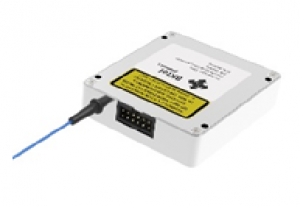
|
CGOA3 |
Fiber Amplifier, 1530 – 1564nm, up to 200mW, OEM |
|
Get Quote |
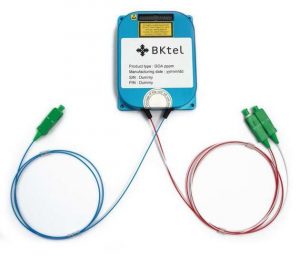
|
GOA |
Fiber Amplifier, 1530 – 1564nm, up to 1.58W, OEM |
|
Get Quote |
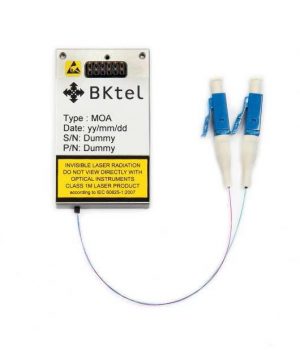
|
ROA1 |
Fiber Amplifier, 1530 – 1564nm, up to 1.58W, Long-Haul, Rack mount |
|
Get Quote |
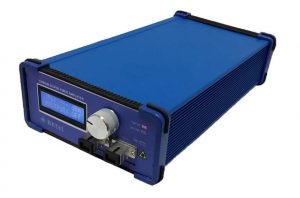
|
TOA |
Fiber Amplifier, 1530 – 1564nm, up to 1W, Turnkey, OEM |
|
Get Quote |
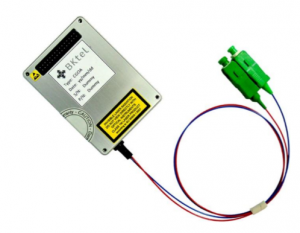
|
CGOA |
Fiber Amplifier, 1530 – 1564nm, up to 1W, OEM |
|
Get Quote |
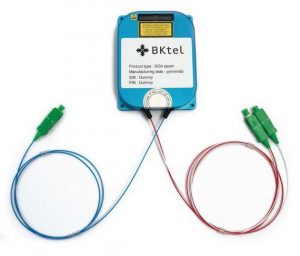
|
GOA-P |
Fiber Amplifier, 1530 – 1564nm, up to 1W, Polarization Maintaining, OEM, |
|
Get Quote |
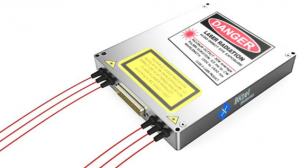
|
LRA |
Fiber Amplifier, 1530 – 1564nm, up to 2W, Low RIN, OEM |
|
Get Quote |
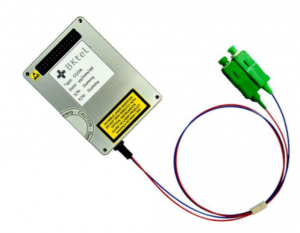
|
CGOA2 |
Fiber Amplifier, 1535 – 1564nm, up to 1.5W, OEM |
|
Get Quote |
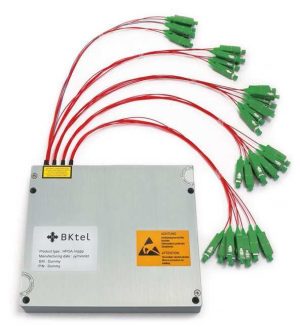
|
HPOA-P |
Fiber Amplifier, 1535 – 1564nm, up to 5W, Polarization Maintaining, OEM |
|
Get Quote |
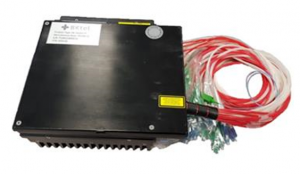
|
UHPOA-1.5 |
Fiber Amplifier, 1535 -1564nm, up to 10W, OEM |
|
Get Quote |
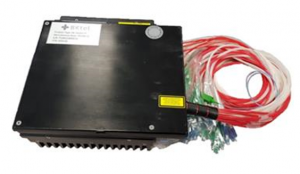
|
UHPOA-P |
Fiber Amplifier, 1535 -1564nm, up to 10W, Polarization Maintaining, OEM |
|
Get Quote |
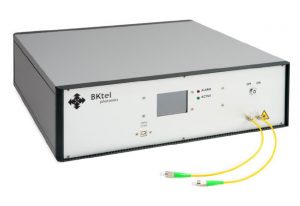
|
THPOA |
Fiber Amplifier, 1540 -1564nm, up to 10W, Turnkey |
|
Get Quote |
|
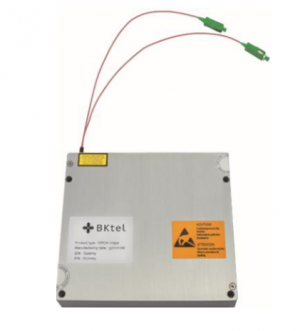
HPOA-1.5 |
Fiber Amplifier, 1540 -1564nm, up to 5W, OEM |
|
Get Quote |

|
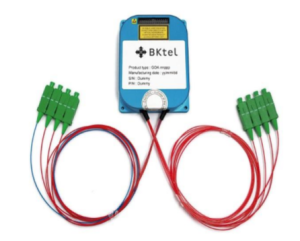
HPOA-IP |
Fiber Amplifier, 1545 – 1564nm, up to 30mW per port, Polarize Maintaining, Multi Port, Integrated WDM, OEM |
|
Get Quote |
|
GOA-M |
Fiber Amplifier, 1545 – 1564nm, up to 30mW per port, Analogue Signal, Multi Port, OEM |
|
Get Quote |
|
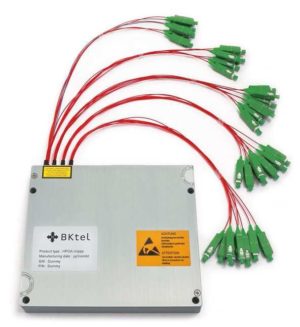
HPOA-M |
Fiber Amplifier, 1545 – 1564nm, up to 5W, Multi Port, OEM |
|
Get Quote |
|
|
HPOA-SFP |
Fiber Amplifier, 1545 – 1564nm, up to 5W, Single Frequency, OEM |
|
Get Quote |
|
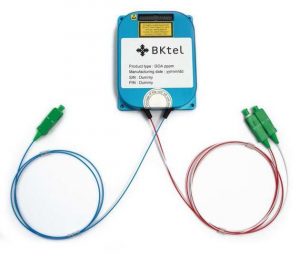
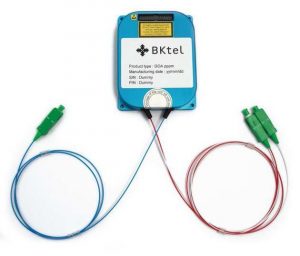
GOA-PL |
Fiber Amplifier, 1570 – 1604nm, up to 500mW, L band, Polarization Maintaining, OEM |
|
Get Quote |
|
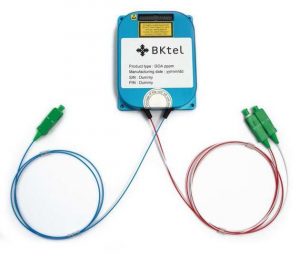
GOA-LF |
Fiber Amplifier, 1570 – 1604nm, up to 1W, Fixed Gain, L Band, OEM |
|
Get Quote |
|
GOA-LV |
Fiber Amplifier, 1570 – 1604nm, up to 1W, Variable Gain, L Band, OEM |
|
Get Quote |
|
|
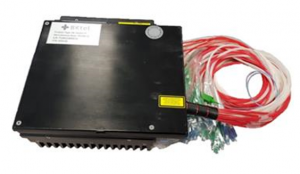
HPOA-L |
Fiber Amplifier, 1570 – 1604nm, up to 5W, L band, OEM |
|
Get Quote |
|
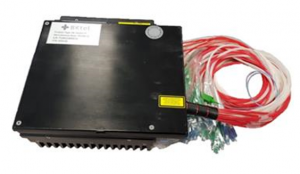
UHPOA-L |
Fiber Amplifier, 1570 -1605nm, up to 10W, L Band, OEM |
|
Get Quote |
|
UHPOA-1P |
Fiber Amplifier, 1030-1054nm, Up to 10W |
|
Get Quote |
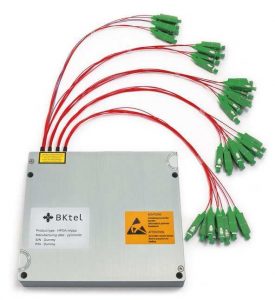
|
HPOA-1 |
Fiber Amplifier, 1030-1054nm, Up to 5W |
|
Get Quote |
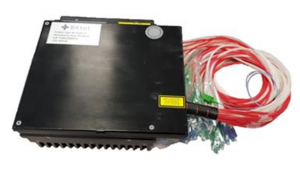
|
UHPOA-1 |
Fiber Amplifier, 1030-1054nm, Up to 10W |
|
Get Quote |
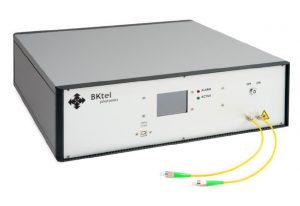
|
THPOA-1 |
Fiber Amplifier, 1030-1054nm, Up to 40W |
|
Get Quote |
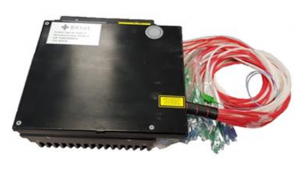
|
UHPOA-2P |
Fiber Amplifier, 1750-2054nm, Up to 10W |
|
Get Quote |
|
THPOA-2 |
Fiber Amplifier, 1750-2054nm, Up to 10W |
|
Get Quote |
Overview: BK-FA-CW 1, 1.5 & 2 µm CW Fiber Amplifiers
The BK-FA-CW family provides configurable continuous-wave fiber amplification for systems that already have a seed laser or optical input and need additional output power. Available architectures span key wavelength bands from 1030-2054 nm, with compact OEM modules and turnkey tabletop configurations.
Depending on the wavelength and amplifier architecture, configuration options can include narrow-linewidth or single-frequency operation, low-RIN performance, linear or random polarization, fixed or variable gain, input and output monitoring, and single or multiple output ports. Output power varies substantially by configuration, with selected 1 µm systems reaching up to 40 W CW.
The family is especially useful when the seed source is already defined and the amplifier must be configured around its wavelength, input power, signal characteristics, package constraints, optical interfaces, and required output power.
If a standard configuration does not match the requirement, RPMC can help define the key constraints and work with BKtel to evaluate an application-specific or custom amplifier configuration.
Start Here When You Already Have a Seed and Need More Optical Power
BK-FA-CW is the likely starting point when:
- You already have a seed laser or optical signal and need additional CW output power.
- Your required wavelength falls within the available 1, 1.5, or 2 µm amplifier families.
- Linewidth, RIN, polarization, gain, or signal monitoring requirements influence the amplifier configuration.
- You need a compact OEM module for integration or a complete tabletop amplifier for laboratory or system use.
- Your architecture requires one or multiple optical outputs, specific fiber terminations, or other interface choices.
- A standard amplifier is close to the requirement, but packaging, power, wavelength, or integration constraints may require additional configuration.
If you need the complete CW source rather than amplification of an existing seed:
Start with theBK-FL-CW fiber laser family.
If the application requires nanosecond or picosecond pulses rather than CW operation:
Start with theBK-FL-Pulsed family.
Choose the BK-FA-CW Amplifier Wavelength Band
BKtel CW fiber amplifiers are available across the 1, 1.5 and 2 µm bands. The appropriate family depends first on the seed wavelength, then on the required output power, signal characteristics, package, polarization and optical interface.
| Amplifier Band | Representative Published Wavelengths | Output Capability | Typical Starting Point |
|---|---|---|---|
| 1 µm | 1030 / 1053 / 1064-1100 nm, depending on configuration | Compact multi-watt amplifiers through selected configurations up to 40 W CW | High-power amplification for LiDAR, industrial, scientific and test systems |
| 1.5 µm | C-band and L-band configurations, including approximately 1528-1605 nm depending on product family | Low-signal telecom amplification through high-power and multi-port configurations | Telecom, free-space optical communications, LiDAR, coherent sensing and specialized OEM systems |
| 2 µm | Published high-power configurations from approximately 1750-2050 nm | Up to 10 W CW on published high-power configurations | Specialized LiDAR, industrial and longer-wavelength optical systems |
How to Configure a BK-FA-CW Fiber Amplifier
Once the wavelength band is established, the amplifier configuration should be matched to the seed source and the requirements of the complete optical system.
- Define the seed wavelength and input power.
The seed determines which gain architecture is appropriate, while available input-power ranges vary by amplifier family. - Set the required output power.
Choose the output level required at the system interface rather than simply selecting the highest available amplifier power. - Identify the signal characteristics that must be preserved.
Specify polarization, linewidth, relative intensity noise, modulation or other signal requirements when they are important to system performance. - Choose the package and optical interface.
BKtel configurations can include compact OEM modules or tabletop systems with options for fiber connectors, collimated output and single or multiple optical ports. - Define monitoring, control and integration requirements.
Input/output monitoring, gain or power control, communications, environmental constraints, size, power consumption and production quantity may all influence the final configuration.
Need an Amplifier Beyond the Published Configurations?
BKtel supports application-specific and custom amplifier configurations when a standard model is close to the requirement but does not fully address the wavelength, power, polarization, signal, packaging or integration needs of the system.
Send RPMC the requirements that must stay fixed and where the design has flexibility. We can help determine whether an existing configuration, a modified platform or a custom amplifier approach is the practical starting point.
BK-FA-CW Fiber Amplifier Applications
The BK-FA-CW family supports applications that need additional CW optical power while retaining the seed wavelength and other important signal characteristics. The appropriate amplifier architecture depends on the wavelength band, seed conditions, required power and integration constraints.
LiDAR, Rangefinding & Coherent Sensing
High-power and low-RIN amplifier configurations can support LiDAR and coherent sensing systems that require greater transmit power or range while maintaining important seed characteristics. BKtel also offers dedicated 1.55 µm amplifier architectures for compact and “eye-safe” LiDAR applications.
Telecom & Free-Space Optical Communications
C-band and L-band amplifier options support telecom, data transmission and free-space optical communication architectures. Available configurations include fixed or variable gain, polarization-maintaining, high-power and multi-port amplifier designs.
Scientific & Test Systems
BKtel amplifiers can support laboratory and test systems where the seed laser is already established and additional optical power, polarization control, signal monitoring or a specialized wavelength band is required.
OEM & Industrial Integration
Compact module formats and configurable optical, electrical and control interfaces allow BK-FA-CW amplifiers to be integrated into OEM instruments and specialized industrial systems where package size, power consumption, communications and fiber delivery must be considered alongside optical performance.
What Does RPMC Need to Help Configure Your Fiber Amplifier?
Send as many of these as you know:
- Seed wavelength or required amplifier wavelength range
- Seed/input optical power
- Required output power
- Required gain or gain-control behavior, if known
- Polarization requirements
- Linewidth, RIN or other signal-quality requirements
- CW modulation requirements, if applicable
- Single or multiple output ports
- Fiber termination, connector or collimated-output requirements
- OEM module or tabletop preference
- Size, weight, power or environmental constraints
- Application, quantity and project timeline
You do not need to identify the final BKtel model before contacting RPMC.
We can help translate the optical and integration requirements into the appropriate amplifier family and configuration.
BKtel CW Fiber Amplifier FAQs
Common questions about BKtel CW fiber amplifier wavelength bands, seed requirements, output power, “eye-safe” 1.55 µm options and custom OEM configurations.
What is the difference between a fiber laser and a fiber amplifier?
A fiber laser provides the complete optical source. A fiber amplifier accepts an existing seed or optical signal and increases its optical power. Start with BK-FA-CW when the seed is already defined and amplification is the primary requirement.
What wavelength bands are available for BKtel CW fiber amplifiers?
BKtel offers CW optical amplifier families around the 1, 1.5 and 2 µm wavelength bands. Exact wavelength coverage depends on the amplifier architecture and model, including C-band and L-band options within the 1.5 µm family.
Does BKtel offer “eye-safe” fiber amplifier options?
BKtel offers dedicated 1.55 µm amplifier configurations for LiDAR applications that are described as operating in the “eye-safe” wavelength region. Final laser-safety classification depends on the complete system, including output power, beam characteristics, optics and operating conditions.
How much seed power does a BKtel fiber amplifier require?
Required input power is model dependent. Published high-power BKtel configurations commonly accept input levels around -10 or -8 dBm up to +15 dBm, while telecom amplifier architectures can be designed for substantially weaker input signals. RPMC can help match the amplifier to the available seed power.
Can BKtel CW fiber amplifiers be customized for OEM applications?
Yes. BKtel supports custom amplifier variants, and available configuration choices can include wavelength, power, polarization, gain behavior, optical monitoring, package format, fiber interfaces, output ports and control requirements. RPMC can help define the requirement set before final configuration with BKtel.
| Wavelength (nm) | |
|---|---|
| Description | Fiber Amplifiers, CW, 1030-2050 nm, -14 to +15 dBm input, up to 40 W output |
| Type | "Eye Safe", Narrow Linewidth, Fiber-Coupled, Turn-Key System, Customizable |