
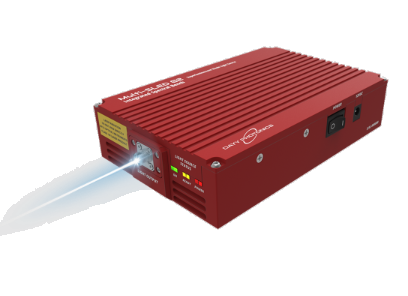
ISB2

Superluminescent Diode, Multi-SLED, Turnkey, Broadband, CW, 2-6 SLEDs, Center wavelength option 770-1680 nm, FWHM 40-460nm, Up to 130 mW

Key Features:

  • 2 to 6 SLEDs in a single unit
  • Spectral Stitching provides optimum power and bandwidth
  • SLED options: 770-1680 nm
  • Bandwidth FWHM: 40-460 nm
  • Adj. power: 0-100% – Up to 40mW FC / 130 mW free-space
  • Comms: USB, RS-232, Ethernet
  • User-friendly GUI, Custom API available for test automation
  • Compact, turnkey format
  • Photodiode & TEC cooling
  • Optimized for max coupling efficiency w/ SM or PM fiber
  • Broadband Dual Stage PMF Isolator (35dB)

There are many different configurations, choices for center wavelength, and other options. Get help selecting the right configuration for you!

Need Quantities? Have a question? Looking for a quote?
The SLED Series

The SLED Series represents a family of high-performance Superluminescent Diode (SLED) light sources, designed to deliver exceptional broadband spectral coverage and low temporal coherence. Leveraging advanced semiconductor technology, the SLED Series combines the high power and brightness of laser diodes with the broad spectral output of conventional LEDs. Available in compact, industry-standard packages such as 14-pin butterfly, these sources feature integrated thermoelectric coolers (TEC), monitor photodiodes, and isolators to ensure stable, high-quality performance. With center wavelengths ranging from 770nm to 1680nm and bandwidths from 10nm to 460nm, the SLED Series offers customizable spectral stitching and power options (up to 130mW free space), making it ideal for a wide range of applications. The series meets Telcordia GR-468 and RoHS/Reach standards, ensuring reliability and compliance, and offers specialty devices featuring distributed feedback (DFB), tunable external cavity lasers, semiconductor optical amplifiers, and amplified spontaneous emission (ASE) sources.

ISB2 – Integrated Spectral Bench – Multi-SLED – Overview

DAYY’s Multi-SLED® (superluminescent diode) is a compact broadband light source that operates within the near-infrared region. The product itself is a fully enclosed Integrated Spectral Bench (ISB2) containing DAYY’s proprietary 32-pin butterfly package that uses a set of superluminescent diodes, one monitor diode for each SLED (enabling better power control and monitoring capabilities), an integrated isolator, a thermoelectric cooler (TEC), and a driver circuit to provide overlapping spectral coverage. This user-controlled box enables complete control of up to six light sources enclosed.

The ISB2 includes various spectral coverages with SLED’s ranging from 770nm to 1680nm, with up to 40mW of optical power. Users operate with complete control of the temperature from a remote device (e.g., PC or laptop) or from the dip switches on the side of the bench. The bench includes six monitor diodes, and is capable of USB, RS-232, or Ethernet connection. The ISB2 is compact and easy to use, making it a great fit for manufacturer assemblies requiring light power.

The Multi-SLED uses DAYY’s technology of spectral stitching to provide extensive spectral coverage. This technology intergrates multiple wavelengths into a single spatially coherent beam with low temporal coherence and broad spectral coverage. The Multi-SLED product lines can be spectrally tailored to suit specific application needs. This provides exceptional flexibility and usability, making these sources ideal for the applications included below:

ISB2 Laser Type Ordering Option:

Low-Degree of Polarization (DOP): the ISB1 can provide under 5% DOP across spectrum – this minimizes polarization sensitivity of fiber sensors and reduces the effects of polarization dependent loss

Free-Space Output: for higher-power applications that do not require fiber optics, higher power free-space models are available, providing a direct collimated beam

Customization, Packaging & Assembly Capabilities

ISB2 – Multi-SLED Benefits:

  • Spectral Stitching Technology:
    • Achieve broad spectral coverage from 770 nm to 1680 nm, delivering up to 130 mW output power in the free-space configuration
  • 2-6 Independently Adjustable SLEDs:
    • Enhance control and precision, with adjustable power from 0-100% for each individual SLED and bandwidth options from 40-460 nm
  • Central Wavelength Options:
    • 770nm, 830nm, 850nm, 880nm, 930nm, 970nm, 1050nm, 1300nm, 1340nm, 1390nm, 1430nm, 1480nm, 1550nm, 1615nm, 1680nm
  • Fiber-Coupled and Free-Space Configurations:
    • Flexible fiber-coupled output (up to 40 mW) and high-power free-space output (up to 130 mW) options to suit your needs
  • Compact, User-Friendly, Turnkey Design:
    • Simplify operation & integration: intuitive GUI, compact design, USB, RS-232, or Ethernet options & remote temperature control
  • Integrated Isolators and Monitor Photodiodes
    • Enhance reliability in select models, reducing noise and ensuring stable operation in demanding environments.
  • Low DOP (<5%) Options:
    • Minimize polarization effects, improving accuracy in fiber sensing and reducing polarization-dependent loss for sensitive applications

ISB2 – Multi-SLED Applications:

  • Optical Component Testing
  • Telecom Test Equipment
  • Medical Optical Coherence Tomography
  • Industrial Optical Coherence Tomography

  • Industrial and Biomedical Imaging Systems
  • Optical Sensing
  • Test and Measurement
  • Research and Development


If you have any questions or need more information, please contact us:

Back to all DAYY Photonics products

How can we help you?

Talk to one of our experienced product managers today!

Contact us

CW Lasers FAQs

How do I align my optical system?

How do I align my optical system?

Laser alignment can be a challenging task, but aligning a laser beam doesn’t have to be as complicated as it might seem with the right optical alignment tools and proper laser alignment techniques. Multiple optical alignment techniques have been developed over the years, utilized by technicians and engineers to simplify the alignment process. With the development of these universal laser beam alignment methods, along with some laser alignment tips and tricks, you don’t need to be a laser expert to perform your alignments with relative ease, ensuring your laser beam path is right where you want it to be and your beam is on target every time. Read our article, titled “Laser Alignment: HeNe Lasers, Methods, and Helpful Tips” to get the knowledge and advice you need for proper optical beam path alignment utilizing HeNe Lasers. Get more information from our Lasers 101, Blogs, Whitepapers, FAQs, and Press Release pages in our Knowledge Center!

Should I choose multimode or single-mode for Raman spectroscopy?

On the surface, this seems like a simple question since Raman is a nonlinear optical effect and therefore the tighter the beam can be focused the higher the conversion efficiency.  Seemingly a single-mode laser would be preferable, but in practice there are other factors that can complicate the situation. The first question you should ask yourself when considering which type of laser to choose is whether you are doing microscopy or bulk sampling.  If the answer to that question is microscopy, then you immediately should go with a single mode laser.  Since the goal of any microscopy system is to produce the highest resolution image possible, the number one consideration should be how tightly can the laser beam be focused down. However, there are several other considerations when choosing between multimode and single-mode. Learn which is best for you in this article: “Multimode vs Single-Mode Lasers for Raman Spectroscopy.” Get more information from our Lasers 101, Blogs, Whitepapers, FAQs, and Press Release pages in our Knowledge Center!

What is a CW Laser?
What is a CW Laser?

A CW or continuous-wave laser is any laser with a continuous flow of pump energy. It emits a constant stream of radiation, as opposed to a q-switched or mode-locked pulsed laser with a pulsed output beam. A laser is typically defined as having a pulse width greater than 250 ms. The first CW laser was a helium-neon (HeNe) gas laser, developed in 1960, which you can read more about in this blog “HeNe Lasers: Bright Past, Brighter Future.” If you want to read more about the types of CW Lasers we offer, check out the Overview of CW Lasers section on our Lasers 101 Page!

What is the best laser for optical surface flatness testing?

It is essential that the laser exhibit a high level of spectral stability, ensuring that any changes in the interference pattern are caused by features in the sample and not originating from the laser beam. In addition to spectral stability, high beam pointing stability ensures consistent measurements by mitigating any beam position drift concerning the position of the sample. Lasers with longer coherence lengths, and subsequently narrower linewidths, play an important role in determining the resolution of the measurement, as well as consideration of the wavelength used. Exhibiting both single longitudinal mode and single spatial mode has excellent benefits. Get more information from our Lasers 101, Blogs, Whitepapers, FAQs, and Press Release pages in our Knowledge Center!

What type of laser is best for Doppler LIDAR?

What type of laser is best for Doppler LIDAR?

Various LIDAR signal methods for measuring velocity have one critical requirement in common, the need for precise control over laser frequency. While a wide variety of single-frequency lasers have been used in Doppler LIDAR research, the industry as a whole has adopted single-frequency fiber lasers as the ideal light source. Fiber lasers have several advantages over traditional DPSS lasers, all of which derive from the geometry of the fiber optic itself, namely the innate ability to have an extremely long single-mode optical cavity. This geometry allows for the production of either extremely high-power, single-mode lasers producing unprecedented brightness, or extremely narrow band lasers, with near perfect single-frequency output. If you want to learn more about Doppler LIDAR, the critical considerations involved, and ideal laser sources, check out this whitepaper: “Single-Frequency Fiber Lasers for Doppler LIDAR.” Get more information from our Lasers 101, Blogs, Whitepapers, FAQs, and Press Release pages in our Knowledge Center!

What’s the difference between single transverse mode & single longitudinal mode?

What’s the difference between single transverse mode & single longitudinal mode?

Within the laser community, one of the most overused and often miscommunicated terms is the phrase “single mode.”  This is because a laser beam when traveling through air takes up a three-dimensional volume in space similar to that of a cylinder; and just as with a cylinder, a laser beam can be divided into independent coordinates each with their own mode structure.  For a cylinder we would call these the length and the cross-section, but as shown in the figure below for a laser beam, we define these as the transverse electromagnetic (TEM) plane and the longitudinal axis.   Both sets of modes are fundamental to the laser beam’s properties, since the TEM modes determine the spatial distribution of the laser beams intensity, and the longitudinal modes determine the spectral properties of the laser.  As a result, when a laser is described as being “single-mode” first you need to make sure that you truly understand which mode is being referred to.  Meaning that you must know if the laser is single transverse mode, single longitudinal mode, or both. Get all the information you need in this article: “What is Single Longitudinal Mode?” Get more information from our Lasers 101, Blogs, Whitepapers, FAQs, and Press Release pages in our Knowledge Center!