 BUY NOW
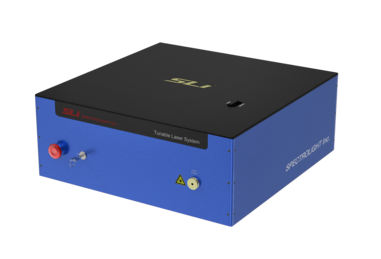
 TLS-Blue Fixed-Bandwidth
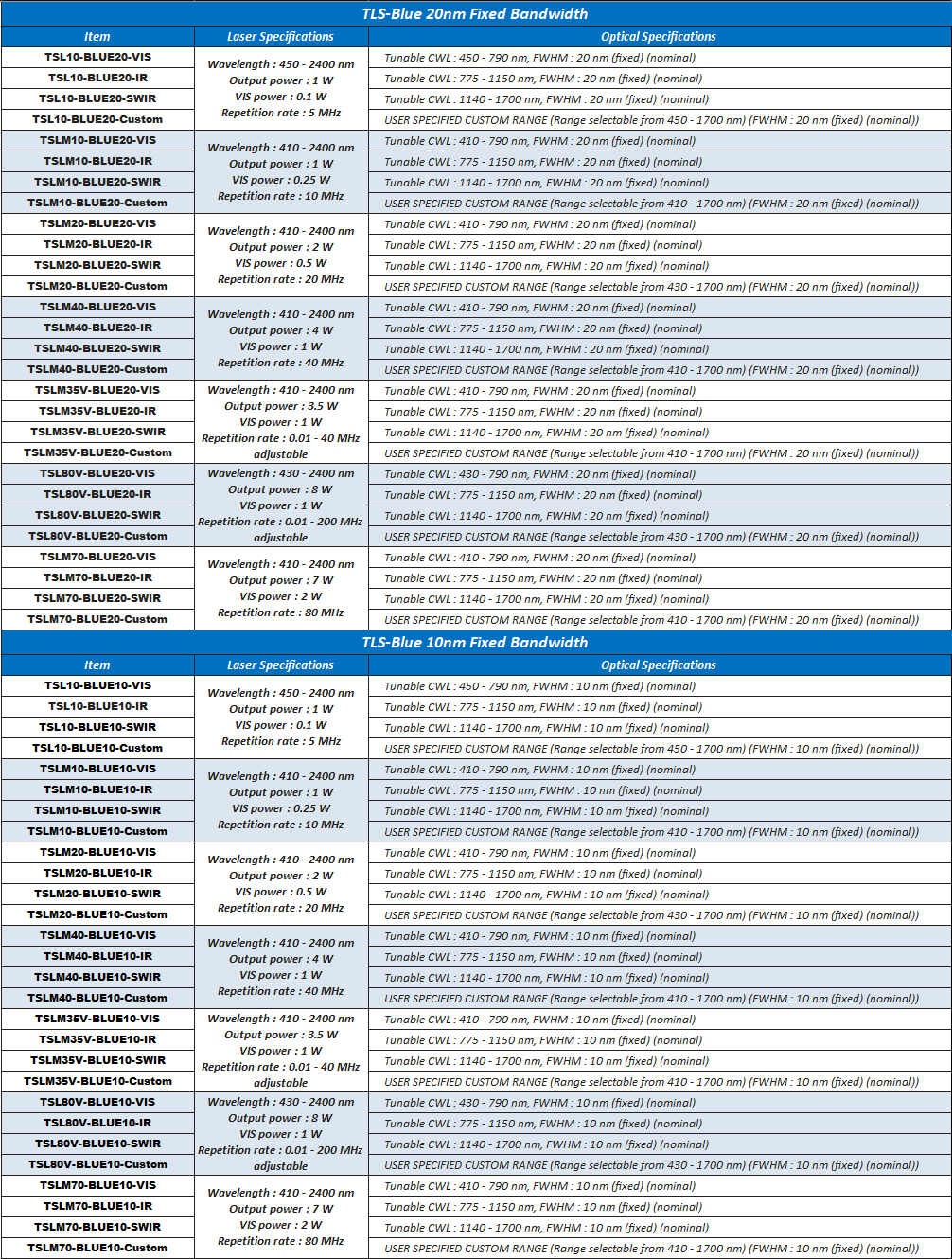
Picosecond supercontinuum-based tunable laser with software-controlled wavelength selection and fixed 10 or 20 nm bandwidth across selectable VIS, IR, SWIR, or custom ranges within 410-1700 nm.
Key Features:
- 410-1700 nm platform coverage output across VIS, IR, SWIR, or custom ranges
- Fixed 10 or 20 nm FWHM bandwidth
- Fixed or variable repetition rates up to 200 MHz
- Software-based wavelength selection
- Out-of-band blocking up to OD 10
- One-box, plug & play system – No routine optical alignment
Choose from multiple picosecond supercontinuum source configurations, then select the wavelength region and fixed-bandwidth option required for your application.
Not sure where to start? Send RPMC your wavelength range, desired bandwidth, power needs, pulse width, rep. rate & application. We’ll help narrow the available TLS-Blue configurations.
POPULAR CONFIGURATIONS:
Picture |
Part Number |
Part Description |
Datasheet |
|
|---|---|---|---|---|
|
TSL10-BLUE |
Tunable Laser System, 450-1700 nm Fixed, 1W total avg. power (100mW – VIS), <300 ps pulse width, 5 MHz rep rate |

|
Get Quote |
|
|
TSLM10-BLUE |
Tunable Laser System, 410-1700 nm Fixed, 1W total avg. power (250mW – VIS), <50 ps pulse width, 20 MHz rep rate |
|
Get Quote |
|
|
TSLM20-BLUE |
Tunable Laser System, 410-1700 nm Fixed, 2W total avg. power (500mW – VIS), <50 ps pulse width, 20 MHz rep rate |
|
Get Quote |
|
|
TSLM40-BLUE |
Tunable Laser System, 410-1700 nm Fixed, 4W total avg. power (1W – VIS), <50 ps pulse width, 40 MHz rep rate |
|
Get Quote |
|
|
TSLM35V-BLUE |
Tunable Laser System, 410-1700 nm Fixed, 3.5W total avg. power (1W – VIS), <50 ps pulse width, 0.01 to 40 MHz rep rate |
|
Get Quote |
|
|
TSL80V-BLUE |
Tunable Laser System, 430-1700 nm Fixed, 8W total avg. power (1W – VIS), <300 ps pulse width, 0.01 to 200 MHz rep rate |
|
Get Quote |
|
|
TSLM70-BLUE |
Tunable Laser System, 410-1700 nm Fixed, 7W total avg. power (2W – VIS), <50 ps pulse width, 80 MHz rep rate |
|
Get Quote |
Overview: TLS-Blue Fixed-Bandwidth Tunable Picosecond Laser
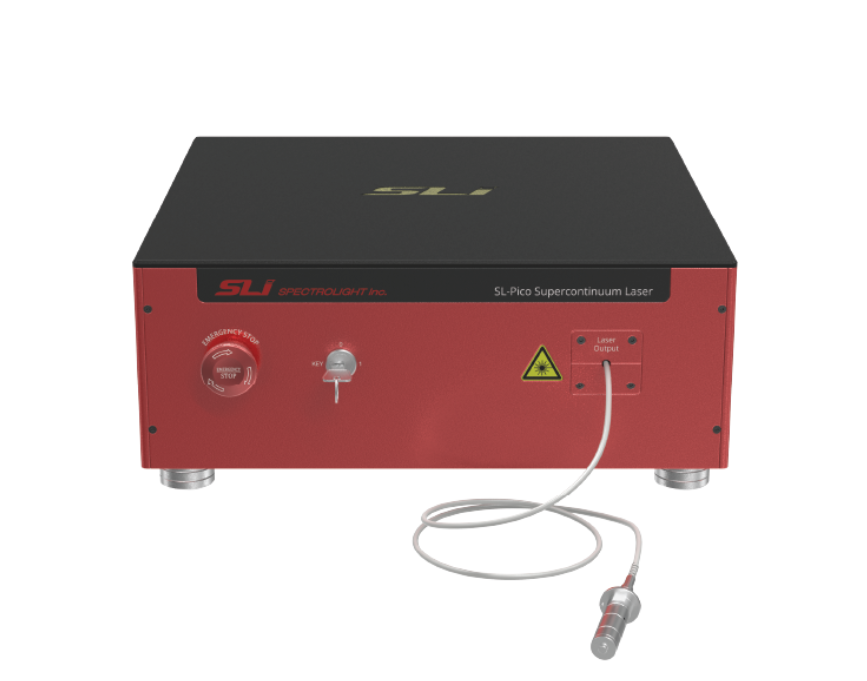
The Spectrolight TLS-Blue is a wavelength-selectable picosecond laser system for applications that require tunable center wavelength while using a consistent spectral bandwidth. It combines a broadband SL-Pico supercontinuum source with Spectrolight wavelength-selection technology in a single integrated system.
Depending on configuration, users can select tunable VIS, IR, SWIR, or custom wavelength ranges within the broader 410-1700 nm TLS platform. TLS-Blue uses a fixed 10 or 20 nm FWHM bandwidth, while TLS-Red adds adjustable bandwidth for applications that need control of both wavelength and spectral width.
TLS-Blue is a useful starting point when an imaging, inspection, spectroscopy, detector-characterization, or optical measurement setup needs wavelength-selectable illumination but does not require bandwidth to change during operation.
RPMC can help determine the appropriate source architecture, wavelength range, fixed bandwidth, output requirements, pulse width, and repetition rate for the application.
Start Here When You Need Wavelength Tuning With a Fixed Bandwidth
TLS-Blue is the likely starting point when:
- You need to tune the selected center wavelength across your required spectral range.
- A fixed 10 or 20 nm FWHM bandwidth works for the measurement or illumination setup.
- You need wavelength-selectable illumination for imaging, inspection, spectroscopy, detector, or optical-system characterization.
- Your test method does not require changing spectral bandwidth between measurements.
- You need one wavelength-selectable source rather than aligning multiple independent laser sources.
If your measurement also requires control of spectral bandwidth, start with TLS-Red instead.
If you need the full broadband supercontinuum spectrum rather than wavelength-selected output, start with SL-Pico.
TLS-Blue vs. TLS-Red: Which Tunable Laser Should You Start With?
| Selection Factor | TLS-Blue | TLS-Red |
|---|---|---|
| Center wavelength | Tunable | Tunable |
| Spectral bandwidth | Fixed | Adjustable |
| FWHM | 10 or 20 nm | Approximately 2-15 nm depending on wavelength/configuration |
| Bandwidth adjustment | Selected fixed bandwidth | 1 nm increments |
| VIS / IR / SWIR / Custom | Yes | Yes |
| Start here when… | Wavelength tuning is needed but fixed bandwidth is sufficient. | The measurement requires control of wavelength and bandwidth. |
How to Configure a TLS-Blue System
Use these steps to narrow the TLS-Blue configuration before selecting the final model. The right starting point depends on the required source architecture, fixed spectral bandwidth, wavelength region, timing needs, and application setup.
|
1
|
Select the picosecond supercontinuum sourceStart with the required:
Spectrolight offers multiple SL-Pico-based source architectures and power classes. |
|
2
|
Choose the fixed spectral bandwidthTLS-Blue configurations use either 10 nm or 20 nm FWHM fixed bandwidth. Select the bandwidth that matches the requirements of your measurement, imaging, or illumination setup. If the application requires the bandwidth itself to change, TLS-Red is the better starting point. |
|
3
|
Choose the wavelength regionStandard and custom configurations can cover portions of:
within the overall 410-1700 nm TLS platform range. |
Not sure which fixed bandwidth or wavelength range fits your setup?
Send RPMC the spectral range, required bandwidth, power, pulse width, repetition rate, detector/system information, and application.
We’ll help down-select the configuration.
Applications for TLS-Blue Fixed-Bandwidth Tunable Lasers
TLS-Blue fixed-bandwidth tunable lasers can support applications that require wavelength-selectable picosecond illumination while using a consistent 10 or 20 nm spectral bandwidth. Common use cases include spectral imaging, inspection, spectroscopy, detector testing, and optical-system characterization.
Hyperspectral and Multispectral Imaging
Wavelength-selectable illumination can support hyperspectral camera development, spectral imaging, image-system calibration, and wavelength-dependent illumination studies when a fixed spectral bandwidth is appropriate for the measurement.
Semiconductor, Wafer and Display Inspection
Spectrolight specifically demonstrates the TLS platform for silicon wafer inspection. Tunable illumination can also support optical inspection, camera testing, component QC, and wavelength-dependent transmission or reflection measurements.
Spectroscopy and Material Characterization
TLS-Blue can support spectroscopy and material-characterization experiments that need controllable center wavelength with a consistent passband, as well as filter, component, transmission, reflection, and spectral-response measurements.
Detector, Camera and Optical-System Characterization
Wavelength-selectable output can support spectral responsivity measurements, image-sensor characterization, camera development, filter testing, and calibration-system development.
What Does RPMC Need to Help Configure TLS-Blue?
Send as many of these as you know:
- Required center wavelength or wavelength tuning range
- Required fixed FWHM bandwidth: 10 or 20 nm
- Desired optical power at the selected wavelength
- Pulse-width requirements
- Fixed or variable repetition-rate requirements
- Triggering or synchronization requirements
- Detector, camera, spectrometer, microscope, or optical-system details
- Application and measurement objective
- Lab, OEM, production, or other integration environment
- Timeline and any special configuration constraints
You don’t need the final model number before contacting us.
RPMC can help translate your measurement requirements into a Spectrolight TLS configuration.
TLS-Blue FAQs
Below are common questions about Spectrolight TLS-Blue tunable laser configurations, wavelength coverage, fixed bandwidth options, and selection considerations.
What is the Spectrolight TLS-Blue?
TLS-Blue is a picosecond tunable laser system that combines a broadband supercontinuum source with wavelength-selection technology. It provides wavelength-selectable output using a fixed 10 or 20 nm FWHM bandwidth.
What wavelength range does TLS-Blue cover?
Depending on configuration, TLS-Blue can provide tunable output across selected VIS, IR, SWIR, or custom ranges within the overall 410-1700 nm TLS platform.
What bandwidth does TLS-Blue provide?
TLS-Blue uses a fixed 10 or 20 nm FWHM bandwidth, selected according to the system configuration.
What is the difference between TLS-Blue and TLS-Red?
Both systems provide wavelength-selectable picosecond output. TLS-Blue uses a fixed 10 or 20 nm bandwidth, while TLS-Red allows the spectral bandwidth to be adjusted.
How do I choose a TLS-Blue configuration?
Start with the required wavelength range, fixed bandwidth, optical power, pulse width, repetition rate, timing requirements, and application. RPMC can then help narrow the available supercontinuum source and wavelength-selection configurations.
Related Resource: “Enhanced Spectral Imaging with Tunable Laser Systems (TLS)“
See All Spectrolight Products
| Wavelength (nm) | |
|---|---|
| Description | |
| Type | Supercontinuum Laser, Broadband Lasers, Tunable Lasers, Ultrafast Lasers, Multi Wavelength, Adjustable Rep Rate, High Peak Power, Turn-Key System |