
 BUY NOW
 mirSense Quantum Cascade Lasers
for MWIR & LWIR Applications
PowerMir (ITAR-free) & UniMir QCL options for defense/security, gas sensing, molecular spectroscopy, industrial monitoring & OEM integration
Not sure which QCL fits?
RPMC helps N. American customers select the right mirSense wavelength, package, operating mode, driver, and integration path for demanding MWIR and LWIR applications.
Share your requirements and RPMC can help narrow the options.
- Target wavelength, molecule, or absorption feature
- Output power requirements
- CW, QCW, or pulsed operation
- Linewidth or tuning needs
- HHL, OEM module, or turnkey package
- Lab, field, airborne, or embedded system environment
- Export/compliance considerations

Why Choose mirSense QCLs?
mirSense is a strong QCL source when your application requires specialized MWIR/LWIR wavelengths, high-power pulsed operation, DFB narrow-linewidth emission, or an OEM-ready path from lab testing to system integration.
|
PowerMIR High-Power QCLs
ITAR-free high-power QCL options for MWIR/LWIR applicationPowerMIR provides ITAR-free high-power QCL options in the 4-9 µm range, with QCW operation and chip, HHL, OEM module, and turnkey configuration paths available depending on the project. |
UniMIR DFB QCLs
10-19 µm DFB QCLs for gas sensing and spectroscopyUniMIR supports wavelength-stabilized DFB QCL operation in the 10-19 µm region, making it a strong starting point for molecule-specific gas sensing, molecular spectroscopy, environmental monitoring, and research applications. |
|
MWIR/LWIR Access
Access QCL wavelengths beyond standard catalog optionsmirSense helps cover QCL wavelength regions that may be difficult to source through standard laser catalogs, especially when the application depends on a specific mid-IR or long-wave IR absorption feature. |
OEM-Ready Options
From lab evaluation to embedded systemsmirSense QCLs are available in practical configurations for different stages of development, including HHL-packaged lasers, OEM modules, and turnkey platforms. RPMC can help match the package and electronics approach to the customer’s wavelength, power, modulation, cooling, and integration requirements. |
Start Here: PowerMir vs. UniMir
Use this section to help narrow which mirSense QCL family may be the better starting point before reviewing the product options below.
Start here for high-power pulsed or QCW QCL output
PowerMir is the better starting point when the application requires high-power MWIR/LWIR QCL output, QCW operation, compact packaging, and a practical path toward OEM or system integration.
| Typical fit: Defense/security, IR testing, detector validation, countermeasure-related R&D, material characterization, and OEM system integration |
| Common requirements: 4-9 µm configurations, high output power, QCW operation, HHL/OEM/turnkey options, ITAR-free PowerMir technology |
Start here for 10-19 µm DFB QCL spectroscopy
UniMir is the better starting point when the application depends on a specific molecule or absorption feature in the LWIR region and requires narrow-linewidth DFB QCL emission.
| Typical fit: Gas sensing, molecular spectroscopy, environmental monitoring, industrial process sensing, and research spectroscopy |
| Common requirements: 10-19 µm operation, DFB single-mode output, narrow linewidth, molecule-specific detection, HHL package options |
Final configuration depends on the details.
Wavelength, target molecule, output power, operating mode, linewidth, package, driver, cooling, integration environment, and export/compliance requirements can all affect the right starting point. RPMC can help confirm whether PowerMir, UniMir, or a custom path is the best fit.
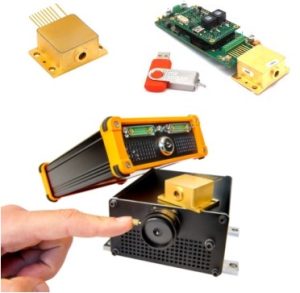
Where mirSense QCLs Fit Best
mirSense QCLs are best evaluated by matching the application to the required wavelength region, power level, linewidth, operating mode & package format.
Defense & SecurityStart with PowerMir when the application requires high-power MWIR/LWIR QCL output, QCW operation, compact/OEM-ready packaging, and ITAR-free technology. Final export and program-specific requirements should be confirmed with RPMC and mirSense. |
Gas Sensing & Molecular SpectroscopyStart with UniMir when the target molecule or absorption feature falls in the 10-19 µm LWIR region and the system requires DFB narrow-linewidth emission for selective detection. |
Industrial & Environmental MonitoringmirSense QCLs can support process monitoring, emissions monitoring, VOC/BTEX-related sensing, toxic gas detection, and other applications where wavelength selection and system integration are critical. |
Research & Advanced SpectroscopyFor specialized MWIR/LWIR spectroscopy work, mirSense provides QCL options for difficult wavelengths, molecule-specific detection, and custom configuration paths that may not be available through standard catalog sources. |
What Sets mirSense Apart
mirSense develops quantum cascade laser technology for MWIR and LWIR applications, including high-power Fabry-Perot PowerMir sources and DFB UniMir sources for spectroscopy. PowerMir is positioned for high-power pulsed/QCW operation in the 4-9 µm range and is available in chip, HHL, OEM module, and turnkey configurations. UniMir is designed for wavelength-stabilized DFB operation in the 10-19 µm region, where target molecules may have useful absorption features for gas sensing and spectroscopy.
mirSense’s technology includes InP-based and InAs-based QCL development. Because material-platform, uniqueness, export, wavelength, power, and application claims can be technically sensitive, final wording should be reviewed by RPMC and mirSense before publishing.
Related QCL Articles & Application Resources
These resources provide additional context on MWIR/LWIR QCL applications, spectroscopy use cases, and mirSense-related technology. For product selection, start with PowerMir or UniMir above, or contact RPMC with your wavelength, molecule, power, operating mode, and packaging requirements.
|
White Paper
|
Application Article
|
|
Case Study
|
Case Study
|