
HL-AR

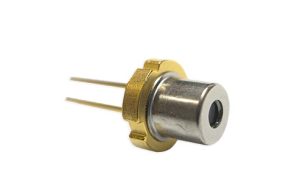
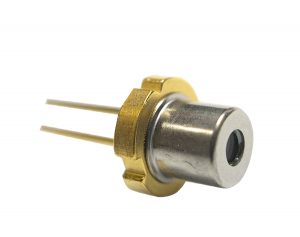
Laser Diode, Single mode, 671/689/698nm, AR coated, up to 210mW

Key Features:

  • AR-Coated Facet
  • High output power
  • Single-mode operation
  • TE mode oscillation
  • High efficiency
  • Wide temperature range

Typically, there are many different package types, wavelengths, output powers, and options to choose from. Get help selecting the right configuration for you!


POPULAR CONFIGURATIONS:

Picture
Part Number
Part Description
Datasheet
 
Store-R2Z9-Image-DG-package HL67231DG

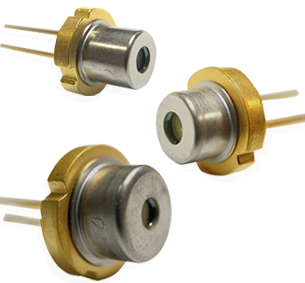
Laser Diode, Single Mode, 671nm, 0.210W, 5.6mm Package, w/PD, AR Coated

PDF icon Get Quote
Store-R2Z9-Image-DG-package HL69021DG

Laser Diode, Single Mode, 689 nm, 0.210W, 5.6mm Package, w/PD, AR Coated

PDF icon Get Quote
Store-R2Z9-Image-DG-package HL70041DG

Laser Diode, Single Mode, 698nm, 0.210W, 5.6mm Package w/PD, AR Coated

PDF icon Get Quote

The HL-AR series represents a breakthrough in single-mode laser diodes tailored for quantum applications, leveraging advanced AlGaInP crystal enhancements to deliver unprecedented performance at longer wavelengths (671, 689 & 698 nm) with 210mW output. These diodes offer high efficiency, unmatched reliability, and superior temperature stability, making them essential for cutting-edge quantum technologies.

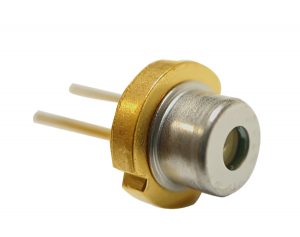
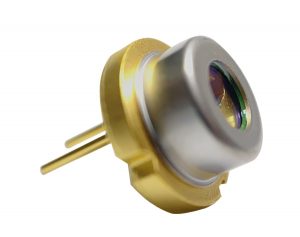
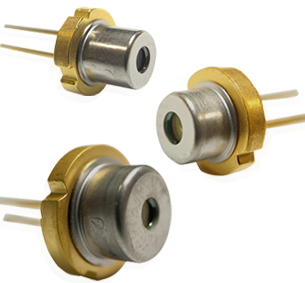
Available in a compact TO-Can package, they enable easy OEM integration while supporting TE mode oscillation for precise beam control. RoHS compliant and designed for low threshold currents and high slope efficiency, the HL-Q series drives innovations in quantum computing, optical lattice clocks with precision deviations of just one second in 30 billion years, laser cooling, genome analysis, and pharmaceutical design. If your quantum setup requires a custom wavelength or power profile within our lineup, define your needs and let us optimize the solution for you!

If your exact needs are not in our popular configurations, define your ideal laser diode and let us find the best solution!

Product Range:

Wavelength Selection:

Standard wavelength options with additional wavelengths available to better fulfill your needs.

671nm 689nm 698nm

Output Power Range:

Output power depends on the wavelength and mode.

Up to 210 mW (dependent on wavelength)


Package Type:

3.8mm Package 5.6mm Package 9mm Package
Industry-standard 3.8mm package perfect for OEM integration. Industry-standard 5.6mm package perfect for OEM integration. Industry-standard 9mm package perfect for OEM integration.

*Not all packages, output powers, and options are available with every wavelength

*Some products may require a minimum order

Benefits: 

  • Quantum-Precise Wavelengths
    671-698 for lattice clocks and cooling
  • Stable High-Power Output
    Up to 210 mW with low threshold
  • Reliable Temperature Performance
    Consistent across -10oC to +75oC
  • Enhanced Crystal Quality
    Superior efficiency and longevity

HL-AR: AR-Coated Single-Mode Laser Diode FAQs

What makes these diodes suitable for quantum applications?

The HL-Q series features enhanced AlGaInP crystals for stable single-mode output at quantum-relevant wavelengths, supporting applications like laser cooling where beam precision and reliability are critical.

How do operating temperatures affect performance in quantum setups?

With a wide range (-10°C to +75°C), these diodes maintain consistent output and wavelength stability, essential for temperature-sensitive quantum experiments.

What is the difference between single-mode and multimode diodes for quantum use?

Single-mode diodes like the HL-Q provide a clean, Gaussian beam ideal for precise quantum interactions, unlike multimode which may introduce noise in applications like optical lattices.

Can these diodes be used in external cavity configurations?

Yes, the AR-coated facet minimizes feedback, making them perfect for tunable external cavity setups in quantum research.

What factors affect the lifespan of these quantum diodes?

Proper heat management, staying within absolute max ratings (e.g., 210mW output, 280-300mA current), and avoiding overdrive ensure longevity in quantum systems.

If you have any questions or need more information, please contact us.

How can we help you?

Talk to one of our experienced product managers today!

Contact us

Component FAQs

Can I operate multiple laser diodes from the same power supply?

Can I operate multiple laser diodes from the same power supply?

The same power supply can drive multiple laser diodes if they are connected in series, but they must never be connected in parallel. When two diodes are connected in series, they will function properly as long as the compliance voltage is large enough to cover the voltage drop across each diode. For example, suppose you are trying to power two diode lasers, each with an operating voltage of 1.9 V, and connect the two in series. In that case, the pulsed or CW laser driver must have a total voltage capacity greater than 3.8 V. This configuration works because diodes share the same current when connected in series. In contrast, when two diodes are connected in parallel, the current is no longer shared between the two diodes. Get more details on the topic in this article: “Can I Operate Multiple Laser Diodes From the Same Power Supply?” Get more information from our Lasers 101, Blogs, Whitepapers, FAQs, and Press Release pages in our Knowledge Center!

Can laser diodes emit green, blue, or UV light?

Can laser diodes emit green, blue, or UV light?

The output wavelength of a semiconductor laser is based on the difference in energy between the valance and conduction bands of the material (bandgap energy). Since the energy of a photon is inversely proportional to its wavelength, this means that a larger bandgap energy will result in a shorter emission wavelength. Due to the relatively wide bandgap energy of 3.4 eV, gallium nitride (GaN) is ideal for the production of semiconductor optoelectronic devices, producing blue wavelength light without the need for nonlinear crystal harmonic generation. Since the mid-’90s, GaN substrates have been the common material utilized for blue LEDs. In recent years, GaN based laser technology has provided blue, green and UV laser diodes, now available in wavelengths from 375 nm to 521 nm, with output powers exceeding 100 watts. Read our article, titled “Gallium Nitride (GaN) Laser Diodes: Green, Blue, and UV Wavelengths” to learn more about GaN Based Laser Diodes, available through RPMC. Get more information from our Lasers 101, Blogs, Whitepapers, and FAQs pages in our Knowledge Center!

How long will a laser diode last?

Honestly, it depends on several factors, and there is no simple chart to cover everything. Typical diode lifetimes are in the range of 25,000 to 50,000 hours. Though, there are lifetime ratings outside this range, depending on the configuration. Furthermore, there are a wide range of degradation sources that contribute to a shorter lifespan of laser diodes. These degradation sources include dislocations that affect the inner region, metal diffusion and alloy reactions that affect the electrode, solder instability (reaction and migration) that affect the bonding parts, separation of metals in the heatsink bond, and defects in buried heterostructure devices. Read more about diode lifetime and contributing factors in this article: “Understanding Laser Diode Lifetime.” Get more information from our Lasers 101, Blogs, Whitepapers, FAQs, and Press Release pages in our Knowledge Center!

What factors affect the lifetime of laser diodes?

There are a great many factors that can increase or decrease the lifetime of a laser diode. One of the main considerations is thermal management. Mounting or heatsinking of the package is of tremendous importance because operating temperature strongly influences lifetime and performance. Other factors to consider include electrostatic discharge (ESD), voltage and current spikes, back reflections, flammable materials, noxious substances, outgassing materials (even thermal compounds), electrical connections, soldering method and fumes, and environmental considerations including ambient temperature, and contamination from humidity and dust. Read more about these critical considerations and contributing factors in this article: “How to Improve Laser Diode Lifetime: Advice and Precautions on Mounting.” Get more information from our Lasers 101, Blogs, Whitepapers, FAQs, and Press Release pages in our Knowledge Center!

What is a laser diode?

A Laser Diode or semiconductor laser is the simplest form of Solid-State Laser. Laser diodes are commonly referred to as edge emitting laser diodes because the laser light is emitted from the edge of the substrate. The light emitting region of the laser diode is commonly called the emitter. The emitter size and the number of emitters determine output power and beam quality of a laser diode. Electrically speaking, a laser diode is a PIN diode. The intrinsic (I) region is the active region of the laser diode. The N and P regions provide the active region with the carriers (electrons and holes). Initially, research on laser diodes was carried out using P-N diodes. However, all modern laser diodes utilize the double-hetero-structure implementation. This design confines the carriers and photons, allowing a maximization of recombination and light generation. If you want to start reading more about laser diodes, try this whitepaper “How to Improve Laser Diode Lifetime.” If you want to read more about the Laser Diode Types we offer, check out the Overview of Laser Diodes section on our Lasers 101 Page!

What is the difference between laser diodes and VCSELs?

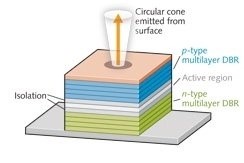
Laser Diodes and VCSELs are semiconductor lasers,  the simplest form of Solid State Lasers.  Laser diodes are commonly referred to as edge emitting laser diodes because the laser light is emitted from the edge of the substrate. The light emitting region of the laser diode is commonly called the emitter.  The emitter size and the quantity of emitters determine output power and beam quality of a laser diode. These Fabry Perot Diode Lasers with a single emission region (Emitter) are typically called laser diode chips, while a linear array of emitters is called laser diode bars. Laser diode bars typically use multimode emitters, the number of emitters per substrate can vary from 5 emitters to 100 emitters. VCSELs (Vertical Cavity Surface Emitting Laser) emit light perpendicular to the mounting surface as opposed to parallel like edge emitting laser diodes.  VCSELs offer a uniform spatial illumination in a circular illumination pattern with low speckle. If you want to read more about lasers in general, and help narrowing down the selection to find the right laser for you, check out our Knowledge Center for our Blogs, Whitepapers, and FAQ pages, as well as our Lasers 101 Page!VCSEL

What’s the difference between single transverse mode & single longitudinal mode?

What’s the difference between single transverse mode & single longitudinal mode?

Within the laser community, one of the most overused and often miscommunicated terms is the phrase “single mode.”  This is because a laser beam when traveling through air takes up a three-dimensional volume in space similar to that of a cylinder; and just as with a cylinder, a laser beam can be divided into independent coordinates each with their own mode structure.  For a cylinder we would call these the length and the cross-section, but as shown in the figure below for a laser beam, we define these as the transverse electromagnetic (TEM) plane and the longitudinal axis.   Both sets of modes are fundamental to the laser beam’s properties, since the TEM modes determine the spatial distribution of the laser beams intensity, and the longitudinal modes determine the spectral properties of the laser.  As a result, when a laser is described as being “single-mode” first you need to make sure that you truly understand which mode is being referred to.  Meaning that you must know if the laser is single transverse mode, single longitudinal mode, or both. Get all the information you need in this article: “What is Single Longitudinal Mode?” Get more information from our Lasers 101, Blogs, Whitepapers, FAQs, and Press Release pages in our Knowledge Center!