
 BUY NOW
Start With the Mission
The right space laser architecture depends on what the optical system must accomplish. Start with the mission function, then narrow the source around the optical, mechanical, environmental, and qualification requirements.
Free-Space Optical Communications
Start here for satellite-to-satellite, satellite-to-ground, ground-to-satellite, or other optical-link architectures.
Selection may involve wavelength band, transmit or receive role, amplifier gain or output power, noise, linewidth, polarization, seed compatibility, beam delivery, SWaP & environmental requirements.
LiDAR, Altimetry & Mapping
Start here for ranging, terrain mapping, navigation, altimetry, 3D mapping, and related laser-based measurement systems.
Important parameters can include wavelength, pulse energy, pulse width, repetition rate, timing, beam quality, pointing, detection architecture, SWaP, and package constraints.
Remote & Atmospheric Sensing
Start here when the source supports spectroscopy, atmospheric measurements, remote detection, or coherent sensing.
Wavelength access, linewidth, wavelength stability, tunability, output power, detector compatibility, optical path, and thermal or packaging requirements may drive the selection.
Metrology, Calibration & Scientific Payloads
Start here for precision optical measurements, calibration sources, scientific instruments, and specialized payloads.
Linewidth, frequency or wavelength stability, coherence, beam quality, timing, power stability, packaging, and operating environment can become critical.
What Changes When the Laser Is Going to Space?
Selecting a source for a space-based system involves more than wavelength and optical power. The laser, amplifier, or diode must be evaluated as part of the complete payload and mission environment.
- SWaP and thermal budget
- Package size and mechanical integration
- Free-space or fiber beam delivery
- Launch shock and vibration
- Vacuum and material considerations
- Operating temperature and thermal cycling
- Radiation environment, where applicable
- Mission duration and operating profile
- Screening and qualification requirements
- Lot traceability, spares, and supply continuity
Low SWaP Is a System Tradeoff
Low Size, Weight and Power can be a major constraint for CubeSats, SmallSats, instruments, and other space payloads. But SWaP is not simply a small enclosure. Electrical power, heat generation and removal, packaging, optics, electronics, beam delivery, and integration all contribute to the real system burden.
Space Qualification Is Mission-Specific
There is no single universal qualification process that makes every laser or laser diode automatically suitable for every space mission. Requirements depend on the device, package, mission environment, operating profile, reliability expectations, and customer or agency acceptance criteria.
Read: Space-Qualified Laser Diodes – Development, Qualification & Acceptance
Space Laser Application & Solution Examples
The examples below illustrate how different laser-source architectures can address space-system requirements across optical communications, LiDAR, sensing, and scientific payloads. Where appropriate and publicly available, mission heritage is noted.
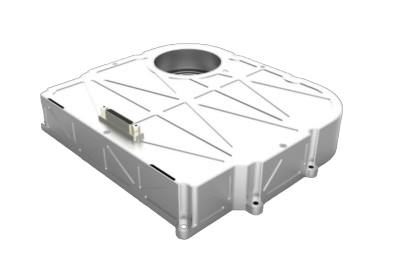
1.5 µm Fiber Amplifiers for Free-Space Optical Communications
For inter-satellite and satellite-to-ground optical links, a fiber amplifier may serve as a transmitter booster or, in selected architectures, a low-noise receiver preamplifier.
Space-oriented amplifier configurations in the 1.5 µm region can be evaluated around output power, gain, noise, package size, electrical power, thermal management, optical interfaces, and mission-specific environmental and qualification requirements.
The appropriate amplifier depends on whether the system needs transmit power, weak-signal amplification, compact integration, or a customized optical architecture.
Mission Heritage: OSIRIS-REx
Laser Altimetry for NASA’s OSIRIS-REx Mission
The Laser Altimeter, or OLA, used laser ranging to produce high-resolution topographic measurements of asteroid Bennu in support of mapping, navigation, and sample-site assessment.
Bright Solutions supplied two 1064 nm laser sources for the OLA instrument: a low-energy microchip laser optimized for high-resolution short-range measurements and a higher-energy DPSS laser for longer-range acquisitions.
That mission illustrates why LiDAR source selection cannot be reduced to wavelength alone. Pulse energy, repetition rate, measurement range, beam characteristics, package design, reliability, and the complete instrument architecture all affect the source requirement.
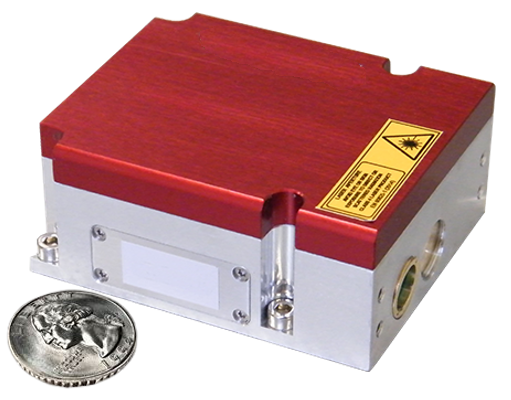
Narrow-Linewidth Fiber Lasers for Coherent LiDAR
Coherent LiDAR and Doppler-based measurement systems may require a narrow-linewidth fiber source with stable spectral behavior, appropriate output power, low noise, and compatibility with the detection architecture.
For space-based use, those optical requirements must then be evaluated alongside package size, power consumption, thermal management, beam delivery, radiation environment, and program-specific qualification requirements.
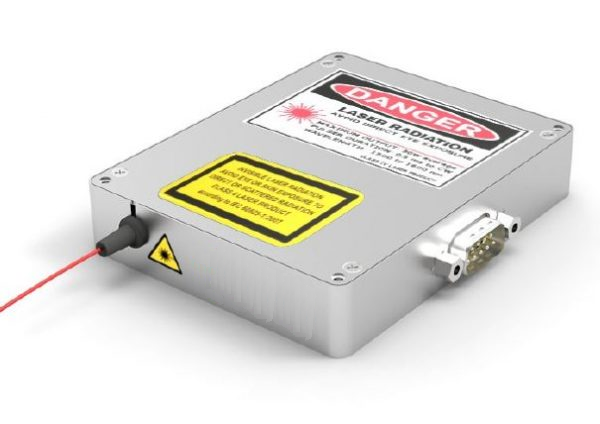
DFB Laser Diodes for Spectroscopy and Remote Sensing
Narrow-linewidth DFB laser diodes can be useful in compact spectroscopy and sensing instruments when their wavelength and spectral characteristics align with the measurement.
Narrow-linewidth DFB laser diodes can be useful in compact spectroscopy and sensing instruments when their wavelength and spectral characteristics align with the measurement.
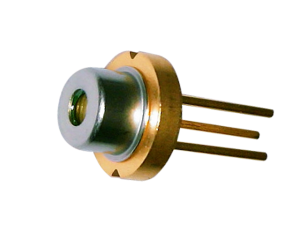
Compact Pulsed Sources for LiDAR, Altimetry & Mapping
Pulsed DPSS, microchip, and fiber-laser architectures can all be considered for ranging, altimetry, mapping, and remote-sensing payloads depending on the measurement method.
Useful comparison parameters include pulse energy, pulse width, repetition rate, timing and jitter requirements, beam quality, wavelength, pointing, package size, electrical power, and thermal load.
The final source must then be evaluated against the mission’s environmental and qualification requirements rather than assuming that every compact or ruggedized commercial laser is automatically suitable for flight.
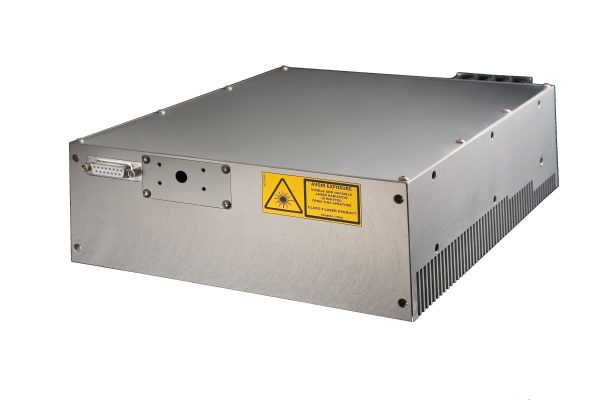

Fiber Lasers & Amplifiers
Fiber-based architectures can be a strong fit when the system benefits from fiber delivery, optical amplification, telecom-band wavelengths, coherent sensing, or pulsed and CW operation.
Best Fit When
The system needs free-space optical communications, LiDAR, ranging, sensing, precision optical measurements, transmitter amplification, or low-noise preamplification.
What to Define
Wavelength, seed or input power, output power or gain, noise figure, linewidth, RIN, pulse format, polarization, and optical interface can all affect the architecture.
Space-System Considerations
Package size, electrical power, thermal management, fiber routing, environmental requirements, and qualification needs should be evaluated alongside the optical specifications.
Laser Diodes
Laser diodes offer compact source options when the design needs a direct-emission source, seed laser, pump source, DFB source, or another diode-based architecture that fits the optical system.
Best Fit When
The payload needs a compact source for sensing, spectroscopy, communications, pumping, metrology, or other space-based instrumentation.
What to Define
Wavelength, optical power, spatial mode, spectral linewidth, wavelength stability, free-space or fiber delivery, and package type help narrow the diode options.
Space-System Considerations
Thermal path, drive requirements, ESD protection, package construction, vacuum compatibility, radiation environment, lot traceability, and qualification requirements may all affect the final configuration.
RPMC can also help compare standard and configurable diode options around packaging, beam delivery, customization, domestic-source requirements where applicable, and longer-term program supply.
Pulsed DPSS & Microchip Lasers
Pulsed DPSS and microchip architectures can provide useful combinations of pulse energy, short pulse width, repetition rate, beam quality, and compact integration for space-based measurement systems.
Best Fit When
The payload requires short optical pulses for LiDAR, ranging, altimetry, mapping, spectroscopy, calibration, or other pulsed measurements.
What to Define
Pulse energy, pulse width, repetition rate, timing, beam quality, wavelength, and measurement distance are useful starting points for comparison.
Space-System Considerations
Package size, electrical power, thermal load, launch environment, operating profile, and qualification requirements need to be considered with the optical performance.
Compact size or rugged construction can be valuable design characteristics, but they should not by themselves be treated as evidence of space qualification.
Why Work With RPMC on a Space Laser Requirement?
Space programs frequently involve competing requirements that cannot be solved by filtering on wavelength or power alone.
RPMC works across multiple laser and amplifier manufacturers to help engineers compare standard, configurable, and fully custom options around:
- wavelength
- power or pulse energy
- pulse width and repetition rate
- linewidth and spectral behavior
- beam quality and delivery
- package and electrical interface
- SWaP and thermal requirements
- environmental constraints
- qualification and screening needs
- customization and integration
- lot traceability
- program quantities and spares
- long-term supply planning
- domestic-source requirements where available
- supplier and integration risk
The goal is to narrow a large field of possible laser sources to the configurations that are technically and commercially realistic for the program, then work with the appropriate manufacturing partner on the details that still need to be defined.
What Information Helps Us Down-Select a Space Laser?
You do not need every requirement finalized before starting the discussion. Share what is already known and where the design still has flexibility.

- application and measurement or communication objective
- wavelength or wavelength range
- required power, pulse energy, pulse width, or repetition rate
- linewidth, frequency stability, or beam-quality requirements
- free-space or fiber delivery
- package and SWaP constraints
- electrical and thermal limits
- orbit or environmental requirements already known
- screening or qualification requirements already defined
- flight quantity, engineering units, spares, and program schedule
- which specifications are fixed and which can still be adjusted
Need Help Selecting a Laser for a Space Program?
Tell us what the source needs to do, the optical and SWaP requirements you already know, the mission environment and qualification requirements already defined, and where the design still has flexibility. RPMC can help compare practical options and down-select the right source architecture and configuration.
Read the Space Qualification Guide